Trinidad and Tobago
North America
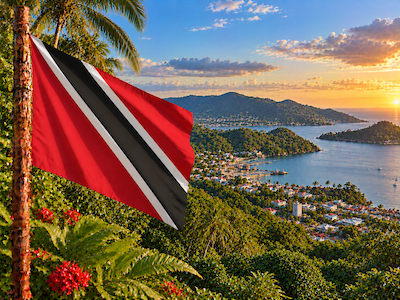
Trinidad and Tobago is a twin-island nation in the southern Caribbean, near the coast of Venezuela. Trinidad is known for its lively cities, tropical rainforests, and the Caroni Swamp, while Tobago offers coral reefs, secluded beaches, and forested hills. The capital, Port of Spain, is a vibrant cultural center famous for its Carnival celebrations. The country’s diverse population reflects African, Indian, European, Chinese, and Indigenous influences, expressed through its cuisine, festivals, music, and traditions.
Trinidad and Tobago has a rich literary heritage shaped by colonialism, migration, cultural diversity, and the search for identity. V. S. Naipaul, awarded the Nobel Prize in Literature in 2001, explored colonial society and displacement in novels such as A House for Mr Biswas. Earl Lovelace, another major Trinidadian novelist, examines community, cultural resistance, and the legacy of colonialism in works including The Dragon Can’t Dance. Poetry, calypso lyrics, and oral storytelling also play important roles in the country’s literary culture, capturing the rhythms and complexities of Caribbean life.