Tunisia
Africa
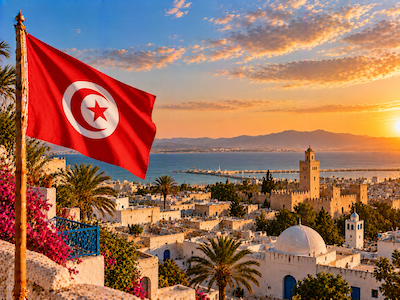
Tunisia is a North African country on the Mediterranean coast, where golden beaches, fertile plains, olive groves, and the vast Sahara Desert create a diverse landscape. Its capital, Tunis, combines a lively modern city with a historic medina of narrow streets, traditional courtyards, mosques, and bustling souks. The ancient ruins of Carthage reflect Tunisia’s importance in Mediterranean history, while the blue-and-white village of Sidi Bou Said has become an enduring symbol of its architectural charm. Tunisian culture brings together Amazigh (Berber), Arab, Mediterranean, and African influences, shaped by centuries of trade and successive civilizations. Arabic is the official language, while French remains widely used in education, business, and cultural life.
Tunisian literature reflects the country’s position at the crossroads of Arab, African, and Mediterranean cultures. Its traditions include Arabic poetry, oral storytelling, folk tales, and writing influenced by classical Islamic scholarship. Modern literature has explored colonialism, national identity, political freedom, gender, religion, and the tensions between tradition and social change. French-language writing has also played an important role, giving Tunisian authors another way to engage with questions of cultural identity and belonging. Among Tunisia’s notable writers is Aboul-Qacem Echebbi, one of the Arab world’s most celebrated modern poets, whose work became associated with freedom, dignity, and resistance to oppression. Albert Memmi, a Tunisian-born French-language writer, explored colonialism and the complexities of identity in works such as The Pillar of Salt. Fawzia Zouari, a novelist and journalist, examines women’s lives, cultural expectations, and the relationship between North African heritage and life in Europe. Hélé Béji, an essayist and novelist, has written extensively about identity, modernity, and the political and cultural transformations of Tunisia. Yamen Manai, known for The Ardent Swarm, uses allegory and ecological themes to reflect on power, extremism, and social responsibility. Together, these writers illuminate Tunisia’s diverse literary voices and its ongoing dialogue between heritage and change.