Tajikistan
Asia
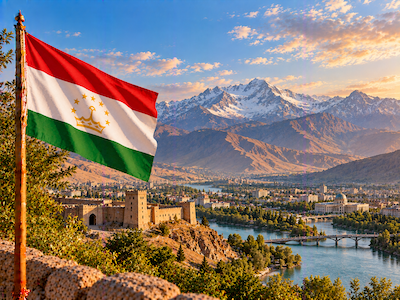
Tajikistan is a landlocked country in Central Asia, renowned for its dramatic mountain landscapes, glacial lakes, and remote valleys. The Pamir Mountains, often called the “Roof of the World,” dominate much of the east, while the fertile Fergana Valley and river valleys support agriculture and settlements. The capital, Dushanbe, combines Soviet-era architecture with modern parks, monuments, and traditional bazaars. Tajik culture reflects a deep Persian heritage, shaped by centuries of trade, poetry, and cultural exchange along the Silk Road. Tajik, a variety of Persian, is the official language, while Russian remains widely used in certain professional and social settings. Hospitality, traditional music, embroidery, and celebrations such as Navruz remain important parts of cultural life.
Tajikistan’s literary tradition belongs to the wider Persian-speaking world, sharing historical and cultural roots with the literature of Iran and Afghanistan. Classical Persian poetry has played a central role in shaping Tajik cultural identity, particularly the works of Rudaki, widely regarded as the father of Persian poetry, who was born in what is now Tajikistan. The legacy of Ferdowsi, Hafez, and Rumi has also profoundly influenced the region’s literary imagination. Modern Tajik literature developed through periods of Russian imperial rule, Soviet cultural policy, and post-independence nation-building. Writers have explored rural life, social transformation, national identity, and the relationship between tradition and modernity. Sadriddin Ayni, a foundational figure in modern Tajik literature, helped establish modern Tajik prose and wrote about social change and life in Central Asia. Mirzo Tursunzoda, a celebrated poet, became known for works addressing peace, friendship, and international solidarity. Loiq Sherali, one of the most influential modern Tajik poets, drew on Persian literary heritage while expressing contemporary Tajik identity. Together, these writers illustrate how Tajik literature connects an ancient Persian poetic tradition with the experiences and aspirations of a modern Central Asian nation.