South Sudan
Africa
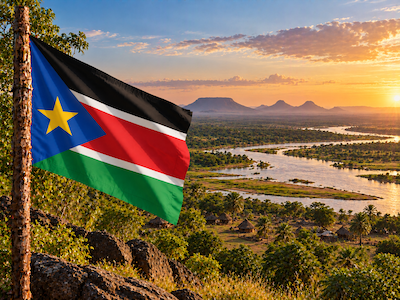
South Sudan is a landlocked country in East-Central Africa, characterized by vast savannas, wetlands, grasslands, and the White Nile River, which flows through the country. Its capital, Juba, lies along the river and serves as the country’s main urban and commercial center. South Sudan is home to diverse communities with distinct languages, customs, music, and oral traditions. English is the official language, alongside many Indigenous languages, including Dinka, Nuer, and Bari.
South Sudanese literature draws heavily on oral traditions, including folktales, proverbs, songs, and epic narratives that preserve community histories and cultural values. Contemporary writing often explores displacement, conflict, memory, identity, and the experience of building a nation after independence in 2011. Taban Lo Liyong, a South Sudanese-born writer and critic, is an influential figure in East African literature, known for his experimental style and literary criticism. Stella Gaitano, a South Sudanese writer, explores war, displacement, and the lives of ordinary people in works written in Arabic.