Suriname
South America
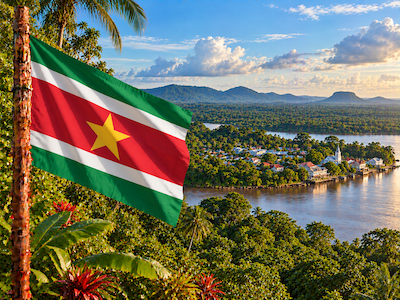
Suriname is a small country on the northeastern coast of South America, known for its vast tropical rainforests, winding rivers, and remarkable cultural diversity. Its capital, Paramaribo, features historic wooden colonial architecture and a lively waterfront. Suriname’s population includes communities of African, Indian, Javanese, Indigenous, Chinese, and European heritage, creating a distinctive blend of languages, cuisines, religions, and traditions. Dutch is the official language, while Sranan Tongo is widely used in everyday life.
Surinamese literature explores colonialism, slavery, migration, cultural identity, and the complexities of belonging in a multicultural society. Oral traditions and storytelling remain important, particularly within Indigenous and Maroon communities. Astrid Roemer, one of Suriname’s most acclaimed writers, examines memory, power, and identity in novels such as On a Woman’s Madness. Cynthia McLeod, author of The Cost of Sugar, explores the history of slavery and colonial society in Suriname, bringing the country’s past into contemporary discussions of identity and historical memory.