Senegal

Africa
Senegal
3
books
2
authors

Books from Senegal

1
The Most Secret Memory of Men
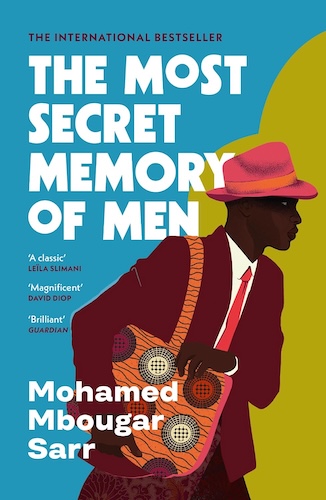
A forgotten masterpiece. A disgraced writer. A mystery that spans continents and generations. In Paris in 2018, young Senegalese novelist Diégane Latyr Faye discovers a legendary 1938 novel by T.C. Elimane, an African writer once celebrated as the “Black Rimbaud” before a plagiarism scandal destroyed his reputation and drove him into obscurity. Fascinated, Diégane sets out to uncover the truth about Elimane’s disappearance, following a trail from Senegal to France and Argentina. His search leads him into the darker corners of literary history, where colonialism, cultural prejudice, and the politics of recognition determine whose voices are remembered and whose are erased. Blending literary mystery with historical investigation, Mohamed Mbougar Sarr’s acclaimed novel is both a meditation on the power of storytelling and a passionate tribute to literature’s ability to transcend borders. Winner of France’s prestigious Prix Goncourt, it asks who gets to define literary greatness—and what it costs to pursue it.
2021
2
Pure Men
Pure Men
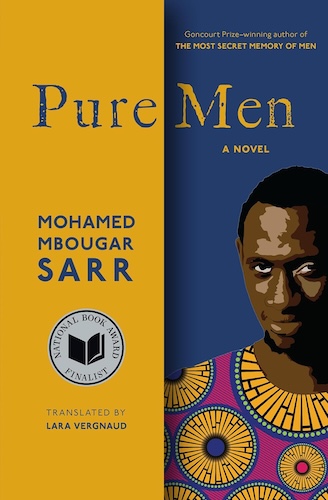
A viral video captures an enraged crowd in Dakar digging up a dead man’s grave to punish him for being gay. Disturbed by the footage, Ndéné, a French literature professor, begins investigating the life of the man labelled a góor-jigéen—a term used in Senegal for men who defy conventional expectations of masculinity. His search takes him into a hidden world of queer lives, where he encounters both persecution and extraordinary resilience. Although Ndéné initially shares many of the prejudices surrounding him, the people he meets force him to question his own beliefs, identity, and place in society. Set against the tensions between religious conservatism, social conformity, and individual freedom, this provocative novel examines the human cost of intolerance and asks what it truly means to be a man.
2026
3
At Night All Blood is Black
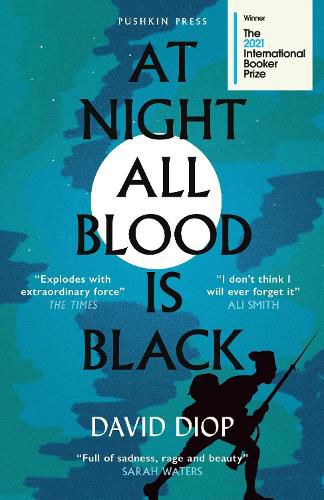
During the First World War, Alfa Ndiaye, a young Senegalese soldier fighting for the French army, watches his childhood friend and fellow soldier, Mademba, suffer a horrific battlefield injury. Mademba repeatedly begs Alfa to end his suffering, but Alfa cannot bring himself to deliver the fatal blow. Haunted by guilt and the memory of his friend’s agony, Alfa begins a terrifying transformation. Night after night, he ventures into enemy territory, killing German soldiers in increasingly brutal ways and returning to camp with their severed hands. His fellow soldiers grow frightened of him, whispering that he has become something beyond human. As Alfa’s violence intensifies, the boundaries between courage and madness, revenge and remorse, begin to dissolve. Through his increasingly fragmented narration, Diop exposes the psychological devastation of war and the dehumanising legacy of colonialism. Drawing on Senegal’s history of supplying soldiers to the French army, this haunting novel challenges conventional narratives of heroism and examines the terrible cost of turning human beings into instruments of violence. It won the 2021 International Booker Prize, shared by Diop and translator Anna Moschovakis.
2020

Famous authors from Senegal

About Senegal

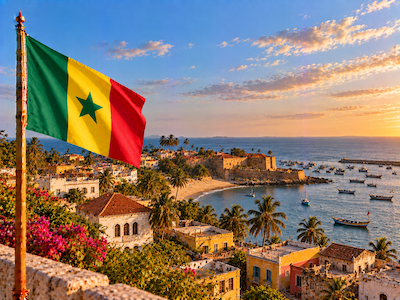
Senegal is a country on the westernmost edge of mainland Africa, bordered by the Atlantic Ocean and stretching inland across the Sahel. Its landscapes include golden beaches, mangrove forests, savannas, fertile river valleys, and semi-arid plains. Dakar, the capital, is a vibrant cultural center known for its music, art, and lively literary scene, while the historic island of Gorée preserves important traces of the Atlantic slave trade. Senegalese culture reflects the traditions of Wolof, Serer, Pulaar, Jola, Mandinka, and other communities, with Islam, oral heritage, music, and hospitality playing significant roles in everyday life.

Region
Africa
Literary Context

Senegalese literature is deeply rooted in oral storytelling, proverbs, praise poetry, epic narratives, and the griot tradition. Griots have historically served as storytellers, musicians, historians, and guardians of community memory, passing knowledge and genealogies between generations. These traditions continue to influence contemporary writing, alongside the country’s French-language literary heritage and literature in Indigenous languages such as Wolof. Senegal became a major center of modern African literature through Léopold Sédar Senghor, poet, politician, and leading figure of the Négritude movement, which celebrated Black identity and African cultural heritage. Ousmane Sembène, often regarded as a pioneer of African cinema and literature, explored colonialism, class, and social inequality in works such as God’s Bits of Wood. Other important writers include Mariama Bâ, whose novel So Long a Letter examines women’s lives and social expectations; Cheikh Hamidou Kane, author of Ambiguous Adventure; and Fatou Diome, whose writing explores migration and belonging. Senegalese literature frequently examines colonialism, cultural identity, religion, gender, social change, migration, and the relationship between tradition and modernity.
Africa