Solomon Islands
Oceania
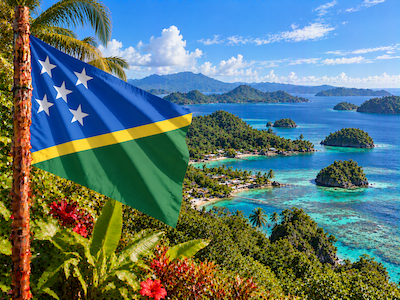
The Solomon Islands is an archipelago in the southwestern Pacific, comprising hundreds of islands with volcanic mountains, dense rainforests, coral reefs, and sheltered lagoons. Its capital, Honiara, is located on Guadalcanal, an island known for its role in World War II. The country is home to diverse Melanesian communities, each with distinct languages and traditions. Community life, customary practices, canoe building, and a close relationship with the ocean remain central to Solomon Islands culture.
Solomon Islands literature is deeply rooted in oral traditions, including legends, chants, myths, and ancestral stories passed down through generations. Modern writing often explores colonial history, cultural identity, land ownership, and the effects of conflict and environmental change. John Saunana, one of the country’s pioneering novelists, wrote The Alternative, a novel examining colonialism, political power, and the tensions surrounding independence. Contemporary Solomon Islands voices also contribute to wider Pacific literature through poetry, storytelling, and reflections on island life and cultural continuity.