Books from Russia
Suggest a book
All genres
Historical Fiction
Literary Fiction
Fantasy
Romance
Horror
Thriller
Non-Fiction
Mystery
Memoir
Classics
History
Sci-Fi
Contemporary Fiction
Science Fiction
Fiction
Poetry
Essays
Family Saga
Magical Realism
Family Drama
Dark Academia
Psychological Fiction
Dark Comedy
Political Writing
Feminist Fiction
Satire
Campus Fiction
Cultural Studies
Biography
Philosophy
Comedy
Drama
Young Adult
Gothic
Dystopia
Crime
Children's Books
Short Stories
Mythology
Cozy
Retellings
Humour
Adventure
All themes
Love & Passion
Adventure & Journey
Identity & Belonging
War & Conflict
Freedom & Resistance
Family & Heritage
Nature & Landscape
Society & Class
Spirituality & Faith
Solitude & Exile
Coming of Age
Revolution & Change
Friendship
History
Immigration
Myths and Retellings
Colonialism
Women & Society
Mental Health
Motherhood
1
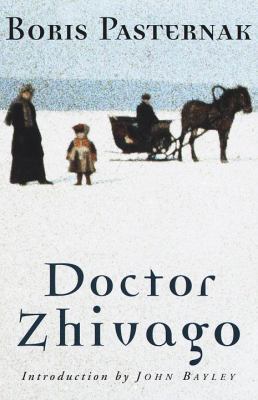
Doctor Zhivago
Doctor Zhivago follows Yuri Zhivago, a physician and poet whose life is transformed by the Russian Revolution and the civil war that follows. As political upheaval destroys established institutions and divides communities, Yuri struggles to reconcile his personal beliefs with the demands of the new order. His marriage to Tonya and his passionate relationship with Lara become entangled with the violence and uncertainty of the era. Forced to move between cities and rural settlements, Yuri witnesses the suffering of ordinary people caught between competing political forces. Pasternak explores the relationship between individual conscience and historical events, examining how love, art, and personal freedom endure under oppressive circumstances. The novel portrays a society in which private lives are repeatedly disrupted by ideological conflict, while poetry becomes a means of preserving human dignity amid destruction.
1957
2
The Mountain and the Wall
In The Mountain and the Wall, Shamil, a young journalist in Dagestan’s capital, Makhachkala, hears rumours that the Russian government intends to build a wall separating the Muslim regions of the North Caucasus from the rest of the country. As anxiety and unrest spread, Shamil finds himself confronting the political and religious divisions shaping his community. What begins as distant speculation gradually becomes an urgent personal and social crisis, forcing him to reconsider his own passivity. Ganieva portrays a region caught between competing ideologies, traditional beliefs, and the pressures of modern political life. Through Shamil’s experiences, the novel explores how intolerance and extremism can fracture communities and how ordinary people respond when the society around them begins to unravel.
2012
3
Bride and Groom
Set in contemporary Dagestan, Bride and Groom follows two young people whose prospects for marriage become entangled with the expectations of their families and community. Against a backdrop of religious conservatism, social pressure, and political uncertainty, the characters struggle to reconcile their personal desires with the traditions that govern their lives. Marriage becomes more than a private romantic decision: it is also a negotiation involving family honour, social status, and competing ideas about modernity and cultural identity. Ganieva offers an intimate portrait of a society undergoing profound change, where old customs and new aspirations coexist uneasily. With humour and sharp observation, the novel reveals how difficult it can be to make independent choices when the community claims a powerful stake in individual lives.
2015
4
Offended Sensibilities
Offended Sensibilities is a darkly comic, neo-noir novel set in a provincial Russian town where a series of sudden deaths among local officials exposes a deeply dysfunctional system. The investigation unfolds against the backdrop of legislation criminalising forms of expression deemed offensive to religious believers. As the characters navigate corruption, political manoeuvring, religious nationalism, and personal hypocrisy, the line between justice and absurdity becomes increasingly blurred. Ganieva uses the mystery to examine a society in which public morality can become a tool of political control and where almost everyone has something to hide. Combining elements of crime fiction and political satire, the novel offers a sharp critique of contemporary Russian institutions and the contradictions between official values and private behaviour.
2021
5
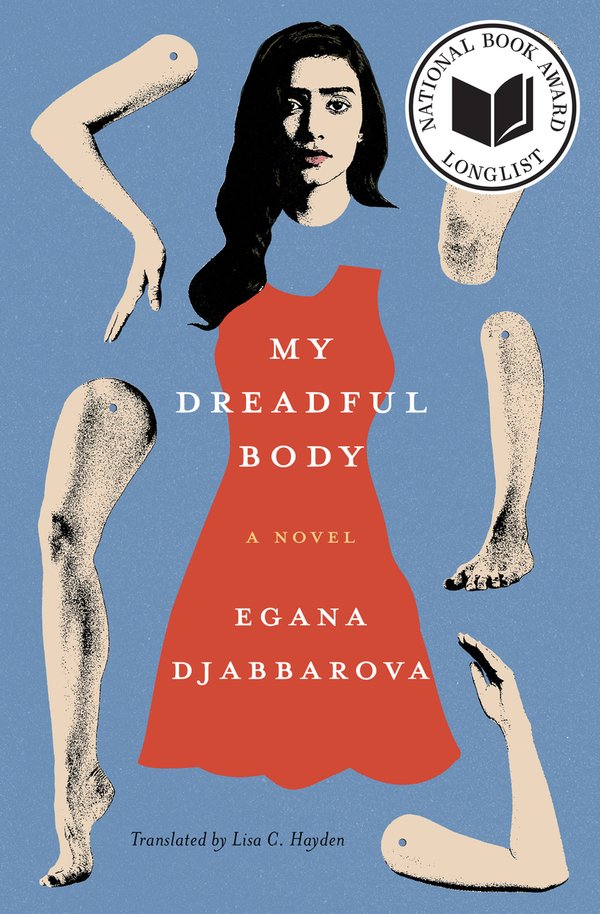
My Dreadful Body
In My Dreadful Body, Egana Djabbarova explores what it means to grow up as a woman in a traditional Azerbaijani family in Russia, where a woman’s body is shaped by cultural expectations, religious beliefs, and the prospect of marriage. As the narrator develops a mysterious neurological condition that causes pain, involuntary movements, and speech difficulties, her body becomes both a source of suffering and a lens through which she examines her identity.
Organised into chapters devoted to different body parts, the novel weaves together intimate memories, family traditions, and reflections on gender, illness, and belonging. The narrator confronts the rules imposed on women across generations, as well as the cultural tensions of living between Azerbaijani and Russian identities. Lyrical and deeply personal, this debut novel explores how physical vulnerability can challenge social expectations and open a path towards self-determination.
2023