Serbia
Europe
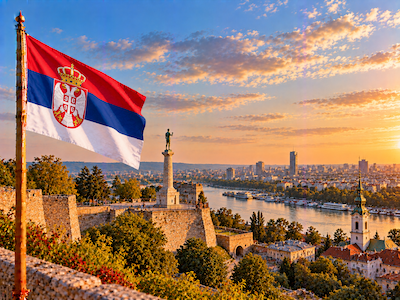
Serbia is a landlocked country in southeastern Europe, located in the heart of the Balkans. Its landscape includes fertile river plains, rolling hills, forested mountains, and dramatic gorges, with the Danube and Sava rivers shaping much of its geography. Serbian identity is shaped by Slavic heritage, Orthodox Christianity, folk traditions, music, and a rich historical memory.
Serbian literature has deep roots in medieval religious writing, epic poetry, folk songs, legends, and oral storytelling. Medieval monasteries preserved important manuscripts, while oral epics kept alive stories of heroes, battles, and historical events. These traditions were especially important during periods when cultural identity was maintained through songs and stories passed between generations. Modern Serbian literature flourished in the 18th and 19th centuries as writers developed a modern literary language and collected traditional folklore. Vuk Karadžić played a central role in reforming the Serbian language and documenting oral literature, while Dositej Obradović helped introduce Enlightenment ideas. Major literary figures include Ivo Andrić, Nobel Prize winner known for The Bridge on the Drina; Miloš Crnjanski, whose writing explores exile and identity; Danilo Kiš, celebrated for his complex reflections on memory and history; and Milena Marković, a contemporary poet and playwright. Serbian literature frequently explores history, war, identity, migration, family, political change, and the relationship between personal memory and collective experience, connecting local stories with broader Balkan and European themes.