Portugal

Europe
Portugal
3
books
2
authors

Books from Portugal

1
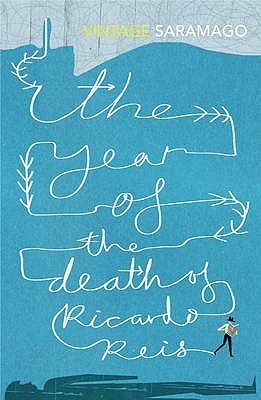
The Year of the Death of Ricardo Reis
Set in Lisbon in 1936, The Year of the Death of Ricardo Reis follows Ricardo Reis, a doctor and poet who returns to Portugal after sixteen years in Brazil, having learned of the death of the poet Fernando Pessoa. Reis is one of Pessoa’s fictional literary alter egos, brought to life by Saramago as a character who must navigate a world increasingly shaped by political turmoil. Staying in a Lisbon hotel, Reis spends his days wandering the city, reading newspapers, writing poetry, and becoming involved with two women: Lídia, a hotel maid, and Marcenda, a young woman with a paralysed left hand. He is also visited by the ghost of Pessoa, with whom he discusses literature, life, and death. Beyond Reis’s private existence, Portugal is living under António de Oliveira Salazar’s authoritarian regime, while fascism is spreading across Europe and the Spanish Civil War is approaching. Through Reis’s detached observations, Saramago examines the tension between individual contemplation and historical responsibility. Blending philosophical reflection, political commentary, and the uncanny, the novel explores mortality, isolation, and the difficulty of remaining a passive observer in a world marked by injustice.
1984
2
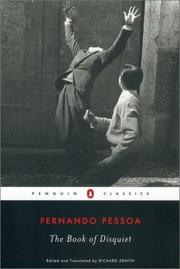
The Book of Disquiet
The Book of Disquiet is a fragmentary, deeply introspective work attributed to Bernardo Soares, an assistant bookkeeper living a quiet, unremarkable life in Lisbon. Through a series of diary-like reflections, philosophical meditations, and poetic observations, Soares examines his inner world, revealing a profound sense of alienation from society and an ongoing struggle to understand his own existence. Ordinary experiences, from walking through Lisbon’s streets to sitting at his desk, become starting points for reflections on dreams, identity, time, and the distance between the self and the world. Rather than following a conventional narrative, Fernando Pessoa’s work unfolds as an intimate record of consciousness, capturing the contradictions and uncertainties of being human. The narrator finds both refuge and imprisonment in his imagination, often preferring the richness of dreams to the demands of reality. Blurring the boundaries between autobiography, fiction, and philosophy, The Book of Disquiet is a haunting meditation on loneliness, the fragmented nature of identity, and the quiet beauty of an uneventful life. Note: Although Pessoa began writing the fragments decades earlier, the book was first published posthumously in Portuguese in 1982.
1982
3
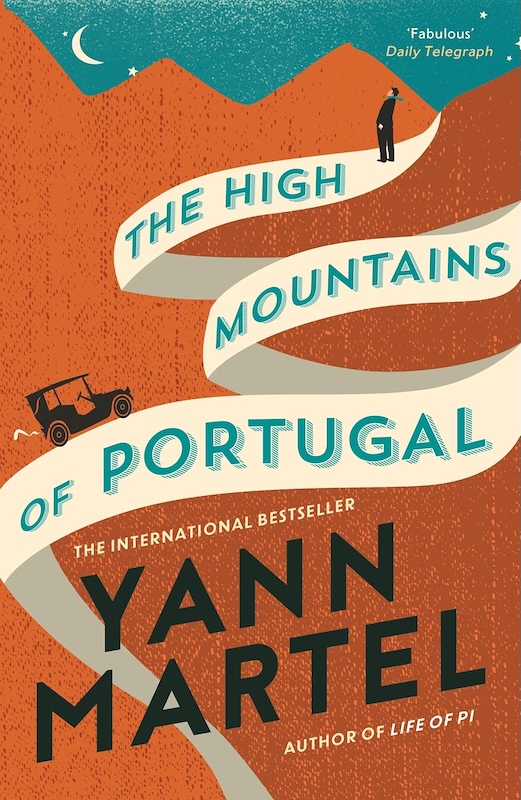
The High Mountains of Portugal
The High Mountains of Portugal weaves together three interconnected stories spanning nearly a century, exploring grief, faith, and the mysteries of human existence. In 1904, a young Portuguese archivist named Tomás discovers an ancient religious artifact and embarks on a journey through the countryside in search of its meaning. Thirty-five years later, a Portuguese pathologist confronts a personal tragedy that challenges his understanding of love and belief. In the final story, a Canadian senator living in contemporary Portugal finds himself drawn into an unexpected relationship with a chimpanzee, prompting him to reconsider the boundaries between humans and animals. Through these unusual narratives, Yann Martel explores the ways people respond to loss and search for meaning in a world that resists easy explanations. Blending philosophical reflection, historical fiction, and elements of the surreal, the novel examines faith, mortality, love, and humanity’s connection to the natural world.
2016

Famous authors from Portugal

About Portugal

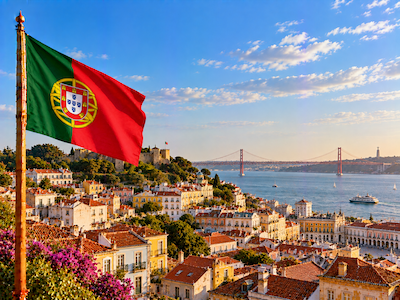
Portugal is a country in southwestern Europe, situated on the Iberian Peninsula along the Atlantic Ocean. Its landscapes include dramatic coastal cliffs, golden beaches, rolling vineyards, olive groves, and green mountain ranges. Lisbon, the capital, is known for its tiled façades, historic neighborhoods, and views over the Tagus River, while Porto is celebrated for its riverside architecture and wine heritage. Portugal’s cultural identity has been shaped by centuries of maritime exploration, Mediterranean traditions, and connections with Africa, Asia, and South America.

Region
Europe
Literary Context

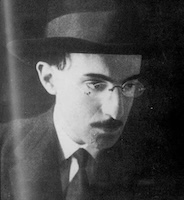
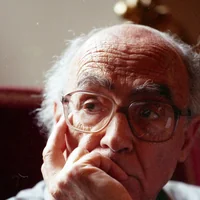
Portuguese literature has a rich heritage of medieval poetry, folk traditions, epic narratives, and maritime storytelling. During the Renaissance, Portugal’s age of exploration inspired literature celebrating voyages, discovery, and national identity. The country’s most celebrated literary work is Luís de Camões’s The Lusiads, an epic poem recounting Portuguese voyages and the journey of Vasco da Gama to India. Portuguese literature later developed through Romanticism, realism, modernism, and contemporary experimentation. Fernando Pessoa, one of the most influential poets of the 20th century, is known for writing through multiple literary identities, or heteronyms. Other major writers include José Saramago, Nobel Prize winner and author of Blindness; Eça de Queirós, celebrated for his social realism; and Sophia de Mello Breyner Andresen, whose poetry draws on classical mythology, nature, and moral reflection. Contemporary Portuguese literature frequently explores identity, memory, social class, political change, migration, and the legacy of empire. The wider Portuguese-language literary world also connects Portugal with writers from Brazil, Angola, Mozambique, and other Lusophone countries.
Europe