Books from Palestine
Suggest a book
All genres
Historical Fiction
Literary Fiction
Fantasy
Romance
Horror
Thriller
Non-Fiction
Mystery
Memoir
Classics
History
Sci-Fi
Contemporary Fiction
Science Fiction
Fiction
Poetry
Essays
Family Saga
Magical Realism
Family Drama
Dark Academia
Psychological Fiction
Dark Comedy
Political Writing
Feminist Fiction
Satire
Campus Fiction
Cultural Studies
Biography
Philosophy
Comedy
Drama
Young Adult
Gothic
Dystopia
Crime
Children's Books
Short Stories
Mythology
Cozy
Retellings
Humour
Adventure
All themes
Love & Passion
Adventure & Journey
Identity & Belonging
War & Conflict
Freedom & Resistance
Family & Heritage
Nature & Landscape
Society & Class
Spirituality & Faith
Solitude & Exile
Coming of Age
Revolution & Change
Friendship
History
Immigration
Myths and Retellings
Colonialism
Women & Society
Mental Health
Motherhood
1
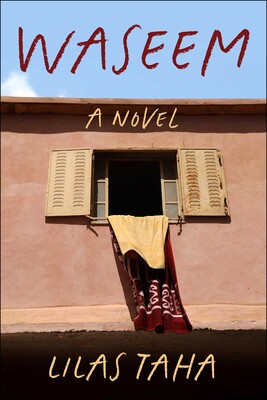
Waseem
What does it mean to call a place home when the land you long for has always been out of reach?
In a crowded Palestinian refugee camp in Lebanon, Waseem lives with a disability that leaves him largely unable to speak or walk. Much of his world unfolds through a small window, until Ameena, his spirited childhood friend, brings books into his life. Their friendship grows into a deep bond shaped by shared dreams, unspoken affection, and a longing to visit their ancestral homeland, Palestine.
As the years pass, Waseem must confront the limits imposed on him by his body, his circumstances, and a world that often underestimates him. Yet his story is not defined by hardship alone. Humour, tenderness, and an enduring hunger for knowledge illuminate the everyday lives of people whose hopes extend far beyond the confines of the camp.
With warmth and emotional depth, Lilas Taha explores love, disability, exile, and the search for belonging. Waseem is a moving portrait of a young man determined to claim his own future while holding on to the homeland he has never known.
2025
2
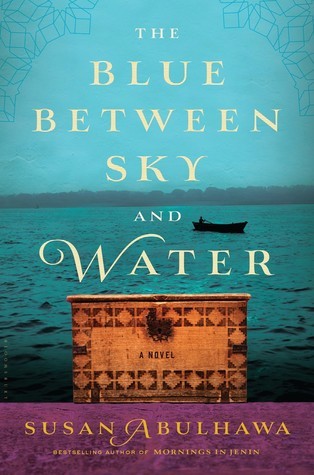
The Blue Between Sky and Water
In 1947, the Baraka family lives in Beit Daras, a Palestinian village surrounded by olive groves and fertile farmland. When their home is destroyed and the family is forced to flee during the Nakba, siblings Nazmiyeh and Mamdouh embark on separate journeys that will shape the lives of generations to come. In Gaza, Nazmiyeh struggles to rebuild her life in a refugee community, preserving her family’s traditions and nurturing the people around her despite repeated hardships. Meanwhile, Mamdouh eventually settles in the United States, where his granddaughter Nur grows up far from her ancestral homeland, struggling with loneliness and a fractured sense of belonging. Decades later, Nur travels to Gaza, where she encounters Alwan and her son Khaled, whose mysterious condition connects their families in unexpected ways. Blending Palestinian history, magical realism, and the intimate stories of several generations, Susan Abulhawa’s novel explores displacement, inherited trauma, family bonds, and the enduring longing for home.
2015
3
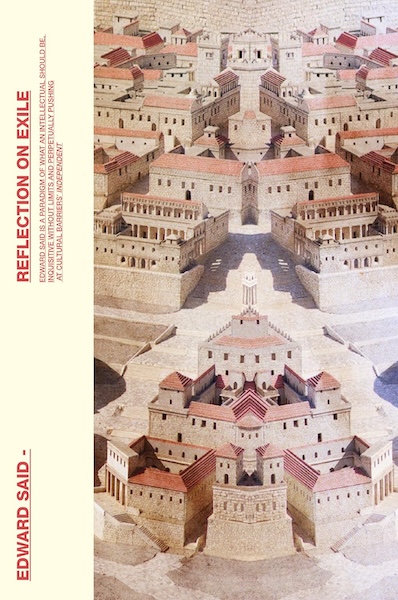
Reflections On Exile: And Other Literary And Cultural Essays
What does it mean to live between worlds—to belong to a place through memory while remaining separated from it by distance, politics, or history?
In Reflections on Exile, Edward W. Said brings together essays written over more than three decades, exploring literature, culture, politics, and the experience of displacement. The collection reflects his lifelong engagement with Palestinian identity and his own experience of exile, while examining how writers and artists respond to the societies that shape them.
Said moves between close readings of literary works and broader reflections on imperialism, cultural identity, and intellectual responsibility. He considers figures such as Joseph Conrad, George Orwell, and Naguib Mahfouz, revealing how art can illuminate the tensions between personal experience and historical forces.
At the heart of the collection is the idea that exile is more than physical separation: it can transform how people see home, belonging, and themselves. Both intellectually searching and deeply personal, the book explores the creative possibilities and emotional costs of living between cultures.
2000