Books from Palestine
Suggest a book
All genres
Historical Fiction
Literary Fiction
Fantasy
Romance
Horror
Thriller
Non-Fiction
Mystery
Memoir
Classics
History
Sci-Fi
Contemporary Fiction
Science Fiction
Fiction
Poetry
Essays
Family Saga
Magical Realism
Family Drama
Dark Academia
Psychological Fiction
Dark Comedy
Political Writing
Feminist Fiction
Satire
Campus Fiction
Cultural Studies
Biography
Philosophy
Comedy
Drama
Young Adult
Gothic
Dystopia
Crime
Children's Books
Short Stories
Mythology
Cozy
Retellings
Humour
Adventure
All themes
Love & Passion
Adventure & Journey
Identity & Belonging
War & Conflict
Freedom & Resistance
Family & Heritage
Nature & Landscape
Society & Class
Spirituality & Faith
Solitude & Exile
Coming of Age
Revolution & Change
Friendship
History
Immigration
Myths and Retellings
Colonialism
Women & Society
Mental Health
Motherhood
1
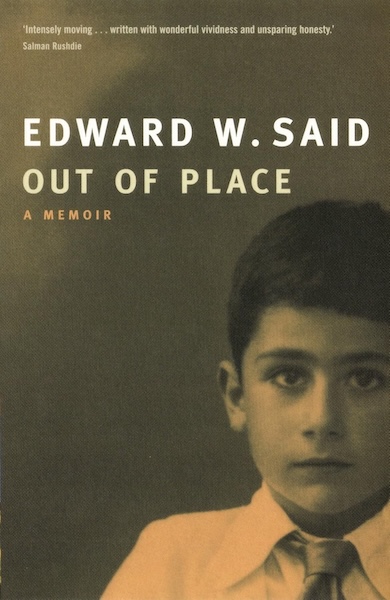
Out Of Place: A Memoir
What does it mean to belong when home is never quite one place?
In Out of Place, Edward W. Said recounts his childhood and early adulthood across Jerusalem, Cairo, and the United States. Born into a Palestinian family in 1935, he grew up moving between cultures, languages, and expectations, often feeling that he did not fully belong anywhere.
With candour and introspection, Said revisits his complicated relationships with his family, his education, and the competing identities that shaped him. His memories reveal the intimate experience behind his later work on exile, culture, and displacement, offering a personal perspective on the historical upheavals of the twentieth century.
More than a conventional autobiography, Out of Place is a meditation on memory and belonging—and on the enduring experience of living between worlds.
1999
2
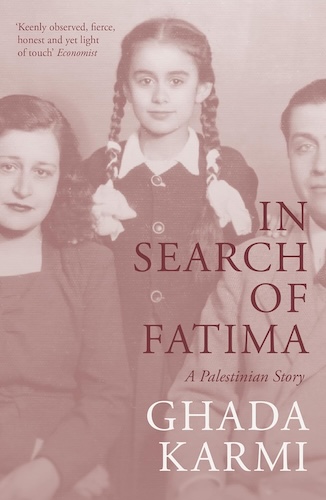
In Search of Fatima
What does it mean to lose your homeland—and spend the rest of your life searching for a place to belong? In this moving memoir, Ghada Karmi recounts her childhood in Jerusalem, her family’s forced displacement during the 1948 Nakba, and their eventual resettlement in England. Growing up between two worlds, she struggles with exile, cultural alienation, and the feeling of being a stranger in a country that is supposed to be home. As she reflects on her childhood and later returns to Palestine, Karmi explores the personal consequences of displacement alongside the political history that shaped her life. Both an intimate family story and a powerful account of Palestinian experience, this memoir examines how the loss of a homeland can shape identity across generations.
2002
3
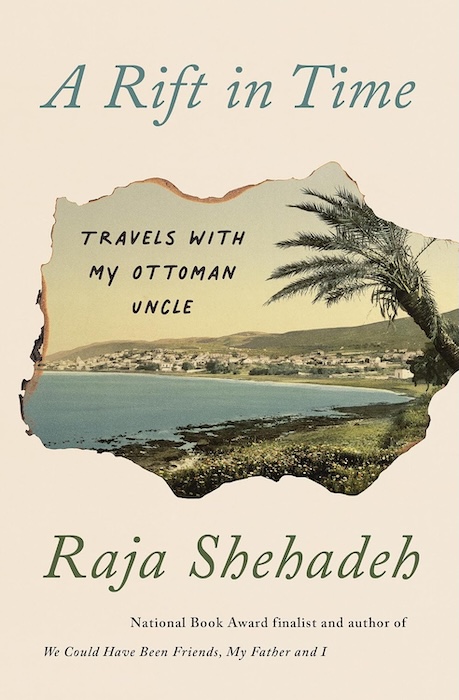
A Rift in Time: Travels with My Ottoman Uncle
In A Rift in Time: Travels with My Ottoman Uncle, Palestinian writer and human rights lawyer Raja Shehadeh explores the connections between family history, national identity, and the changing political landscape of the Middle East. Inspired by the life of his great-uncle Najib Nassar, a Palestinian journalist who lived during the final decades of the Ottoman Empire, Shehadeh traces the journey of a man who witnessed the collapse of an empire and the emergence of a new political order. Moving between historical research, personal reflection, and travel writing, the author examines how the experiences of earlier generations continue to shape contemporary Palestinian life. Through his uncle’s story, Shehadeh reflects on the meaning of belonging, the fragility of historical memory, and the ways political borders transform people’s relationships with their homeland. The book offers an intimate exploration of the past, revealing how an individual’s life can illuminate the wider forces that shape a nation’s history and collective identity.
2010
4
The Book of Disappearance
The Book of Disappearance imagines a startling alternative reality: one morning, all Palestinians living within Israel suddenly vanish without explanation. The disappearance transforms the country, leaving behind empty homes, abandoned workplaces, and a society forced to confront the absence of a population whose presence has shaped its history and everyday life. At the centre of the novel is Alaa, a Palestinian journalist living in Tel Aviv, whose Israeli friend Ariel discovers Alaa’s abandoned diary and begins reading it. Through their intertwined perspectives, the novel explores memory, displacement, belonging, and the political tensions surrounding Palestinian identity. As Ariel searches for meaning in the disappearance, Alaa’s diary reveals the intimate experiences and historical wounds that official narratives often overlook. Blending speculative fiction with social and political commentary, Ibtisam Azem challenges readers to imagine how history, identity, and power might look if those who have been marginalised were suddenly impossible to ignore.
2014
5
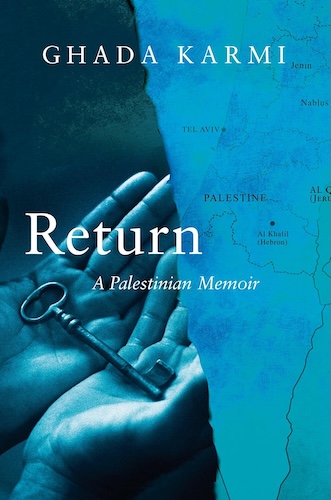
Return: A Palestinian Memoir
What happens when you finally return to the homeland you were forced to leave as a child—and discover that it no longer feels like home? More than fifty years after her family fled Jerusalem during the 1948 Nakba, Palestinian-British doctor and writer Ghada Karmi returns to Palestine, hoping to contribute to the struggle for peace and Palestinian statehood. Working with the Palestinian Authority in Ramallah, she encounters the realities of occupation, military restrictions, political bureaucracy, and a homeland transformed beyond recognition. As she revisits places connected to her childhood and confronts the loss of her family home, Karmi wrestles with a deeply personal question: can exile ever truly end? An intimate memoir of displacement and belonging, Return explores the painful distance between the homeland preserved in memory and the reality of returning to it.
2015
6
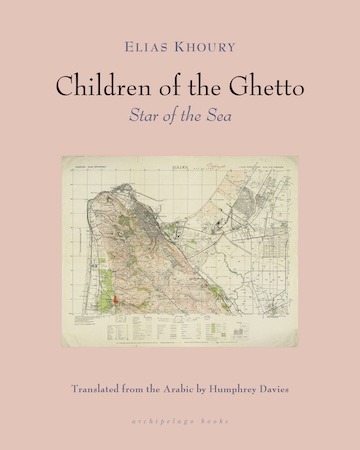
Children of the Ghetto: Star of the Sea
How many lives can one person inhabit before losing sight of who he really is? Adam Dannoun was an infant when the 1948 Nakba tore his family apart and destroyed his childhood home in Lydda, Palestine. Years later, after fleeing an oppressive stepfather, he arrives in Haifa determined to reinvent himself. He becomes Adam Danon, a young man with a fabricated past who claims to be Jewish and born in the Warsaw Ghetto. His new identity offers him a chance to escape his history, but it also traps him in a web of lies, particularly when he falls in love with the daughter of the man who has taken him in. As Adam moves between identities, Elias Khoury explores the devastating consequences of displacement and the impossibility of escaping collective memory. Both a deeply personal story and a sweeping reflection on Palestinian history, this novel asks whether reinvention can ever erase the wounds of the past.
2024
7
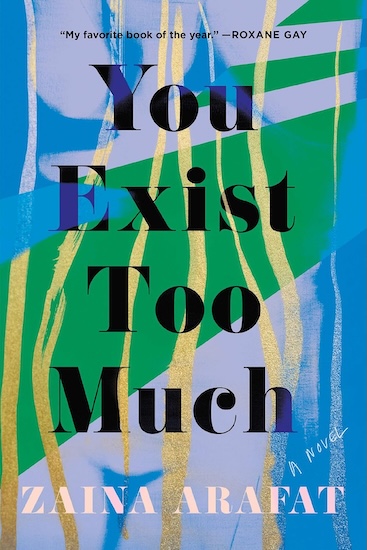
You Exist Too Much
Caught between her Palestinian heritage, her queer identity, and an overwhelming hunger for love, an unnamed young woman struggles to find somewhere she truly belongs. When a painful breakup sends her spiralling, she enters an unconventional treatment centre for what is described as love addiction. Through fragmented memories spanning Palestine, Jordan, Lebanon, and the United States, she confronts her complicated relationship with her mother, the shame surrounding her sexuality, and the emotional wounds shaping her destructive romantic patterns. Intimate, provocative, and darkly funny, this novel explores the fine line between desire and obsession—and the difficult journey toward accepting yourself when you feel you are always too much for the world.
2026
8
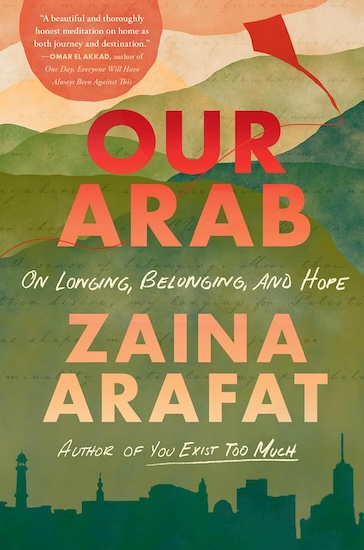
Our Arab
What does it mean to belong to a homeland you may never fully know? In this moving collection of essays, Palestinian-American writer Zaina Arafat explores the complexities of diaspora, inherited memory, and the longing for home. Moving between Nablus, Amman, the Appalachian Mountains, and Manhattan, she weaves together her family’s history, her experiences of identity and motherhood, and the pain of watching Palestine from afar. With tenderness, anger, and sharp insight, Arafat examines what it means to preserve a culture across generations while confronting displacement, erasure, and the shifting meaning of belonging. Our Arab is both an intimate family portrait and a powerful meditation on what it means to be Palestinian today.
2026
9
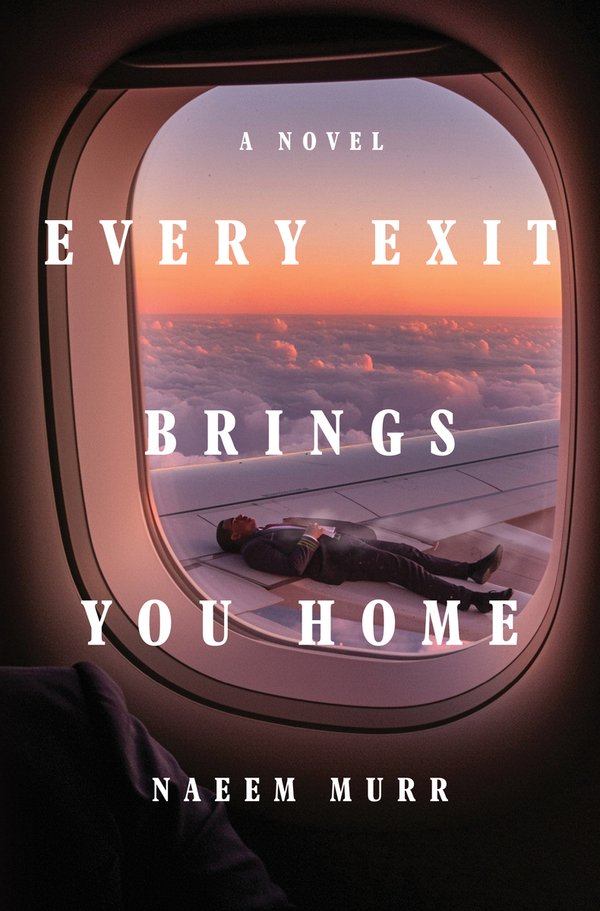
Every Exit Brings You Home
Jamal “Jack” Shaban has built a new life in Chicago, far from the violence that forced him to flee Gaza decades earlier. Now a flight attendant and the unofficial peacemaker of his condominium building, he spends his days resolving neighbours’ disputes while concealing the complicated truths of his own life. His traditional Muslim wife, Dimra, longs for a child, while Jack struggles with the secrets, desires, and regrets that threaten their marriage. When a troubled single mother moves into the building, new tensions awaken memories of a forbidden love affair in Gaza that changed the course of his life. As financial troubles engulf the community and the past resurfaces, Jack must confront the contradictions that define him: devoted husband and restless lover, generous neighbour and troubled survivor. Blending dark humour with heartbreaking reflections on war and displacement, Every Exit Brings You Home explores the meaning of home, the weight of exile, and the extraordinary ways people choose love despite the pain they carry.
2026
10
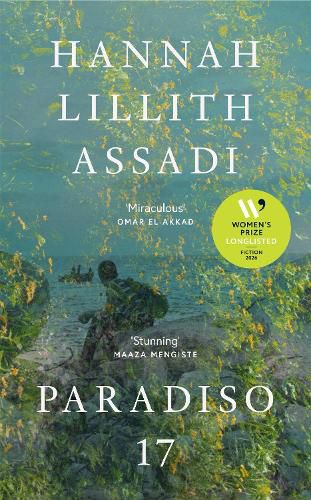
Paradiso 17
Born in Palestine on the eve of the 1948 Nakba, five-year-old Sufien is forced to leave his family’s ancestral home, beginning a lifelong journey shaped by displacement and the search for belonging. From a refugee camp in Syria to the oil-rich deserts of Kuwait, the university streets of Florence, and the crowded neighbourhoods of New York, Sufien moves between countries and cultures, repeatedly attempting to build a home somewhere new. Yet every place offers both the promise of reinvention and the painful reminder of what he has lost.
In Kuwait, he experiences first love and family estrangement. In Italy, he discovers intellectual freedom and the intoxicating possibilities of life beyond his upbringing. Later, in New York, he forms an unlikely friendship with a wealthy Jewish American man and falls in love with a Jewish woman, creating a family of his own. But even as he establishes roots in the United States, the past remains an enduring presence.
Recounted from his deathbed, Sufien’s story moves between memory and reflection, tracing the complicated relationship between exile, identity, and the desire to belong. Inspired by the life of Assadi’s Palestinian father, this lyrical novel explores how displacement reverberates across generations and asks whether home is a place we can recover, a community we create, or an idea we carry within ourselves.
2026
11
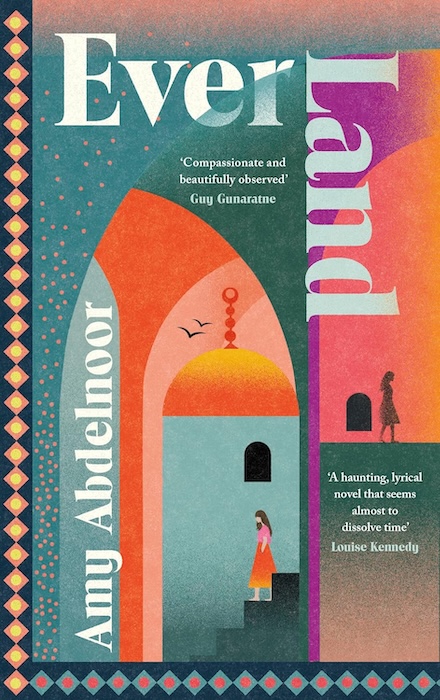
Ever Land
Set in Israel and Palestine in 2000, Ever Land follows two teenage girls whose lives become intertwined across time. Dinah, a Jewish teenager from London, moves to Israel with her family after the death of her beloved father. Struggling to adjust to her new surroundings, she feels increasingly disconnected from the life she has been forced to leave behind.
Meanwhile, Safa, a fourteen-year-old Palestinian girl killed during the Six-Day War in 1967, remains trapped in a mysterious limbo she calls the In-Between. Unable to move on without discovering what happened to her younger sister, Nur, Safa watches Dinah settle into the very house where she once lived. When an opportunity to find Nur emerges decades after Safa’s death, she realizes that Dinah may be the key to uncovering the truth.
Moving between past and present, Abdelnoor explores displacement, historical memory, belonging, and the human connections that cross political and cultural divisions. Through the contrasting experiences of two young women, the novel examines how history shapes identity and how confronting the past can open possibilities for understanding and compassion.
2026
12
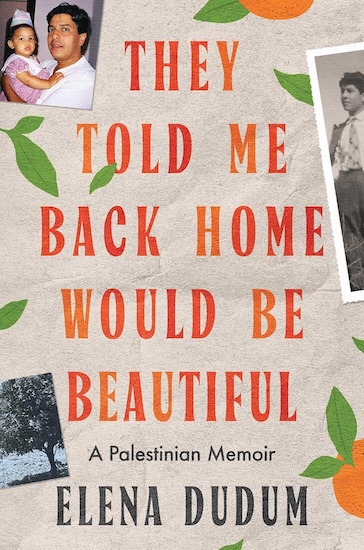
They Told Me Back Home Would Be Beautiful
Raised in a Palestinian Christian family in San Francisco, Elena Dudum grows up surrounded by her father’s stories of a homeland her grandparents were forced to leave. For years, she resists this inheritance, trying to fit into American life and escape the weight of a history she struggles to claim. But a visit to Palestine brings the realities of occupation, displacement, and her family’s past into sharp focus. Weaving together family memories, archival discoveries, and political reflection, this intimate memoir traces one woman’s journey from estrangement to belonging—and her determination to reclaim a heritage that cannot be erased.
2027