Books from Palestine
Suggest a book
All genres
Historical Fiction
Literary Fiction
Fantasy
Romance
Horror
Thriller
Non-Fiction
Mystery
Memoir
Classics
History
Sci-Fi
Contemporary Fiction
Science Fiction
Fiction
Poetry
Essays
Family Saga
Magical Realism
Family Drama
Dark Academia
Psychological Fiction
Dark Comedy
Political Writing
Feminist Fiction
Satire
Campus Fiction
Cultural Studies
Biography
Philosophy
Comedy
Drama
Young Adult
Gothic
Dystopia
Crime
Children's Books
Short Stories
Mythology
Cozy
Retellings
Humour
Adventure
All themes
Love & Passion
Adventure & Journey
Identity & Belonging
War & Conflict
Freedom & Resistance
Family & Heritage
Nature & Landscape
Society & Class
Spirituality & Faith
Solitude & Exile
Coming of Age
Revolution & Change
Friendship
History
Immigration
Myths and Retellings
Colonialism
Women & Society
Mental Health
Motherhood
1
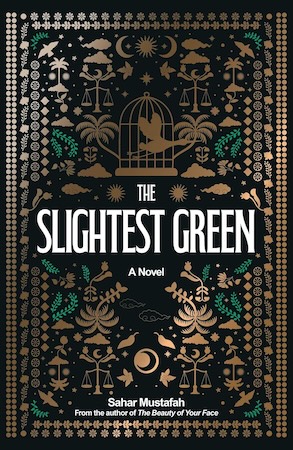
The Slightest Green
When Intisar Jaber receives news that her estranged father is dying, she leaves her life in Chicago behind and returns to Palestine, a land she barely remembers but has never entirely escaped. Her father, Hafez, abandoned her family decades earlier to join the resistance, only to spend the rest of his life imprisoned. Now, standing in her ancestral village, Intisar must confront the complicated legacy he left behind and the unfamiliar feeling of being a stranger in her own homeland. Meanwhile, her grandmother Sundus fights to protect the family home from those seeking to take it away. As the two women navigate grief, fractured family ties, and the enduring struggle to preserve their inheritance, Intisar faces a difficult choice between the life she has built in America and the history calling her back. The Slightest Green is a moving multigenerational novel about Palestinian identity, displacement, and the powerful connection between people and the land they call home.
2025
2
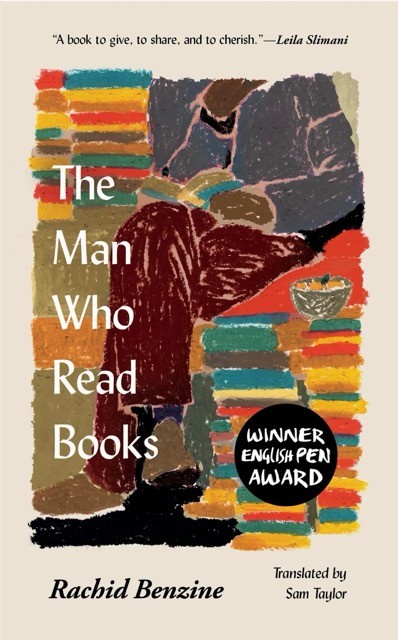
The Man Who Read Books
In a city where buildings are reduced to rubble, one bookseller refuses to let his world disappear.
During a ceasefire in Gaza, a young French photographer wanders through the city’s narrow streets and encounters Nabil Al Jaber, an elderly bookseller surrounded by stacks of ageing books. When the photographer raises his camera, Nabil asks him to do something unexpected: put it down long enough to hear his story.
What follows is a journey through decades of Palestinian history, from the displacement of Nabil’s family in 1948 to imprisonment, political disillusionment, love, and devastating personal loss. Each chapter of his life is illuminated by the books that helped him make sense of it, offering moments of refuge when the world beyond his shop seemed determined to destroy everything he held dear.
Through Nabil’s memories, literature becomes more than an escape from suffering. It is a way to preserve the past, protect one’s humanity, and resist being reduced to a photograph or a headline. Rachid Benzine’s moving novel explores the lives behind the images of war, asking what can survive when homes, communities, and loved ones are lost. In Nabil’s small, battered bookshop, stories become an act of defiance—and a reminder that even amid devastation, the human spirit continues to seek meaning.
2026
3
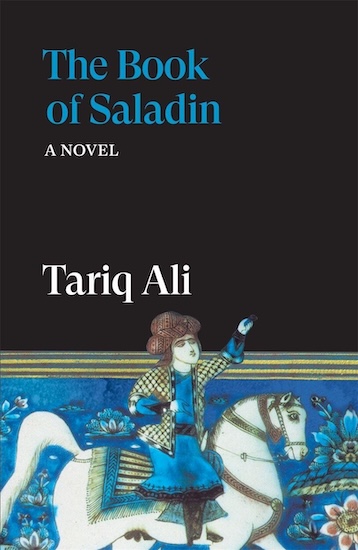
The Book of Saladin (The Islam Quintet)
Set in the twelfth century, The Book of Saladin reimagines the life of Salah al-Din, better known as Saladin, the Kurdish Muslim ruler who united Egypt and Syria and recaptured Jerusalem from the Crusaders in 1187.
The novel takes the form of Saladin’s fictional memoir, dictated to Ibn Yakub, a Jewish scribe tasked with recording the Sultan’s life and achievements. To create a fuller portrait of his subject, Ibn Yakub interviews Saladin’s wives, servants, and companions, revealing the private relationships and personal ambitions behind the public image of a celebrated military leader.
As Saladin rises to power and prepares to reclaim Jerusalem, the narrative explores the political rivalries, religious tensions, and fragile alliances that shape his world. Alongside military campaigns and diplomatic intrigue, the novel delves into the intimate lives of the royal household, including a passionate relationship between Saladin’s favoured wife, Jamila, and another woman in the harem, Halima.
Ali presents a complex portrait of medieval Muslim society, challenging simplified accounts of the Crusades and exploring the contradictions between political ideals and personal desires. Questions of faith, power, loyalty, sexuality, and cultural coexistence run throughout the story, connecting the struggles of the medieval world with conflicts that continue to resonate today.
2026
4
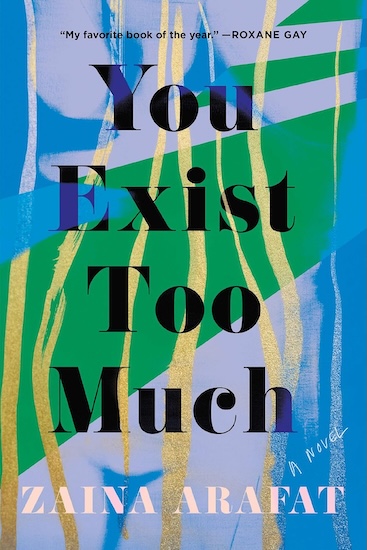
You Exist Too Much
Caught between her Palestinian heritage, her queer identity, and an overwhelming hunger for love, an unnamed young woman struggles to find somewhere she truly belongs. When a painful breakup sends her spiralling, she enters an unconventional treatment centre for what is described as love addiction. Through fragmented memories spanning Palestine, Jordan, Lebanon, and the United States, she confronts her complicated relationship with her mother, the shame surrounding her sexuality, and the emotional wounds shaping her destructive romantic patterns. Intimate, provocative, and darkly funny, this novel explores the fine line between desire and obsession—and the difficult journey toward accepting yourself when you feel you are always too much for the world.
2026
5
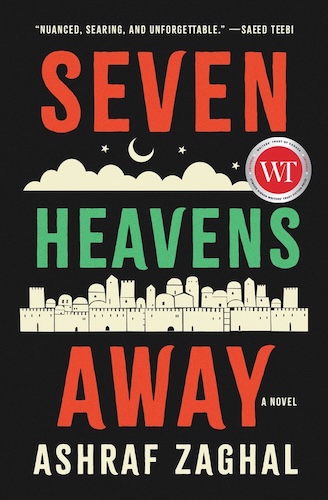
Seven Heavens Away
In Jerusalem, where everyday life unfolds under the shadow of escalating violence, fifteen-year-old Aziz faces a loss that will change everything. After his friend Hassan is killed, Aziz is pulled between grief, loyalty, and the growing political anger surrounding him. His feelings for Dafna, a Jewish girl he works with, further complicate his friendships and force him to question the divisions shaping his world. As his family searches for a way to protect his future, Aziz must confront a difficult choice: how to hold on to love, compassion, and hope when the world seems determined to take them away.
2026
6
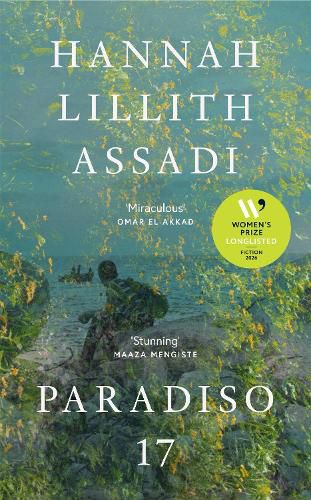
Paradiso 17
Born in Palestine on the eve of the 1948 Nakba, five-year-old Sufien is forced to leave his family’s ancestral home, beginning a lifelong journey shaped by displacement and the search for belonging. From a refugee camp in Syria to the oil-rich deserts of Kuwait, the university streets of Florence, and the crowded neighbourhoods of New York, Sufien moves between countries and cultures, repeatedly attempting to build a home somewhere new. Yet every place offers both the promise of reinvention and the painful reminder of what he has lost.
In Kuwait, he experiences first love and family estrangement. In Italy, he discovers intellectual freedom and the intoxicating possibilities of life beyond his upbringing. Later, in New York, he forms an unlikely friendship with a wealthy Jewish American man and falls in love with a Jewish woman, creating a family of his own. But even as he establishes roots in the United States, the past remains an enduring presence.
Recounted from his deathbed, Sufien’s story moves between memory and reflection, tracing the complicated relationship between exile, identity, and the desire to belong. Inspired by the life of Assadi’s Palestinian father, this lyrical novel explores how displacement reverberates across generations and asks whether home is a place we can recover, a community we create, or an idea we carry within ourselves.
2026
7
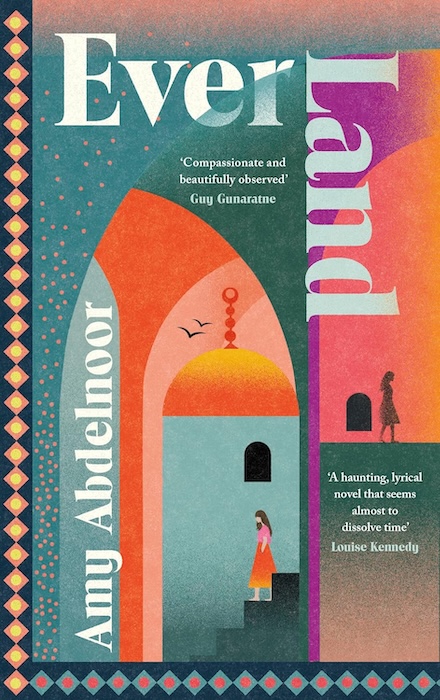
Ever Land
Set in Israel and Palestine in 2000, Ever Land follows two teenage girls whose lives become intertwined across time. Dinah, a Jewish teenager from London, moves to Israel with her family after the death of her beloved father. Struggling to adjust to her new surroundings, she feels increasingly disconnected from the life she has been forced to leave behind.
Meanwhile, Safa, a fourteen-year-old Palestinian girl killed during the Six-Day War in 1967, remains trapped in a mysterious limbo she calls the In-Between. Unable to move on without discovering what happened to her younger sister, Nur, Safa watches Dinah settle into the very house where she once lived. When an opportunity to find Nur emerges decades after Safa’s death, she realizes that Dinah may be the key to uncovering the truth.
Moving between past and present, Abdelnoor explores displacement, historical memory, belonging, and the human connections that cross political and cultural divisions. Through the contrasting experiences of two young women, the novel examines how history shapes identity and how confronting the past can open possibilities for understanding and compassion.
2026