Books from Palestine
Suggest a book
All genres
Historical Fiction
Literary Fiction
Fantasy
Romance
Horror
Thriller
Non-Fiction
Mystery
Memoir
Classics
History
Sci-Fi
Contemporary Fiction
Science Fiction
Fiction
Poetry
Essays
Family Saga
Magical Realism
Family Drama
Dark Academia
Psychological Fiction
Dark Comedy
Political Writing
Feminist Fiction
Satire
Campus Fiction
Cultural Studies
Biography
Philosophy
Comedy
Drama
Young Adult
Gothic
Dystopia
Crime
Children's Books
Short Stories
Mythology
Cozy
Retellings
Humour
Adventure
All themes
Love & Passion
Adventure & Journey
Identity & Belonging
War & Conflict
Freedom & Resistance
Family & Heritage
Nature & Landscape
Society & Class
Spirituality & Faith
Solitude & Exile
Coming of Age
Revolution & Change
Friendship
History
Immigration
Myths and Retellings
Colonialism
Women & Society
Mental Health
Motherhood
1
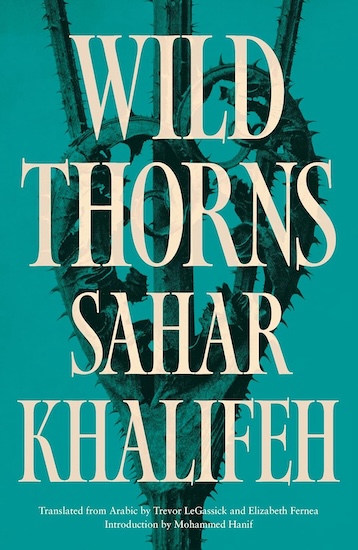
Wild Thorns
After five years working in the Gulf, Usama returns to the occupied West Bank determined to join the Palestinian resistance. He is shocked to discover that life in his hometown of Nablus has changed dramatically. Many Palestinians now work in Israel to support their families, navigating military checkpoints and economic dependence while enduring the daily humiliations of occupation. Frustrated by what he sees as resignation, Usama plans to sabotage buses transporting Palestinian workers into Israel. Yet his encounters with family members, former friends, and fellow Palestinians force him to confront the difficult choices people face between resistance and survival. Through a vivid portrait of ordinary lives under military occupation, Sahar Khalifeh explores political resistance, economic hardship, family loyalty, and the moral complexities of living under oppression. First published in Arabic in 1976, Wild Thorns is a landmark of Palestinian literature that examines the psychological and social consequences of occupation without reducing its characters to simple heroes or victims.
1976
2
The Book of Disappearance
The Book of Disappearance imagines a startling alternative reality: one morning, all Palestinians living within Israel suddenly vanish without explanation. The disappearance transforms the country, leaving behind empty homes, abandoned workplaces, and a society forced to confront the absence of a population whose presence has shaped its history and everyday life. At the centre of the novel is Alaa, a Palestinian journalist living in Tel Aviv, whose Israeli friend Ariel discovers Alaa’s abandoned diary and begins reading it. Through their intertwined perspectives, the novel explores memory, displacement, belonging, and the political tensions surrounding Palestinian identity. As Ariel searches for meaning in the disappearance, Alaa’s diary reveals the intimate experiences and historical wounds that official narratives often overlook. Blending speculative fiction with social and political commentary, Ibtisam Azem challenges readers to imagine how history, identity, and power might look if those who have been marginalised were suddenly impossible to ignore.
2014
3
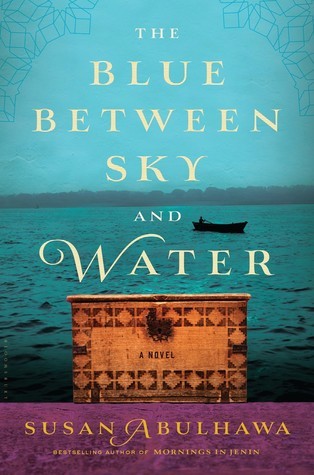
The Blue Between Sky and Water
In 1947, the Baraka family lives in Beit Daras, a Palestinian village surrounded by olive groves and fertile farmland. When their home is destroyed and the family is forced to flee during the Nakba, siblings Nazmiyeh and Mamdouh embark on separate journeys that will shape the lives of generations to come. In Gaza, Nazmiyeh struggles to rebuild her life in a refugee community, preserving her family’s traditions and nurturing the people around her despite repeated hardships. Meanwhile, Mamdouh eventually settles in the United States, where his granddaughter Nur grows up far from her ancestral homeland, struggling with loneliness and a fractured sense of belonging. Decades later, Nur travels to Gaza, where she encounters Alwan and her son Khaled, whose mysterious condition connects their families in unexpected ways. Blending Palestinian history, magical realism, and the intimate stories of several generations, Susan Abulhawa’s novel explores displacement, inherited trauma, family bonds, and the enduring longing for home.
2015
4
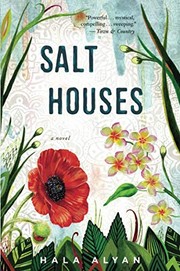
Salt Houses
Salt Houses follows several generations of the Palestinian Yacoub family as political upheaval repeatedly forces them to leave their homes and rebuild their lives elsewhere. Beginning in Nablus in the 1960s, the story traces the family’s experiences through the Six-Day War, the displacement caused by regional conflicts, and the subsequent lives of their descendants across the Middle East, Europe, and the United States. Each generation inherits a complicated relationship with Palestine, balancing memories of a lost homeland with the practical demands of creating a future in unfamiliar places. As family members develop different ideas about belonging, identity, and home, their relationships are shaped by both shared history and personal choices. Alyan explores the intergenerational effects of displacement, revealing how exile can become part of family identity even for those who have never experienced their ancestral homeland themselves.
2018
5
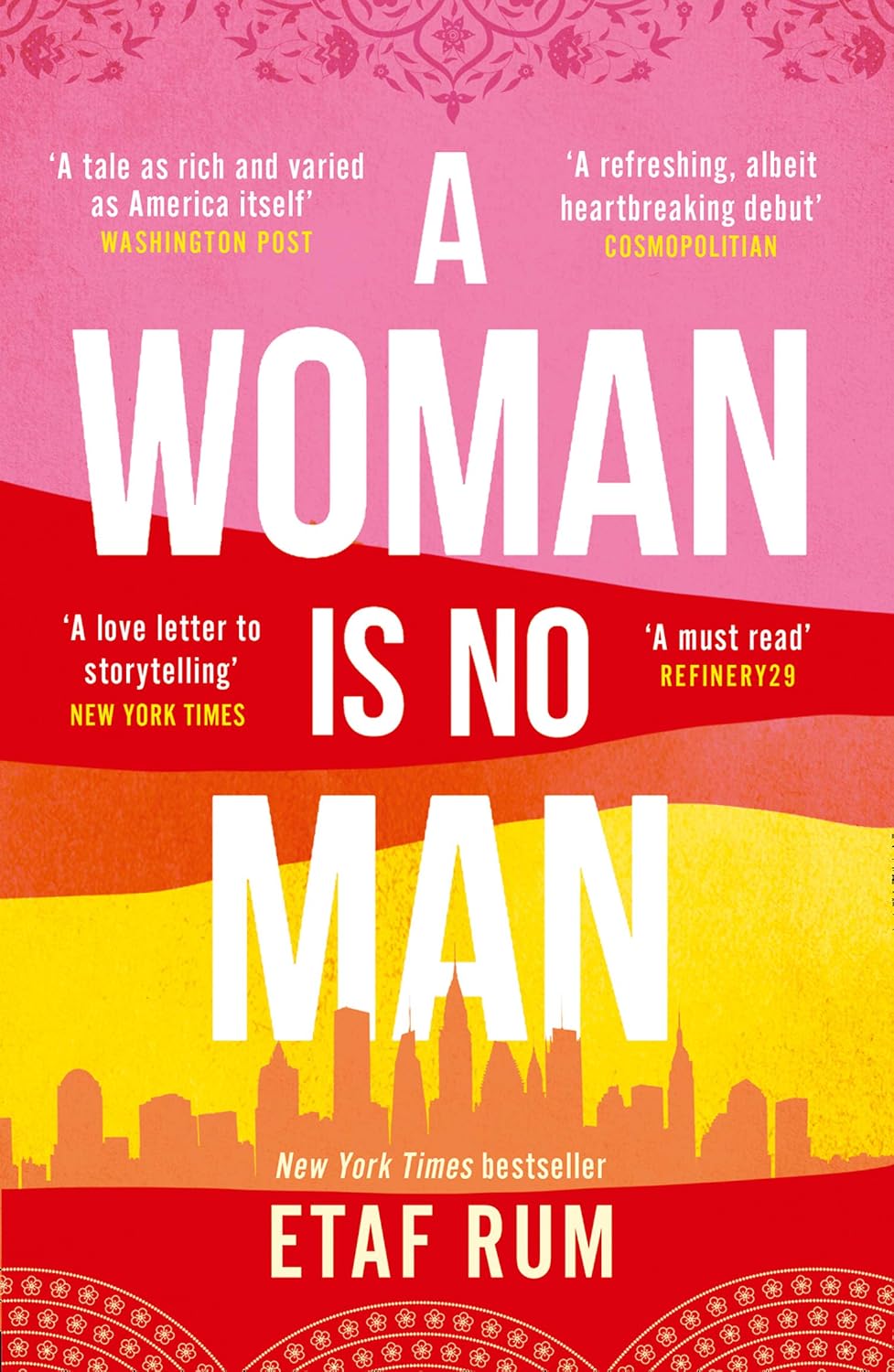
Woman Is No Man
A Woman Is No Man follows three generations of Palestinian women whose lives are shaped by family expectations, cultural traditions, and the struggle for independence. In 1990s Brooklyn, seventeen-year-old Isra marries Adam, a Palestinian American man, and leaves her home in Palestine to begin a new life in the United States. Instead of the freedom she hopes to find, she encounters strict expectations about marriage, motherhood, and obedience. Years later, her daughter Deya grows up under similar pressures, uncertain about her future and the secrets surrounding her mother’s life. As Deya begins to question the stories she has been told, hidden truths emerge that challenge her understanding of family and tradition. Rum explores intergenerational trauma, gender inequality, and the difficult choices women face when personal aspirations conflict with inherited expectations.
2019
6
Against the Loveless World
Against the Loveless World follows Nahr, a Palestinian woman whose life is shaped by displacement, political conflict, and the struggle for independence. Born in Kuwait to Palestinian refugee parents, she dreams of finding love, raising a family, and building a stable future. Instead, a series of betrayals and difficult circumstances leads her through different countries in the Middle East, where she encounters exploitation, prejudice, and political upheaval. As the story unfolds through memories narrated from solitary confinement, Nahr reveals the experiences that shaped her transformation from a vulnerable young woman into someone determined to resist the forces controlling her life. Abulhawa explores the intersection of personal freedom and political oppression, examining how gender, exile, and economic hardship influence women’s choices. The novel is a powerful portrait of survival and the determination to claim dignity in an unjust world.
2020
7

Minor Detail
Minor Detail by Palestinian writer Adania Shibli is a haunting novel that connects a crime committed in the Negev desert in 1949 with a contemporary woman’s search for the truth decades later. The first part recounts the abduction, rape, and murder of a young Bedouin woman by Israeli soldiers shortly after the 1948 war, presenting the events through a detached, almost clinical narrative that emphasizes the brutality of the act and the victim’s anonymity. In the second part, a Palestinian woman in Ramallah becomes obsessed with a seemingly minor detail: the exact date of the crime. Determined to investigate, she travels across checkpoints and restricted territories, confronting the physical and psychological barriers that shape life under occupation. Through spare prose and a carefully controlled structure, Shibli explores violence, historical erasure, memory, and the unequal power to tell stories. The novel asks how forgotten suffering can be recovered and what it means to seek truth in a landscape where history remains deeply contested.
2020
8
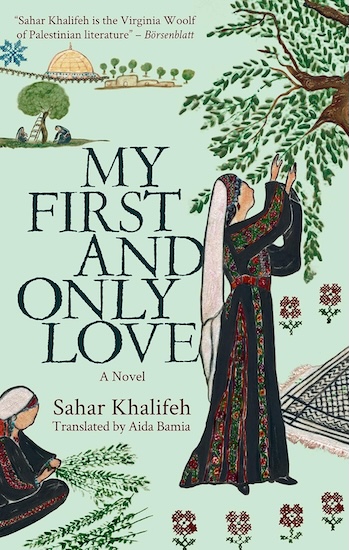
My First and Only Love
After decades of exile, Nidal returns to her family’s ancestral home in Nablus, hoping to restore the crumbling house and reconnect with the land she left behind. As she revisits the memories of her childhood, she recalls falling in love with Rabie, a young freedom fighter whose ideals embodied her hopes for Palestine’s future. Their love unfolds against the final years of the British Mandate, when political upheaval, resistance, and the struggle for national independence transform ordinary lives. Years later, when Nidal and Rabie meet again, he encourages her to read the memoirs of her uncle Amin, revealing long-buried family secrets and the hidden history of her absent mother. Through intertwined stories of love, loss, and resistance, Sahar Khalifeh explores how political conflict fractures families, separates lovers, and reshapes personal destinies. This sweeping novel is both an intimate portrait of a woman confronting her past and a meditation on the enduring connection between love, memory, and homeland.
2021
9
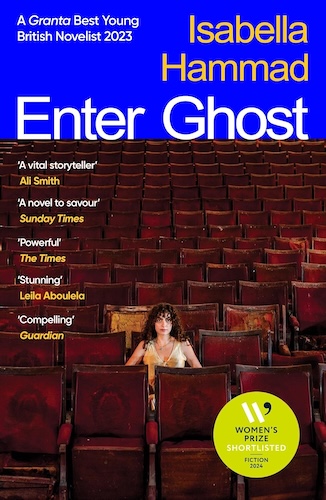
Enter Ghost
What does it mean to perform a tragedy when your own life is shaped by one? After a painful love affair, British-Palestinian actress Sonia Nasir returns to Haifa to visit her sister, reconnecting with a homeland she has long kept at a distance. There, she joins a daring theatrical production of Shakespeare’s Hamlet in the occupied West Bank, playing Gertrude alongside a company of Palestinian actors determined to bring the play to life despite political restrictions, personal rivalries, and the daily realities of occupation. As rehearsals progress, Sonia begins to reconsider her relationship with Palestine, her family, and her own identity. Weaving Shakespearean tragedy with contemporary Palestinian experience, Isabella Hammad’s powerful novel explores displacement, resistance, and the transformative potential of art when simply telling a story becomes an act of defiance.
2023
10
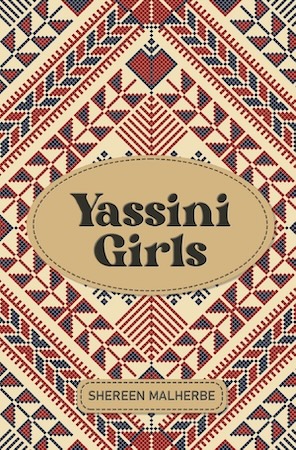
Yassini Girls
In the ancient streets of Jerusalem, Fatima receives an unexpected phone call that awakens memories she has spent years trying to bury. Thousands of miles away in the English countryside, Layla discovers a family heirloom hidden beneath her attic floor, setting her on a journey into the painful, long-silenced history of Palestine. As the two women’s stories begin to converge, family secrets reveal the enduring consequences of displacement and the fragile threads connecting generations to their homeland. Inspired by the author’s own discovery of her family’s history during a BBC documentary, Yassini Girls is a deeply personal novel about Palestinian identity, inherited trauma, and the power of storytelling to preserve what history threatens to erase. Through the traditions, memories, and resilience of Palestinian women, it explores how understanding the past can become an act of resistance and a way of safeguarding the future.
2024
11
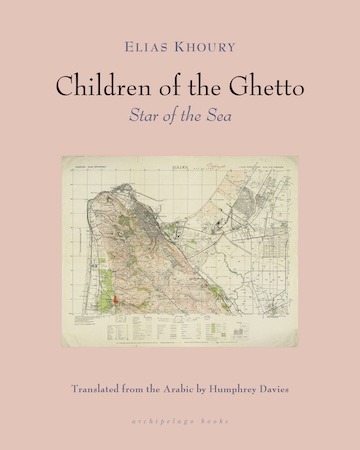
Children of the Ghetto: Star of the Sea
How many lives can one person inhabit before losing sight of who he really is? Adam Dannoun was an infant when the 1948 Nakba tore his family apart and destroyed his childhood home in Lydda, Palestine. Years later, after fleeing an oppressive stepfather, he arrives in Haifa determined to reinvent himself. He becomes Adam Danon, a young man with a fabricated past who claims to be Jewish and born in the Warsaw Ghetto. His new identity offers him a chance to escape his history, but it also traps him in a web of lies, particularly when he falls in love with the daughter of the man who has taken him in. As Adam moves between identities, Elias Khoury explores the devastating consequences of displacement and the impossibility of escaping collective memory. Both a deeply personal story and a sweeping reflection on Palestinian history, this novel asks whether reinvention can ever erase the wounds of the past.
2024
12
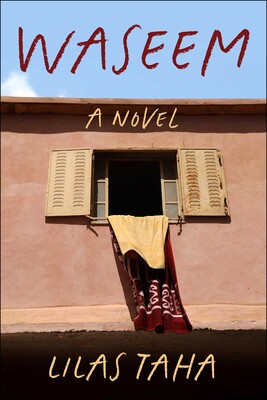
Waseem
What does it mean to call a place home when the land you long for has always been out of reach?
In a crowded Palestinian refugee camp in Lebanon, Waseem lives with a disability that leaves him largely unable to speak or walk. Much of his world unfolds through a small window, until Ameena, his spirited childhood friend, brings books into his life. Their friendship grows into a deep bond shaped by shared dreams, unspoken affection, and a longing to visit their ancestral homeland, Palestine.
As the years pass, Waseem must confront the limits imposed on him by his body, his circumstances, and a world that often underestimates him. Yet his story is not defined by hardship alone. Humour, tenderness, and an enduring hunger for knowledge illuminate the everyday lives of people whose hopes extend far beyond the confines of the camp.
With warmth and emotional depth, Lilas Taha explores love, disability, exile, and the search for belonging. Waseem is a moving portrait of a young man determined to claim his own future while holding on to the homeland he has never known.
2025