Books from Palestine
Suggest a book
All genres
Historical Fiction
Literary Fiction
Fantasy
Romance
Horror
Thriller
Non-Fiction
Mystery
Memoir
Classics
History
Sci-Fi
Contemporary Fiction
Science Fiction
Fiction
Poetry
Essays
Family Saga
Magical Realism
Family Drama
Dark Academia
Psychological Fiction
Dark Comedy
Political Writing
Feminist Fiction
Satire
Campus Fiction
Cultural Studies
Biography
Philosophy
Comedy
Drama
Young Adult
Gothic
Dystopia
Crime
Children's Books
Short Stories
Mythology
Cozy
Retellings
Humour
Adventure
All themes
Love & Passion
Adventure & Journey
Identity & Belonging
War & Conflict
Freedom & Resistance
Family & Heritage
Nature & Landscape
Society & Class
Spirituality & Faith
Solitude & Exile
Coming of Age
Revolution & Change
Friendship
History
Immigration
Myths and Retellings
Colonialism
Women & Society
Mental Health
Motherhood
1
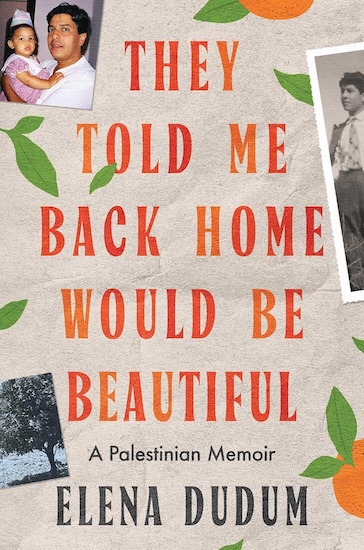
They Told Me Back Home Would Be Beautiful
Raised in a Palestinian Christian family in San Francisco, Elena Dudum grows up surrounded by her father’s stories of a homeland her grandparents were forced to leave. For years, she resists this inheritance, trying to fit into American life and escape the weight of a history she struggles to claim. But a visit to Palestine brings the realities of occupation, displacement, and her family’s past into sharp focus. Weaving together family memories, archival discoveries, and political reflection, this intimate memoir traces one woman’s journey from estrangement to belonging—and her determination to reclaim a heritage that cannot be erased.
2027
2
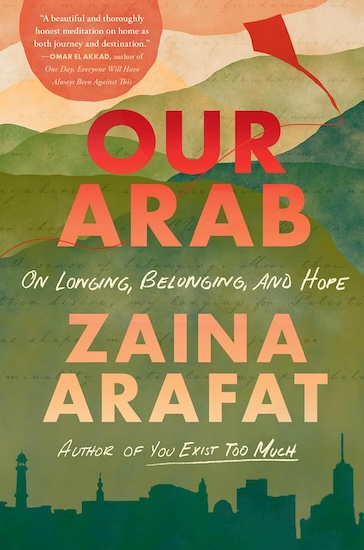
Our Arab
What does it mean to belong to a homeland you may never fully know? In this moving collection of essays, Palestinian-American writer Zaina Arafat explores the complexities of diaspora, inherited memory, and the longing for home. Moving between Nablus, Amman, the Appalachian Mountains, and Manhattan, she weaves together her family’s history, her experiences of identity and motherhood, and the pain of watching Palestine from afar. With tenderness, anger, and sharp insight, Arafat examines what it means to preserve a culture across generations while confronting displacement, erasure, and the shifting meaning of belonging. Our Arab is both an intimate family portrait and a powerful meditation on what it means to be Palestinian today.
2026
3
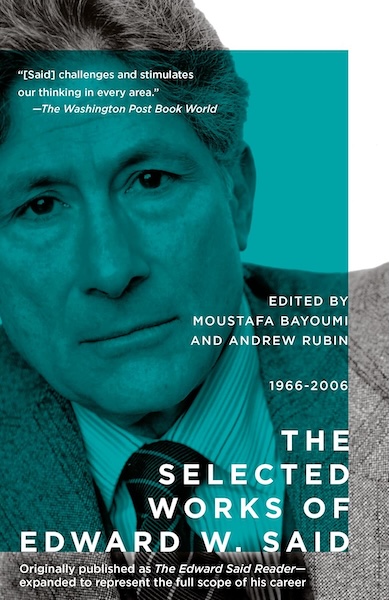
The Selected Works of Edward Said, 1966 - 2006
How do literature, culture, and politics shape the way we understand the world? And whose voices are missing from the stories history tells?
The Selected Works of Edward Said brings together key writings from four decades of one of the most influential intellectuals of the twentieth century. Edited by Moustafa Bayoumi and Andrew Rubin, this expanded collection traces Said’s thinking across subjects ranging from colonialism and Palestinian identity to literature, music, media, and the responsibilities of intellectuals.
Featuring selections from Orientalism, Culture and Imperialism, and Out of Place, alongside important essays and later writings, the collection offers an overview of Said’s evolving ideas about power, representation, and cultural identity.
Essential for understanding Said’s intellectual legacy, this volume reveals how cultural narratives influence political realities—and why questioning dominant perspectives remains vital.
2007
4
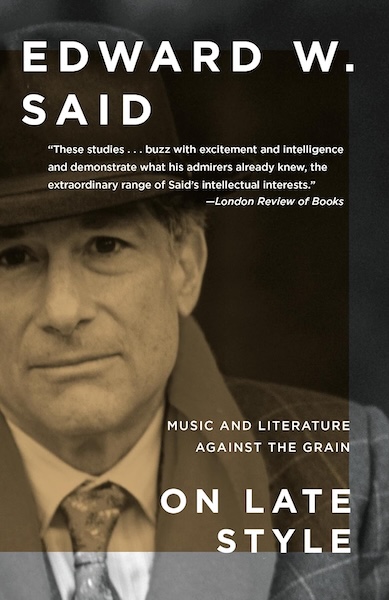
On Late Style: Music and Literature Against the Grain
What happens when great artists approach the end of their lives—and begin creating works that refuse to offer comfort, harmony, or easy answers?
In On Late Style, Edward W. Said explores the final works of celebrated composers, writers, and artists, including Beethoven, Mozart, Thomas Mann, and Jean Genet. He challenges the assumption that artistic maturity naturally leads to wisdom and reconciliation, arguing instead that some creators produce their most challenging work late in life, embracing contradiction, resistance, and unresolved tensions.
Drawing on music, literature, opera, and film, Said examines how artists confront their own mortality while remaining at odds with the cultural expectations of their time. The result is a compelling reflection on creativity, ageing, and the courage to resist conventional ideas of artistic perfection.
Published posthumously in 2006, this unfinished final work reflects Said’s own lifelong commitment to intellectual independence and the power of art to challenge established assumptions.
2006
5
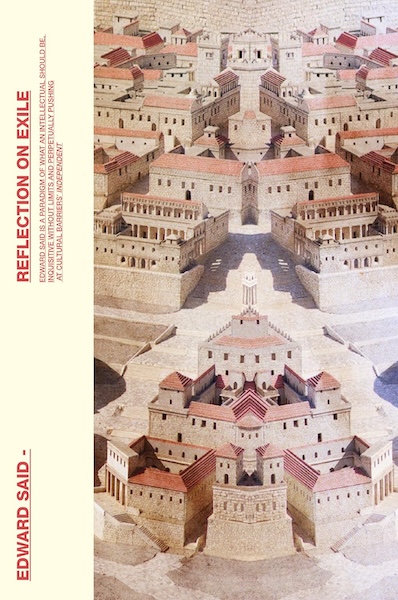
Reflections On Exile: And Other Literary And Cultural Essays
What does it mean to live between worlds—to belong to a place through memory while remaining separated from it by distance, politics, or history?
In Reflections on Exile, Edward W. Said brings together essays written over more than three decades, exploring literature, culture, politics, and the experience of displacement. The collection reflects his lifelong engagement with Palestinian identity and his own experience of exile, while examining how writers and artists respond to the societies that shape them.
Said moves between close readings of literary works and broader reflections on imperialism, cultural identity, and intellectual responsibility. He considers figures such as Joseph Conrad, George Orwell, and Naguib Mahfouz, revealing how art can illuminate the tensions between personal experience and historical forces.
At the heart of the collection is the idea that exile is more than physical separation: it can transform how people see home, belonging, and themselves. Both intellectually searching and deeply personal, the book explores the creative possibilities and emotional costs of living between cultures.
2000
6
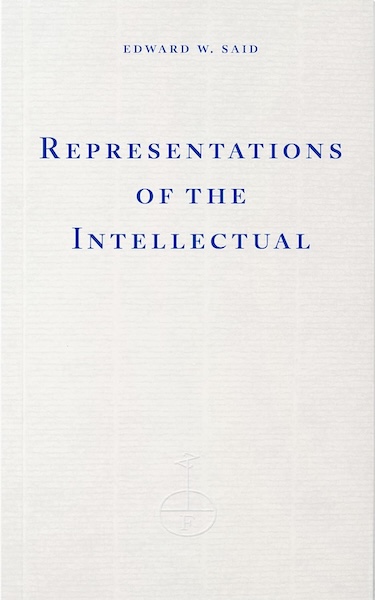
Representations of the Intellectual
Should intellectuals challenge those in power, even when doing so threatens their careers, reputations, or personal safety?
Based on his 1993 BBC Reith Lectures, Representations of the Intellectual explores the role of the thinker in public life. Edward W. Said argues that intellectuals have a responsibility to question accepted wisdom, resist political and institutional pressure, and speak honestly about injustice—even when their views are unpopular.
Drawing on figures such as Theodor Adorno and Jonathan Swift, as well as contemporary political events, Said examines the dangers of allowing expertise, ambition, nationalism, or financial interests to silence independent thought. He presents the intellectual as an outsider who must remain willing to challenge authority rather than simply serve it.
Passionate and provocative, this short collection asks what it means to preserve intellectual independence in a world shaped by powerful institutions and competing interests. It remains a compelling reflection on the relationship between knowledge, conscience, and public responsibility.
1994