4
books
2
authors

Books from Oman

1
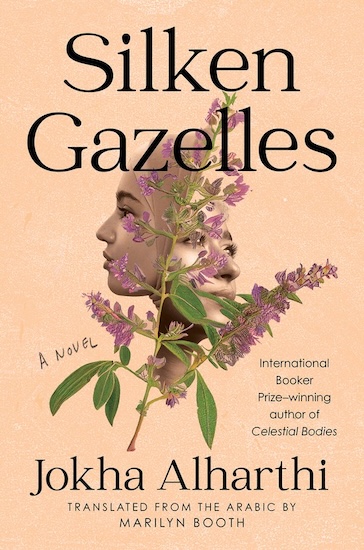
Silken Gazelles
Silken Gazelles
Set between a small mountain village and the bustling capital of Muscat, Oman, Silken Gazelles explores the enduring bonds between women, the pain of separation, and the complicated ways childhood relationships shape adult lives. Ghazaala and Asiya grow up as milk-sisters, sharing a bond considered as close as that between biological siblings. But tragedy tears them apart, and Asiya is forced to leave their village. Her disappearance leaves a lasting wound in Ghazaala’s life, prompting her to search for love and belonging elsewhere. Years later, Ghazaala falls in love with a violinist and moves to Muscat, where she attempts to balance marriage, motherhood, and her education. At university, she befriends Harir, who begins documenting their deepening friendship in her diary. Unbeknownst to either woman, Asiya’s mysterious past connects their lives in unexpected ways. Moving between past and present, Jokha Alharthi weaves together the stories of three women navigating love, loss, family expectations, and the pursuit of independence. The novel offers an intimate portrait of Omani society while examining how friendships evolve over time—and how the absence of someone can continue to shape the lives of those left behind.
2024
2
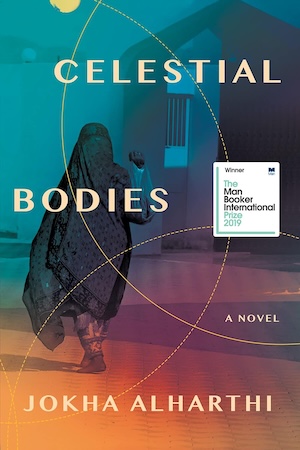
Celestial Bodies
Celestial Bodies
In the Omani village of al-Awafi, three sisters navigate love, marriage, family expectations, and the changing world around them. Mayya marries Abdallah, the son of a wealthy merchant, after experiencing heartbreak. Asma enters marriage out of a sense of duty, while Khawla refuses every suitor, remaining devoted to the man she loves, who has emigrated to Canada. Through the intertwined lives of these women and their extended family, Jokha Alharthi paints a richly layered portrait of Oman across generations. The novel moves between memories, personal histories, and shifting perspectives, gradually revealing how individual lives are shaped by social class, gender roles, and the legacy of slavery. As Oman transitions from a traditional society to a modern nation, its people struggle to reconcile inherited customs with new possibilities. Poetic and intricately structured, Celestial Bodies explores the tension between personal desire and social obligation, showing how love, loss, and family secrets echo across generations. The novel won the 2019 Man Booker International Prize, shared by Alharthi and her translator, Marilyn Booth.
2010
3
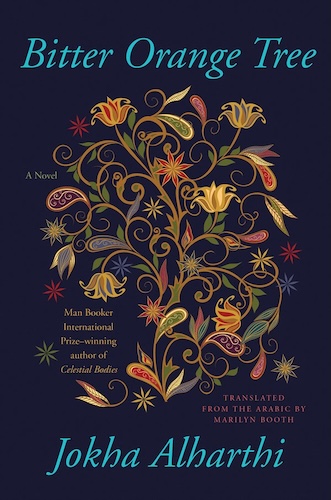
Bitter Orange Tree
Bitter Orange Tree
When Omani student Zuhour leaves her home to study at a university in Britain, she finds herself caught between the promise of a new life and the memories of the people she has left behind. Among them is Bint Aamir, the woman she regarded as her grandmother, whose love and sacrifices shaped Zuhour’s childhood. Bint Aamir’s own life was marked by constrained choices and dreams she was never able to fulfil, finding solace beneath a beloved bitter orange tree. As Zuhour struggles with loneliness, complicated friendships, and the challenge of finding her place in an unfamiliar country, memories and dreams draw her back to Oman. Through a lyrical, nonlinear narrative, Jokha Alharthi weaves together the lives of two women separated by generations but connected by longing, affection, and the desire for independence. Bitter Orange Tree explores how family histories, social class, and gender expectations shape women’s lives—and how understanding the past can help us imagine a different future.
2002
4
Honey Hunger
Honey Hunger
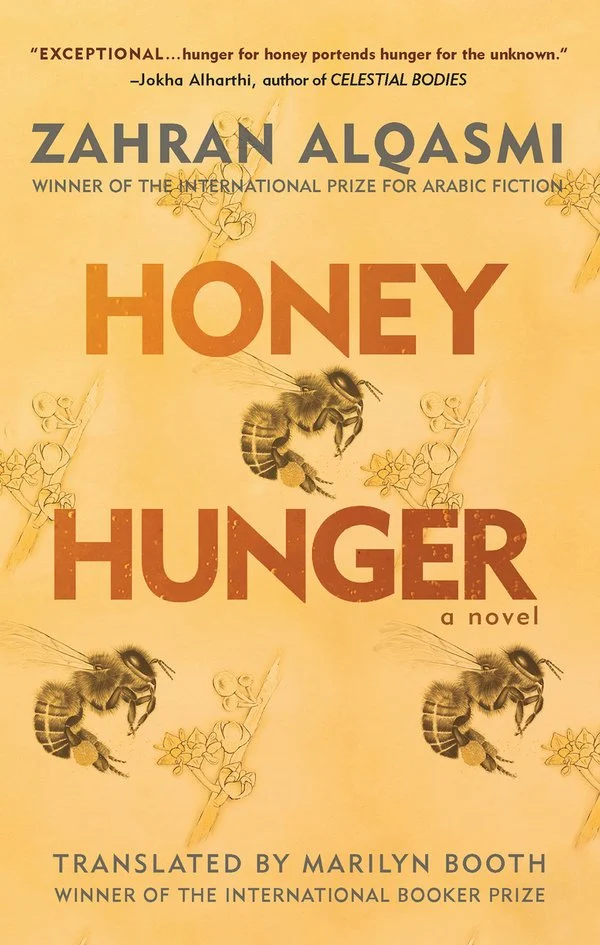
Set in the mountainous countryside of Oman, Honey Hunger follows Azzan, a solitary beekeeper whose devotion to bees and the search for wild honey offers him a refuge from disappointment and personal turmoil. When he encounters Thamna, a shepherd woman with honey-coloured eyes, he becomes captivated by her, opening the possibility of connection in a life marked by loneliness and troubled relationships. As Azzan navigates family expectations, alcohol addiction, and the fragile bonds between people, his work with bees becomes a source of purpose and healing. Yet an unexpected accident threatens to destroy everything he has built, forcing him to confront loss and the uncertainty of starting over. Through vivid descriptions of Oman’s mountains, villages, and delicate ecosystems, Alqasmi creates an intimate portrait of a community whose lives are deeply intertwined with the natural world. The novel explores longing, resilience, and the complicated relationship between humans and their environment, revealing how the pursuit of something as precious as honey can reflect a deeper hunger for meaning and belonging.
2025

Famous authors from Oman

About Oman

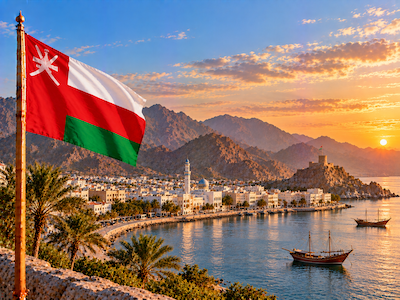
Oman lies on the southeastern coast of the Arabian Peninsula, bordered by the Arabian Sea, the Gulf of Oman, and the Rubʿ al-Khali desert. Its landscapes range from the rugged Al Hajar Mountains and vast sand dunes to fertile oases, rocky coastlines, and traditional fishing villages. Muscat, the capital, combines historic forts, mosques, and traditional architecture with a modern waterfront. Omani culture has been shaped by centuries of maritime trade connecting Arabia with East Africa, Persia, India, and the wider Indian Ocean world.

Region
Asia
Literary Context

Oman’s literary heritage is rooted in Arabic poetry, oral storytelling, folk tales, proverbs, and Islamic scholarship. Poetry has traditionally held an important place in cultural life, serving as a way to preserve history, express personal feelings, celebrate communities, and reflect on social values. Maritime traditions, desert life, and the connections between coastal communities and distant trading ports have also influenced Omani storytelling. Modern Omani literature developed through poetry, short stories, novels, and essays, with writers increasingly exploring social change and individual experience. Important contemporary authors include Abdullah Habib, known for his experimental fiction and filmmaking, Jokha Alharthi, whose novel Celestial Bodies won the International Booker Prize in 2019, and Huda Hamed, whose writing explores women’s lives and social expectations. Omani literature frequently examines tradition and modernity, family, gender, memory, identity, migration, and the transformation of society, while remaining connected to the wider Arabic literary tradition.


Asia