Nepal
Asia
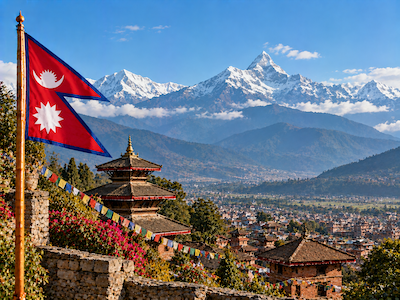
Nepal is a landlocked country in South Asia, nestled between India and China and home to some of the world’s highest mountains, including Mount Everest. Its landscapes stretch from the snow-covered Himalayas and alpine valleys to forested hills, fertile plains, and subtropical lowlands. Kathmandu, the capital, is a historic center of art, architecture, and religion, while cities such as Patan and Bhaktapur preserve remarkable temple complexes and traditional craftsmanship. Nepal’s cultural identity reflects a rich blend of Hindu, Buddhist, and Indigenous traditions, alongside the heritage of diverse communities, including the Newar, Tamang, Sherpa, Tharu, and many others.
Nepal has a rich literary heritage shaped by oral storytelling, religious texts, folk songs, legends, and epic poetry. Sanskrit and Buddhist traditions influenced early written literature, while Nepal Bhasa—the language of the Newar people—developed its own literary traditions. Nepali gradually became a major literary language, connecting stories and poetry from different regions of the country. A foundational figure in Nepali literature is Bhanubhakta Acharya, celebrated for his Nepali translation of the Ramayana. Other influential writers include Laxmi Prasad Devkota, known for his lyrical poetry and epic Muna Madan; Parijat, whose novel Shirishko Phool explores existential questions and human relationships; and Bishweshwar Prasad Koirala, whose fiction examines psychology, social conventions, and individual freedom. Contemporary Nepali literature frequently explores migration, social inequality, political change, gender, family, cultural identity, and the tension between traditional values and modern life. The Himalayas and rural landscapes also remain powerful settings and symbols in Nepali storytelling.