Nicaragua
North America
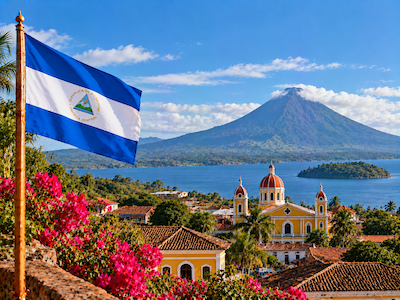
Nicaragua is the largest country in Central America, known for its volcanic landscapes, freshwater lakes, tropical forests, and Pacific and Caribbean coastlines. Its geography includes Lake Nicaragua, the dramatic chain of volcanoes along the Pacific region, and the remote Caribbean lowlands. Cities such as Granada and León preserve colonial architecture and long intellectual traditions, while the country’s cultural identity reflects Indigenous heritage, Spanish influence, and Afro-Caribbean communities.
Nicaraguan literature is especially renowned for its poetry, which has played a central role in shaping the country’s cultural identity. Indigenous storytelling and oral traditions form part of its deeper heritage, while Spanish-language writing developed during the colonial period and expanded with the growth of national literature in the 19th century. The most internationally celebrated Nicaraguan writer is Rubén Darío, a leading figure of Modernismo whose innovative poetry transformed Spanish-language literature. Other important writers include Gioconda Belli, whose work explores love, feminism, revolution, and political freedom; Ernesto Cardenal, a poet and priest whose writing connects spirituality with social justice; and Sergio Ramírez, whose fiction examines power, history, and political life. Contemporary Nicaraguan literature frequently explores revolution, authoritarianism, exile, identity, inequality, memory, and the relationship between personal freedom and collective struggle.