Malaysia
Asia
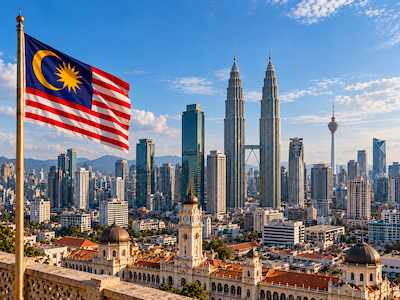
Malaysia is a diverse Southeast Asian country divided between the Malay Peninsula and the island of Borneo, with tropical rainforests, mountains, islands, beaches, and rapidly growing cities. Kuala Lumpur is its modern cultural and economic center, while historic places such as George Town and Malacca preserve layers of Malay, Chinese, Indian, Arab, Portuguese, Dutch, and British influence. Malaysian society is shaped by Malay, Chinese, Indian, Indigenous, and other communities, creating a particularly multilingual and multicultural cultural landscape.
Malaysia has a rich tradition of oral storytelling, legends, folk tales, pantun poetry, proverbs, and court literature. Classical Malay literature was influenced by Hindu-Buddhist traditions and later by Islam, producing works such as the Hikayat Hang Tuah and other hikayat narratives that combine history, mythology, heroism, and moral storytelling. Modern Malaysian literature developed across Malay, English, Chinese, and Tamil, reflecting the country’s multicultural society and colonial history. Important writers include Usman Awang, A. Samad Said, Shahnon Ahmad, and K.S. Maniam, while contemporary authors such as Tash Aw, Tan Twan Eng, and Preeta Samarasan have brought Malaysian experiences to international audiences. Recurring themes include colonialism, ethnicity, language, migration, family, class, memory, identity, and the tension between tradition and rapid modernization.