Maldives
Asia
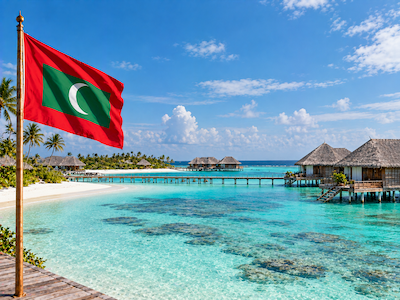
The Maldives is an archipelago of nearly 1,200 coral islands scattered across the Indian Ocean, grouped into natural atolls. Its landscape is defined by turquoise lagoons, coral reefs, white-sand beaches, and low-lying islands, with Malé serving as the country’s densely populated capital and cultural center. Maldivian culture has been shaped by South Asian, Arab, East African, and Indian Ocean maritime influences, as well as centuries of seafaring and trade.
Maldivian literary culture has traditionally been rooted in oral storytelling, poetry, songs, folklore, and Islamic traditions. Stories passed between generations often reflect the sea, island life, spirituality, local legends, and relationships within tightly connected island communities. Dhivehi, the national language, has its own literary tradition and distinctive script, Thaana. Modern Maldivian literature developed alongside changes in education, politics, and society. Poetry has remained particularly important, while contemporary writers increasingly work in both Dhivehi and English. Literature often explores island identity, religion, family, love, migration, modernization, political change, and the relationship between traditional life and a rapidly changing society. The surrounding ocean is not simply a backdrop but a recurring presence, shaping ideas of isolation, movement, belonging, and connection.