Malta
Europe
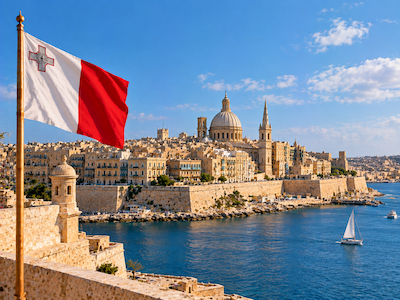
Malta is a small Mediterranean island country at the crossroads of Europe, North Africa, and the Middle East. Its landscape is defined by limestone coastlines, sheltered harbors, rocky cliffs, and densely built historic towns. Valletta, the capital, is known for its fortified architecture, churches, and narrow streets, while the islands’ culture reflects layers of Phoenician, Roman, Arab, Norman, Sicilian, and British influence.
Malta has a distinctive multilingual literary tradition, shaped primarily by Maltese, English, and Italian. Its earliest cultural expression includes folk tales, religious traditions, ballads, and oral storytelling. The Maltese language itself, a Semitic language written in the Latin alphabet, reflects the island’s unusual position between European and North African cultural worlds. Modern Maltese literature developed strongly in the 19th and 20th centuries, with writers such as Dun Karm Psaila, Malta’s national poet, and Mikiel Anton Vassalli, an important figure in the development and study of the Maltese language. Contemporary authors including Immanuel Mifsud, Clare Azzopardi, and Antoine Cassar explore identity, language, migration, colonial history, memory, family, and Malta’s changing relationship with Europe and the Mediterranean.