Mauritania
Africa
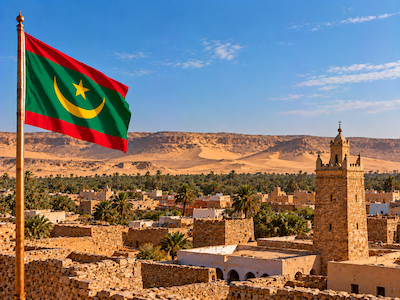
Mauritania lies on the Atlantic coast of West Africa, where the Sahara stretches toward the Sahel and the ocean. Much of the country is covered by desert, with vast dunes, rocky plateaus, oases, and dry valleys, while the Senegal River forms a greener southern region. Nouakchott is the modern capital, while historic towns such as Chinguetti, Ouadane, and Oualata preserve centuries-old traditions of scholarship, trade, and desert culture.
Mauritanian literary culture has deep roots in Arabic poetry, Islamic scholarship, oral storytelling, genealogy, proverbs, and desert traditions. Poetry has traditionally held a particularly important place in society, with verses used to preserve history, express religious and philosophical ideas, celebrate individuals, and comment on social life. The country’s position along historic Saharan trade routes also connected its intellectual culture with North and West Africa. Modern Mauritanian literature is predominantly written in Arabic, alongside literary traditions in Pulaar, Soninke, Wolof, and other local languages. Writers and poets frequently explore desert life, religion, social hierarchy, cultural identity, colonial history, modernization, memory, and the tension between nomadic and urban ways of life. Mauritania’s literary heritage is especially notable for the way written scholarship and poetry coexist with a strong living tradition of oral transmission.