Mongolia
Asia
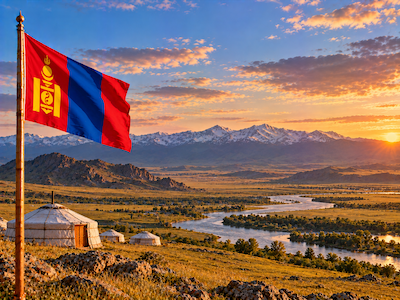
Mongolia is a vast, landlocked country between Russia and China, defined by open steppe, deserts, high mountains, grasslands, and wide river valleys. The Gobi Desert covers much of the south, while the Altai and Khangai ranges rise across the west and center. Ulaanbaatar is the modern cultural center, but Mongolia’s identity remains deeply connected to nomadic pastoralism, horses, yurts, hospitality, and the landscapes of the steppe.
Mongolian literary culture has deep roots in oral storytelling, epic poetry, songs, legends, proverbs, and heroic narratives. One of its most important works is The Secret History of the Mongols, a 13th-century chronicle of Chinggis Khan and the Mongol Empire that combines history, genealogy, folklore, and literary storytelling. Epic performance and oral transmission remain important parts of Mongolian cultural heritage. Modern Mongolian literature developed through poetry, fiction, historical writing, and the collection of traditional folklore, particularly during the 20th century. Major writers include D. Natsagdorj, often regarded as a founder of modern Mongolian literature, Byambyn Rinchen, and S. Buyannemekh. Contemporary writing continues to explore nomadic heritage, nature, national identity, modernization, family, memory, and the tension between traditional pastoral life and rapidly changing urban society.