North Macedonia
Europe
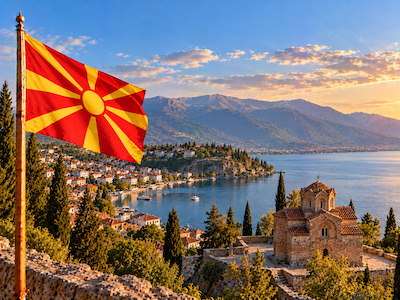

North Macedonia is a landlocked country in southeastern Europe, situated in the central Balkans. Its landscape features rugged mountains, deep valleys, forests, and picturesque lakes, including Lake Ohrid, one of Europe’s oldest lakes. Skopje, the capital, combines Ottoman-era architecture, Orthodox churches, and modern urban development, while Ohrid is known for its historic churches and cultural heritage. The country’s identity reflects a mixture of Slavic, Byzantine, Ottoman, and broader Balkan influences, with Macedonian and Albanian among its principal languages.
North Macedonian literature draws on Slavic oral traditions, folk songs, legends, epic poetry, and religious writing. The region’s literary heritage was shaped by Byzantine and Orthodox Christian traditions, as well as centuries of cultural exchange throughout the Balkans. Folk narratives and songs have played an important role in preserving local history, language, and collective identity. Modern Macedonian literature developed particularly during the 19th and 20th centuries, with the standardization of the Macedonian language in 1945 marking an important turning point. Major writers include Kočo Racin, whose poetry collection White Dawns became foundational to modern Macedonian literature; Blaže Koneski, a poet and linguist central to the development of the modern literary language; and Petre M. Andreevski, known for exploring rural life, history, and national identity. Contemporary literature often examines memory, migration, family, political change, cultural identity, and the tension between tradition and modern life. The country’s multilingual character also connects Macedonian literature with Albanian and other Balkan literary traditions.