Latvia

Europe
Latvia
1
book
1
author

Books from Latvia

1
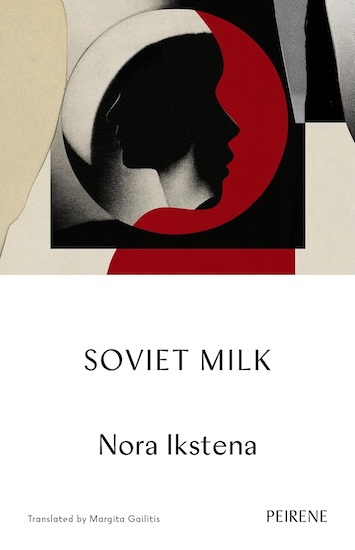
Soviet Milk
Soviet Milk
Set in Soviet-occupied Latvia between 1969 and 1989, Soviet Milk tells the story of three generations of women whose lives are shaped by political oppression, emotional isolation, and the struggle for personal freedom. At its centre is a talented young gynaecologist who refuses to accept the restrictions imposed by the Soviet system. After a professional conflict with the authorities, she loses the career she has worked towards and is sent to practise medicine in the Latvian countryside. Increasingly withdrawn and unable to find meaning in her life, she struggles to connect with her daughter, who grows up feeling the weight of her mother’s unhappiness. The story alternates between the voices of the mother and daughter, revealing how political repression reaches into the most intimate corners of family life. While the mother retreats into despair, the daughter searches for understanding, belonging, and hope, finding emotional stability in the care of her grandmother. As Latvia approaches the restoration of its independence, the women’s personal struggles become intertwined with their country’s desire for liberation. Through its portrayal of a fractured mother-daughter relationship, Ikstena explores how authoritarian systems can damage individual lives across generations. Yet the novel also celebrates the resilience of women, the sustaining power of familial love, and the possibility of breaking free from inherited suffering.
2015

Famous authors from Latvia

About Latvia

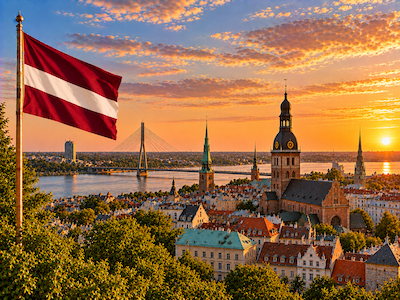
Latvia is a Baltic country on the eastern shore of the Baltic Sea, known for its forests, lakes, rivers, wetlands, and long sandy coastline. Riga, the capital, is the country’s cultural and literary center, with a historic Old Town and one of Europe’s notable concentrations of Art Nouveau architecture. Latvian culture has been shaped by Baltic traditions as well as centuries of interaction with German, Swedish, Polish, and Russian influences.

Region
Europe
Literary Context

Latvian literature has deep roots in folk songs, oral poetry, legends, and traditional storytelling. The vast collection of dainas—short traditional folk songs about nature, family, work, love, and everyday life—has played a central role in preserving Latvian cultural identity. The 19th-century national awakening helped establish Latvian as a modern literary language. Important writers include Rainis, whose poetry and plays became closely associated with national identity and social ideals, and Aspazija, an influential poet, playwright, and advocate for women’s rights. Later writers such as Aleksandrs Čaks, Vizma Belševica, Imants Ziedonis, and Māra Zālīte explored urban life, history, political repression, memory, and personal identity. Contemporary Latvian literature continues to engage with occupation and historical memory, family, migration, nature, belonging, and the experience of living between different cultural worlds.
Europe