Kuwait
Asia
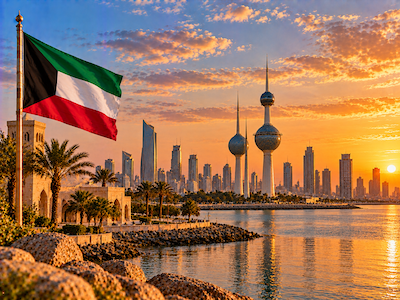


Kuwait is a small country on the northwestern shore of the Arabian Gulf, shaped by desert landscapes, a long coastline, and a network of islands. Kuwait City is the country’s cultural and economic center, combining modern skyscrapers and waterfront development with traditional markets, mosques, and older architectural influences. Its culture reflects deep Gulf Arab traditions alongside centuries of maritime trade and connections with the wider Middle East and Indian Ocean.
Kuwait has a strong tradition of oral storytelling, poetry, songs, and Nabati poetry, with literature historically connected to the sea, desert life, trade, family, and tribal traditions. Poetry has held a particularly important place in Kuwaiti cultural life, serving both as artistic expression and as a way of preserving history and social memory. Modern Kuwaiti literature developed strongly during the 20th century, particularly alongside the country’s rapid modernization. Writers such as Fahd Al-Askar, Taleb Al-Refai, Ismail Fahd Ismail, Laila Al-Othman, and Saud Alsanousi have explored themes of identity, social change, family, class, gender, migration, memory, and the tension between tradition and modernity. Contemporary Kuwaiti fiction often reflects the transformation of Gulf society while also looking back at the country’s pre-oil past and its maritime heritage.