North Korea
Asia
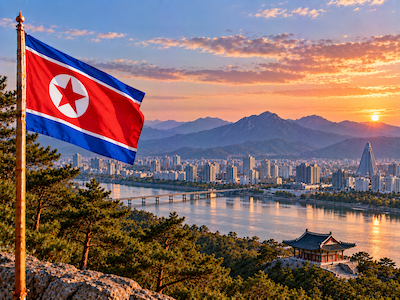
North Korea, officially the Democratic People’s Republic of Korea, occupies the northern part of the Korean Peninsula in East Asia. Its landscape includes rugged mountains, forested valleys, river basins, and a coastline along the Yellow Sea and the Sea of Japan. Pyongyang, the capital, is known for its monumental architecture, broad avenues, and landmarks such as the Juche Tower and the Ryugyong Hotel. Korean cultural traditions, including Confucian heritage, Buddhism, folk music, calligraphy, and traditional architecture, remain important elements of the country’s historical identity.
Korean literature has a long history of oral storytelling, poetry, folktales, historical chronicles, and philosophical writing. Before the development of modern Korean literature, writers used Classical Chinese alongside Korean literary forms, while hanmun poetry and traditional genres such as sijo helped shape the peninsula’s literary heritage. Following the division of Korea in 1945, literature in the North developed under a distinct political and cultural system. Literary institutions and publishing have emphasized socialist realism, revolutionary history, collective identity, and narratives of national struggle. Writers such as Han Sorya became prominent in the North Korean literary establishment, while earlier Korean authors, including Ri Kwang-su, belong to the broader literary history of the peninsula. North Korean literature frequently explores patriotism, sacrifice, war, family, labor, social duty, and the relationship between individuals and the state. Reading North Korean writing alongside South Korean and earlier Korean literature offers insight into how the peninsula’s shared cultural heritage has developed along different paths.