Jordan

Asia
Jordan
5
books
2
authors

Books from Jordan

1
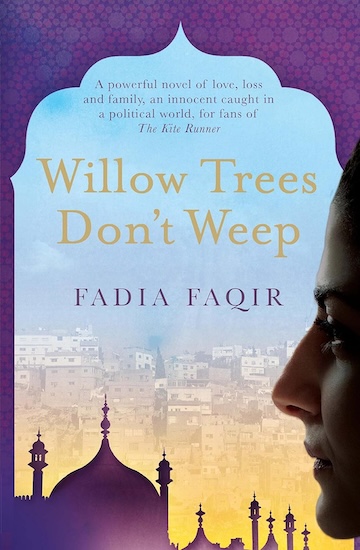
Willow Trees Don't Weep
When Najwa’s mother dies, the young Jordanian woman finds herself facing a future she has never been prepared for. In the conservative society of Amman, an unmarried woman without a male guardian has few options. Her father, Omar, abandoned the family when she was a child to join a radical Islamist movement, leaving Najwa to grow up with unanswered questions about his disappearance and the beliefs that drove him away. Determined to find him, Najwa sets out on a dangerous journey from Jordan to Afghanistan, following the trail of a man she barely remembers. But the father she imagines is not the man she discovers. Her search eventually takes her to Britain, where she must confront painful truths about her family, her father’s ideology, and her own place in the world. As she crosses borders and encounters unfamiliar cultures, Najwa begins to understand that finding her father may be less important than discovering who she wants to become. Moving between the Middle East, Afghanistan, and Britain, Willow Trees Don’t Weep explores the consequences of political extremism through the intimate story of a daughter left behind. Fadia Faqir examines patriarchal expectations, religious identity, and the struggle for female independence in a world where women are often forced to live with the consequences of men’s decisions.
2014
2
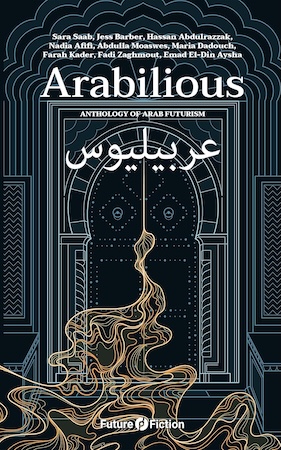
Arabilious: Anthology of Arab Futurism
Arabilious: Anthology of Arab Futurism brings together nine science-fiction stories imagining alternative futures shaped by the cultures, histories, and social realities of the Arab world. Featuring writers from Bahrain, Egypt, Iraq, Jordan, Lebanon, Palestine, and Syria, the collection challenges the dominance of Western perspectives in speculative fiction and presents visions of the future rooted in Arab experiences. The stories explore the consequences of emerging technologies, environmental crises, political conflict, and social inequality. Rather than imagining progress as a simple escape from the past, the contributors examine how traditions, collective identities, and historical memories continue to shape societies undergoing rapid change. The anthology includes Fadi Zaghmout’s A Jaha in the Metaverse, which reimagines the traditional Jordanian marriage-custom ceremony within a virtual world, using satire to question the persistence of patriarchal practices in an increasingly technological society. Together, these stories expand the possibilities of Arab science fiction, offering imaginative alternatives to the present while questioning who gets to envision the future. The collection combines speculative experimentation with cultural specificity, social criticism, and reflections on the legacy of colonialism.
2024
3
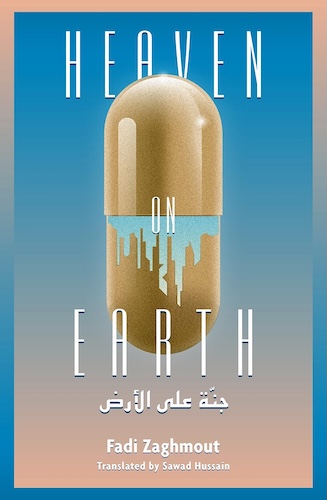
Heaven on Earth
Heaven on Earth
What would happen if science made it possible to remain young forever? Set in Jordan in the 2090s, Heaven on Earth imagines a future transformed by advances in biotechnology and nanotechnology that allow people to reverse the aging process. Yet the promise of eternal youth brings unexpected moral, social, and emotional dilemmas. At the heart of the novel is Janna Abdallah, a journalist navigating a world where humanity has gained unprecedented control over life and death. Her brother, Jamal, who contributed to the scientific breakthroughs behind this new reality, makes the controversial decision to reject age suppression and allow himself to die naturally. His choice unsettles the family and challenges the assumptions of a society that has come to regard aging as a problem to be solved. Meanwhile, strict reproductive regulations complicate the family’s hopes for the future. Blending speculative fiction with social commentary, Zaghmout explores the ethical limits of scientific progress, individual autonomy, family relationships, and the meaning of a fulfilling life. By placing these questions within a distinctly Jordanian cultural setting, he invites readers to reconsider the boundaries between technological possibility and human freedom.
2017
4
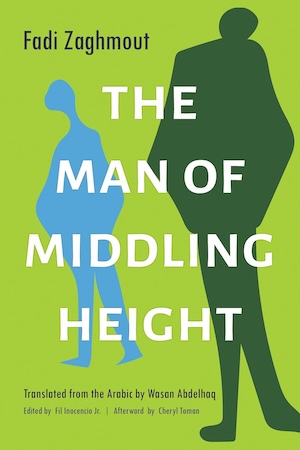
The Man of Middling Height
What if society’s deepest prejudices were based not on gender, but on height? In The Man of Middling Height, Jordanian author Fadi Zaghmout imagines an alternative world divided between two groups: tall people and short people. Height determines social status, personal freedom, romantic possibilities, and the roles individuals are expected to perform. Those who fall outside this rigid binary face exclusion and discrimination. The story follows a short dressmaker whose life changes when she meets Tallan, a man of middling height who occupies an uncomfortable position in a society that recognizes only two categories. As their forbidden romance develops, they must confront the social rules that dictate whom they can love and how they are permitted to live. Other characters challenge these conventions in different ways, revealing the contradictions and injustices underpinning their world. Through speculative fiction and biting social satire, Zaghmout examines how societies construct hierarchies and use arbitrary differences to justify inequality. By transforming familiar debates about gender, sexuality, and power into a story about height, he invites readers to question the assumptions that shape their own understanding of identity and belonging.
2025
5
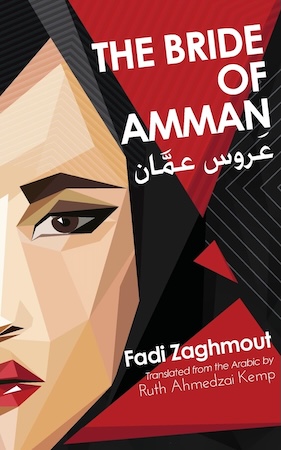
The Bride of Amman
The Bride of Amman
Set in Jordan’s capital, The Bride of Amman follows five young people—four women and one gay man—as they navigate love, sexuality, marriage, and the restrictive social expectations surrounding them. Rana falls in love with a man of a different religion and faces the consequences of their relationship. Hayat struggles with the emotional scars of an abusive childhood, while Ali is pressured into a heterosexual marriage to conceal his sexuality. Meanwhile, Leila confronts the stigma attached to divorce and remaining unmarried, and her sister Salma challenges society’s expectations through her anonymous online writing. Through these interwoven stories, Fadi Zaghmout portrays a society caught between modern aspirations and deeply rooted traditions. The novel examines how gender roles, religious boundaries, and social conventions shape intimate lives, often forcing individuals to choose between personal happiness and public acceptance. Blending humor with painful realism, it challenges the silence surrounding sexuality and women’s autonomy in the Arab world. Ultimately, the novel asks what freedom means when the price of living honestly can be social rejection.
2015

Famous authors from Jordan

About Jordan

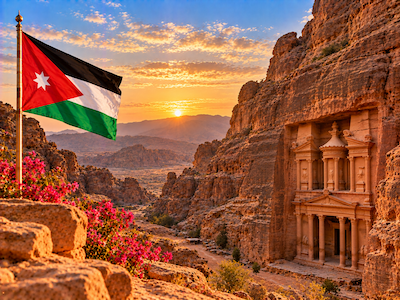
Jordan is a country in the heart of the Middle East, characterized by desert landscapes, rugged mountains, fertile valleys, and the shores of the Dead Sea and Red Sea. Its cultural heritage stretches from the ancient kingdoms of the region to the Nabataean city of Petra, Roman cities such as Jerash, and centuries of Arab and Islamic history. Amman is the country’s modern cultural center, while Bedouin traditions remain an important part of Jordanian heritage.

Region
Asia
Literary Context

Jordanian literature draws on Arabic literary traditions, Bedouin oral poetry, storytelling, proverbs, and the historical memory of the region. Poetry has traditionally held a particularly important place, while oral traditions have preserved stories of tribal history, heroes, landscapes, and community life. Modern Jordanian writing developed strongly during the 20th century and has explored identity, displacement, Palestine, migration, social change, political conflict, and the relationship between tradition and modernity. Important writers include Mustafa Wahbi Al-Tal (Arar), one of Jordan’s best-known poets, Ghalib Halasa, Fadia Faqir, and Ibrahim Nasrallah, whose novels and poetry frequently examine history, memory, exile, and belonging. Contemporary Jordanian literature also reflects the experiences of refugees, diaspora communities, women, and the rapidly changing urban society of Amman.


Asia