Books from India
Suggest a book
All genres
Historical Fiction
Literary Fiction
Fantasy
Romance
Horror
Thriller
Non-Fiction
Mystery
Memoir
Classics
History
Sci-Fi
Contemporary Fiction
Science Fiction
Fiction
Poetry
Essays
Family Saga
Magical Realism
Family Drama
Dark Academia
Psychological Fiction
Dark Comedy
Political Writing
Feminist Fiction
Satire
Campus Fiction
Cultural Studies
Biography
Philosophy
Comedy
Drama
Young Adult
Gothic
Dystopia
Crime
Children's Books
Short Stories
Mythology
Cozy
Retellings
Humour
Adventure
All themes
Love & Passion
Adventure & Journey
Identity & Belonging
War & Conflict
Freedom & Resistance
Family & Heritage
Nature & Landscape
Society & Class
Spirituality & Faith
Solitude & Exile
Coming of Age
Revolution & Change
Friendship
History
Immigration
Myths and Retellings
Colonialism
Women & Society
Mental Health
Motherhood
1
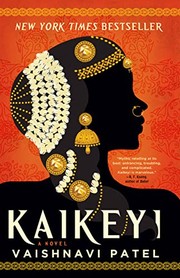
Kaikeyi
Kaikeyi reimagines the story of a controversial queen from the ancient Indian epic Ramayana, giving voice to a woman traditionally remembered as the villain responsible for Rama’s exile. Growing up as the only daughter of a king, Kaikeyi questions the restrictions placed upon women and longs to shape her own destiny. After discovering a mysterious power that allows her to influence the minds of others, she begins to challenge the patriarchal structures governing her world. Her marriage to King Dasharatha brings her into the centre of royal politics, where her ambitions and relationships become increasingly complicated. As she navigates motherhood, power, and loyalty, Kaikeyi must make decisions that will transform her family and the kingdom. Patel explores female agency, ambition, and the tension between personal freedom and social expectations, offering a nuanced portrait of a woman whose story has long been told by others.
2022
2
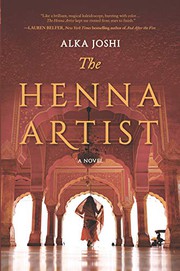
The Henna Artist
Set in Jaipur in the 1950s, The Henna Artist follows Lakshmi, a young woman who escapes an abusive marriage and builds an independent life in the Pink City. Through her exceptional skills as a henna artist and her knowledge of traditional remedies, she becomes a trusted confidante to wealthy women, gaining access to their private lives and secrets. Lakshmi dreams of establishing her own home and achieving financial security, carefully protecting the reputation that sustains her livelihood. However, her carefully constructed world is disrupted when her estranged husband appears with a young girl who turns out to be the sister Lakshmi never knew she had. Forced to reconsider her priorities, Lakshmi must navigate the tension between independence and family responsibility. Joshi explores women’s autonomy, social hierarchy, ambition, and the possibility of creating a new life despite the limitations imposed by society.
2020
3
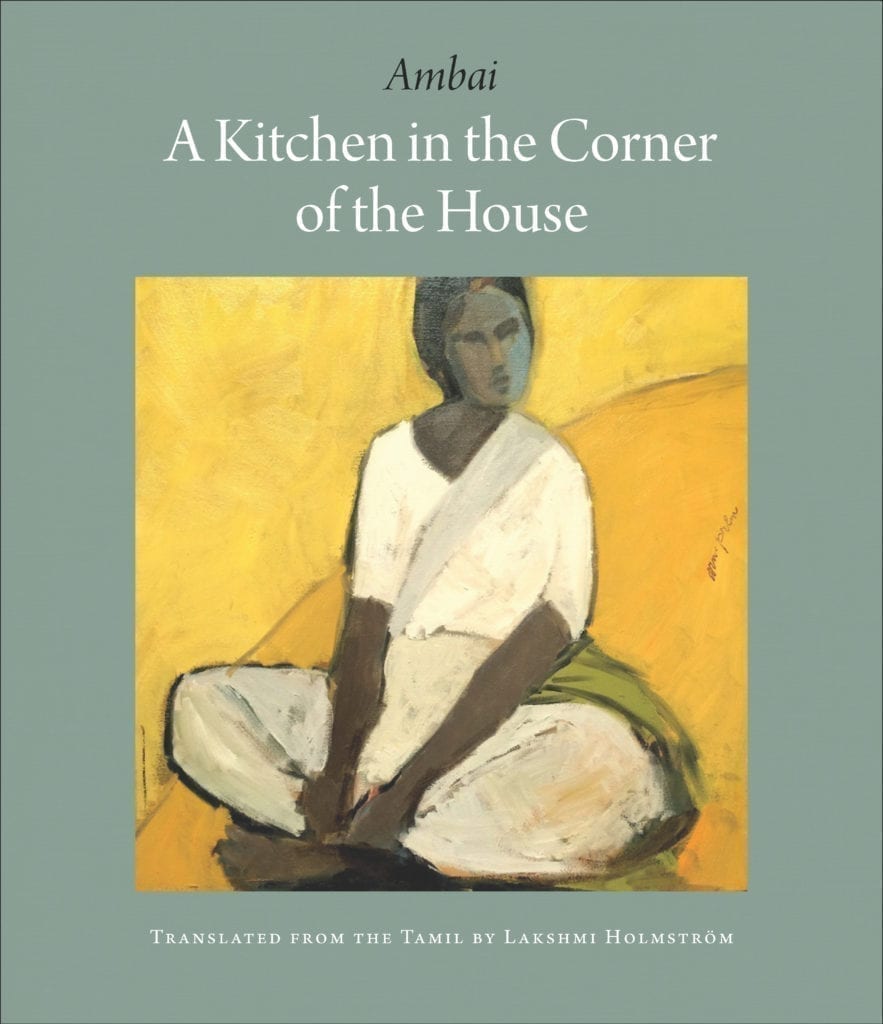
A Kitchen in the Corner of the House
In this rich collection of short stories, Ambai explores the lives of women navigating the competing demands of family, tradition, love, and personal freedom in India. Moving between domestic spaces and wider social worlds, her characters include wives questioning their marriages, mothers negotiating the bonds between generations, and women discovering possibilities beyond the roles society has assigned them. The kitchen in the title story becomes a powerful symbol of women’s lives: a space associated with domestic labour and confinement, yet also one where women exercise influence, preserve traditions, and create their own forms of power. Through fragmented narratives, letters, memories, and mythological references, Ambai captures the contradictions of womanhood with warmth, humour, and quiet rebellion. Her stories challenge the assumption that liberation must mean rejecting one’s roots, instead revealing how women can reshape their worlds while remaining connected to their histories, relationships, and cultural identities.
2019
4
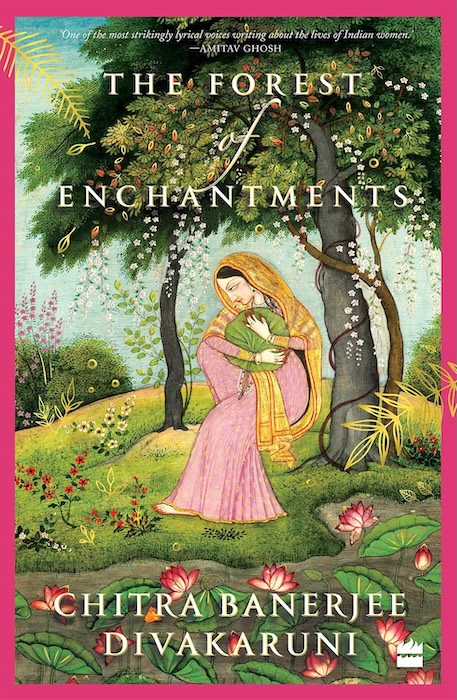
Forest of Enchantments
The Forest of Enchantments reimagines the ancient Indian epic Ramayana through the perspective of Sita, the heroine whose experiences have often been overshadowed by those of the male characters. From her early life and marriage to Prince Rama to their exile in the forest, Sita’s story unfolds as a journey marked by love, sacrifice, and difficult choices. After she is abducted by the demon king Ravana and eventually reunited with Rama, she faces further trials that challenge her dignity and independence. Divakaruni also brings attention to other women in the epic, including Kaikeyi, Surpanakha, and Mandodari, exploring the complicated motivations behind their actions. By giving these women their own voices, the novel questions traditional ideas about duty, honour, and obedience. It offers a feminist interpretation of a foundational Indian epic, examining women’s autonomy and their struggle to define themselves within a world governed by patriarchal expectations.
2019
5

The Widows of Malabar Hill
Set in Bombay in 1921, The Widows of Malabar Hill introduces Perveen Mistry, one of India’s first female lawyers. Educated in England and working in her father’s legal practice, Perveen encounters an unusual inheritance case involving three Muslim widows who live in seclusion and communicate with the outside world through male representatives. When she discovers inconsistencies in the documents governing their late husband’s estate, she begins to suspect that the women may be vulnerable to manipulation or exploitation. Her investigation becomes more dangerous when a murder draws her deeper into the case. Alongside the mystery, Perveen’s own experiences reveal the limitations placed on women in colonial Indian society, particularly in matters of marriage, education, and professional independence. Massey combines historical detail with a compelling detective story, exploring women’s rights, religious traditions, and the pursuit of justice in a changing society.
2018
6
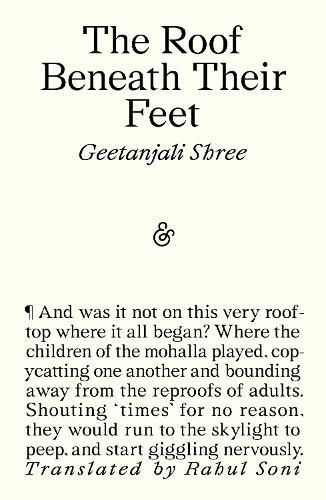
The Roof Beneath Their Feet
In a close-knit residential complex in India, the rooftops of Laburnum House offer a rare refuge from the expectations and restrictions of everyday life. Chachcho, trapped in a lonely marriage, finds companionship in Lalna, a woman abandoned by her husband whom she takes into her home. Their intense and unconventional bond soon becomes the subject of neighbourhood gossip, as their closeness challenges accepted ideas about marriage, female desire and respectability. Years later, following Chachcho’s death, Lalna returns, prompting Chachcho’s nephew, Bitva, to revisit family memories and question the story of his own origins. Moving between perspectives and shifting recollections, Geetanjali Shree creates an intricate portrait of women’s lives, hidden desires and the stories families tell to protect themselves. The rooftop becomes a powerful symbol of freedom—a space where women can escape the watchful eyes of society and imagine lives beyond its boundaries.
2013
7

Sea of Poppies
Set in 1838, shortly before the First Opium War, Sea of Poppies follows a diverse group of characters whose lives converge aboard the Ibis, a former slave ship sailing from India to Mauritius. Among them are Deeti, a village woman escaping an oppressive marriage; Kalua, a low-caste ox-cart driver; Neel Rattan Halder, a wealthy landowner facing ruin; and Zachary Reid, an American sailor navigating questions of race and identity. As they journey across the Indian Ocean, these individuals find themselves bound together by circumstances shaped by colonialism, the opium trade, caste discrimination, and economic exploitation. Through their intertwined stories, Amitav Ghosh brings to life a turbulent period in Indian history, revealing how imperial ambitions transform ordinary lives. Blending historical detail, adventure, and rich linguistic diversity, the novel explores displacement, social inequality, and the universal desire for freedom and belonging.
2008