Books from India
Suggest a book
All genres
Historical Fiction
Literary Fiction
Fantasy
Romance
Horror
Thriller
Non-Fiction
Mystery
Memoir
Classics
History
Sci-Fi
Contemporary Fiction
Science Fiction
Fiction
Poetry
Essays
Family Saga
Magical Realism
Family Drama
Dark Academia
Psychological Fiction
Dark Comedy
Political Writing
Feminist Fiction
Satire
Campus Fiction
Cultural Studies
Biography
Philosophy
Comedy
Drama
Young Adult
Gothic
Dystopia
Crime
Children's Books
Short Stories
Mythology
Cozy
Retellings
Humour
Adventure
All themes
Love & Passion
Adventure & Journey
Identity & Belonging
War & Conflict
Freedom & Resistance
Family & Heritage
Nature & Landscape
Society & Class
Spirituality & Faith
Solitude & Exile
Coming of Age
Revolution & Change
Friendship
History
Immigration
Myths and Retellings
Colonialism
Women & Society
Mental Health
Motherhood
1
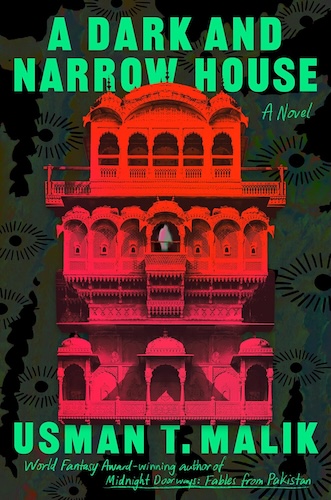
A Dark and Narrow House
When a mysterious, deadly plague sweeps across the world, a group of friends seeks refuge in a luxurious countryside mansion near the Pakistan–India border. But the haveli conceals an ancient darkness, and when they uncover a sealed chest hidden in a nearby cave, they unleash a primordial force that turns their sanctuary into a nightmare. Trapped inside the sprawling estate, the friends begin to unravel under the influence of its sinister magic, confronting buried traumas, personal demons, and the stories they tell themselves to survive. Drawing on South Asian and Middle Eastern folklore, this atmospheric dark fantasy explores memory, fear, and the terrifying power of the past.
2027
2
Kaikeyi
Kaikeyi reimagines the story of a controversial queen from the ancient Indian epic Ramayana, giving voice to a woman traditionally remembered as the villain responsible for Rama’s exile. Growing up as the only daughter of a king, Kaikeyi questions the restrictions placed upon women and longs to shape her own destiny. After discovering a mysterious power that allows her to influence the minds of others, she begins to challenge the patriarchal structures governing her world. Her marriage to King Dasharatha brings her into the centre of royal politics, where her ambitions and relationships become increasingly complicated. As she navigates motherhood, power, and loyalty, Kaikeyi must make decisions that will transform her family and the kingdom. Patel explores female agency, ambition, and the tension between personal freedom and social expectations, offering a nuanced portrait of a woman whose story has long been told by others.
2022
3
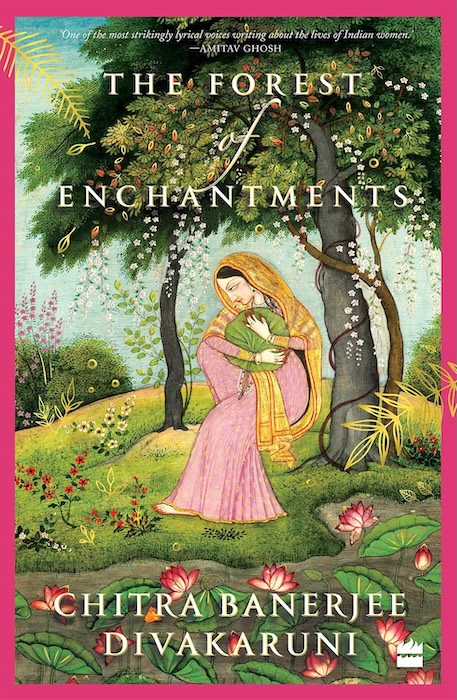
Forest of Enchantments
The Forest of Enchantments reimagines the ancient Indian epic Ramayana through the perspective of Sita, the heroine whose experiences have often been overshadowed by those of the male characters. From her early life and marriage to Prince Rama to their exile in the forest, Sita’s story unfolds as a journey marked by love, sacrifice, and difficult choices. After she is abducted by the demon king Ravana and eventually reunited with Rama, she faces further trials that challenge her dignity and independence. Divakaruni also brings attention to other women in the epic, including Kaikeyi, Surpanakha, and Mandodari, exploring the complicated motivations behind their actions. By giving these women their own voices, the novel questions traditional ideas about duty, honour, and obedience. It offers a feminist interpretation of a foundational Indian epic, examining women’s autonomy and their struggle to define themselves within a world governed by patriarchal expectations.
2019
4
The Palace of Illusions
The Palace of Illusions retells the ancient Indian epic Mahabharata from the perspective of Panchaali, also known as Draupadi, the princess who becomes the wife of the five Pandava brothers. Born from fire and raised amid royal expectations, Panchaali is intelligent, passionate, and determined to influence her own destiny in a world governed by men, duty, and political ambition. As her husbands fight to reclaim their kingdom, she becomes entangled in rivalries, betrayals, and the devastating conflict that eventually leads to war. The novel offers a fresh interpretation of familiar events by foregrounding Panchaali’s inner life, desires, and frustrations. Divakaruni explores gender, power, fate, and the consequences of pride, questioning how women experience and influence histories traditionally told through the deeds of male heroes
2008