Haiti
North America
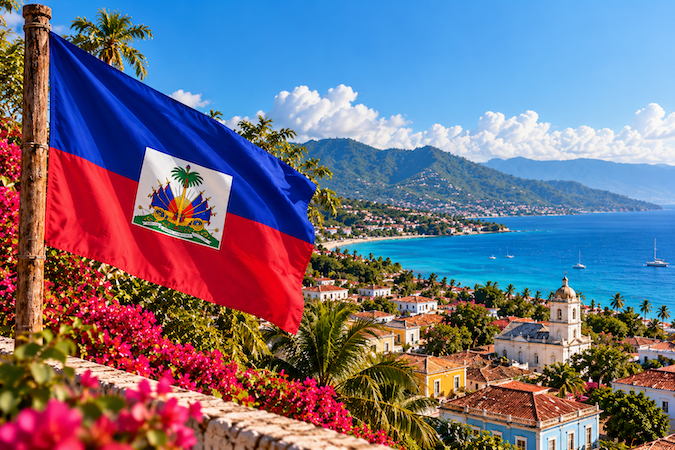
Haiti occupies the western part of the island of Hispaniola in the Caribbean, with a landscape of rugged mountains, tropical valleys, forests, and a long coastline along the Caribbean Sea. Its culture reflects a rich blend of Indigenous Taíno heritage, African traditions, French colonial history, and Caribbean influences. Port-au-Prince is the country’s main cultural center, while cities such as Cap-Haïtien preserve important architectural and historical heritage.
Haitian literature is deeply connected to the country’s history of revolution, independence, colonialism, and cultural identity. Oral storytelling, proverbs, songs, and Vodou traditions have played an important role alongside written literature, helping preserve African and Caribbean cultural memory. Modern Haitian writing developed in both French and Haitian Creole, often exploring freedom, social inequality, political violence, exile, migration, and the relationship between Haiti and the wider Caribbean. Major writers include Jacques Roumain, author of Gouverneurs de la rosée, Jacques Stephen Alexis, Edwidge Danticat, Dany Laferrière, and Frankétienne. Contemporary Haitian literature frequently moves between Haiti and its diaspora, examining memory, displacement, family, identity, and the enduring legacy of the Haitian Revolution.