Honduras
North America
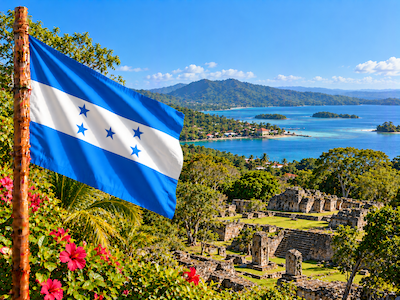
Honduras lies in the heart of Central America, bordered by the Caribbean Sea to the north and the Pacific Ocean to the south. Its landscape ranges from forested mountains and fertile valleys to tropical Caribbean coastlines and the Bay Islands. The country is home to a rich mixture of Indigenous, African, and mestizo cultures, with communities including the Lenca, Miskito, Garífuna, and others. Tegucigalpa and San Pedro Sula are major urban centers, while places such as Copán preserve the legacy of the ancient Maya world.
Honduran literature draws on Indigenous traditions, oral storytelling, colonial history, and the social realities of Central America. Poetry, legends, folk stories, songs, and oral histories remain important, particularly among Indigenous and Afro-Caribbean communities. Modern literature has often engaged with political change, inequality, land and rural life, identity, migration, and the legacy of colonialism. Important figures include Ramón Amaya Amador, known for socially engaged novels such as Prisión Verde, Roberto Sosa, one of Honduras’s most influential poets, and Lucila Gamero de Medina, an important early woman novelist. Contemporary Honduran writing continues to explore violence, displacement, memory, Indigenous and Afro-Caribbean identity, and the experience of migration.