Books from France
Suggest a book
All genres
Historical Fiction
Literary Fiction
Fantasy
Romance
Horror
Thriller
Non-Fiction
Mystery
Memoir
Classics
History
Sci-Fi
Contemporary Fiction
Science Fiction
Fiction
Poetry
Essays
Family Saga
Magical Realism
Family Drama
Dark Academia
Psychological Fiction
Dark Comedy
Political Writing
Feminist Fiction
Satire
Campus Fiction
Cultural Studies
Biography
Philosophy
Comedy
Drama
Young Adult
Gothic
Dystopia
Crime
Children's Books
Short Stories
Mythology
Cozy
Retellings
Humour
Adventure
All themes
Love & Passion
Adventure & Journey
Identity & Belonging
War & Conflict
Freedom & Resistance
Family & Heritage
Nature & Landscape
Society & Class
Spirituality & Faith
Solitude & Exile
Coming of Age
Revolution & Change
Friendship
History
Immigration
Myths and Retellings
Colonialism
Women & Society
Mental Health
Motherhood
1
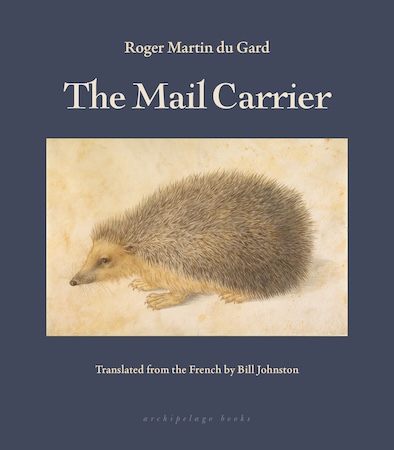
The Mail Carrier
In a small French village, a postman knows everyone’s secrets—and cannot resist uncovering more. Joigneau begins his daily rounds with a bag full of letters, bills, telegrams, and summonses, but delivering the mail is only part of his business. Curious, calculating, and shamelessly intrusive, he opens envelopes, delays deliveries, and invents excuses to enter people’s homes. As he moves from one household to another, the private ambitions, petty rivalries, hidden anxieties, and quiet hypocrisies of the village come into view. A baker cheats his customers, a café owner plots to acquire a neighbour’s property, and superstition shapes everyday decisions. Over the course of a single day, Roger Martin du Gard constructs a vivid portrait of provincial French life, revealing how much drama can hide beneath an apparently peaceful surface. Observant, gently satirical, and rich in human detail, this short novel is a reminder that even the smallest communities contain entire worlds of secrets.
2027
2
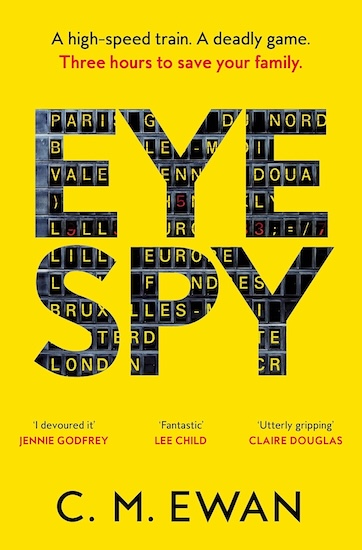
Eye Spy
Waiting for the Eurostar in Paris, Mark is travelling home to London with his four-year-old daughter, Molly, and teenage stepdaughter, Freya. During a game of “Eye Spy,” Molly suddenly identifies a stranger as a “Bad Man.” Mark initially dismisses her words as a child’s imagination, but when he spots the same man boarding their train with a suspicious-looking suitcase, unease turns to fear.
As the train speeds through the Channel Tunnel, Mark begins to suspect that the stranger poses a genuine threat. Trapped in a confined space with hundreds of passengers and no easy way to escape, he must work out who the man is and what he wants. But as unsettling connections to Mark’s past emerge, the danger becomes increasingly personal, and protecting his daughters becomes a race against time.
Unfolding over a tense train journey, Eye Spy combines claustrophobic suspense with an emotional story about parenthood, trust, and the lengths someone will go to protect their family. C. M. Ewan transforms an ordinary trip into a terrifying ordeal where a child’s innocent observation could be the only warning that matters.
2026
3
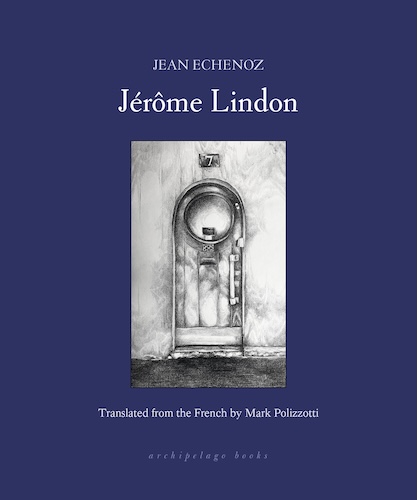
Jérôme Lindon
What makes a great editor—and what happens when the person who believes in your work is no longer there? In this intimate, witty memoir, French novelist Jean Echenoz remembers Jérôme Lindon, the formidable publisher who led Éditions de Minuit and helped shape modern French literature. Their relationship began in 1979, when Echenoz, an unpublished writer, nervously submitted his first novel to Lindon. Instead of rejecting the manuscript, Lindon offered him a contract, beginning a friendship and professional partnership that would last more than twenty years. Through recollections of early-morning phone calls, lunches, disagreements, and conversations about the smallest details of writing, Echenoz reveals a man whose stern exterior concealed generosity, conviction, and an unwavering commitment to literature. Both a personal farewell and a portrait of literary life, this slender book celebrates the often complicated bond between a writer and the editor who helps bring his work into the world.
2026
4

Medusa's Laugh
What if women could reclaim their freedom simply by telling their own stories? First published in 1975, Hélène Cixous’s Medusa’s Laugh is a landmark of feminist thought that challenges the patriarchal traditions shaping literature, language, and society. Drawing on the myth of Medusa, a woman transformed into a monster by the stories told about her, Cixous invites women to reject the identities imposed on them and rediscover their own voices. She introduces the concept of écriture féminine—a form of writing that breaks away from conventional, male-dominated structures and embraces the complexity of women’s bodies, desires, and experiences. Passionate, poetic, and deliberately provocative, this essay is both a literary manifesto and a call to action: women must write themselves into history rather than allow others to define them. Its central message remains powerful: self-expression can be an act of liberation.
2026
5
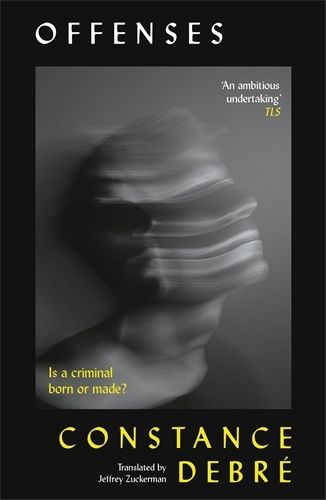
Offenses
Based on a real murder case, Offenses examines the relationship between crime, poverty, and justice in contemporary France. In a housing estate outside Paris, a nineteen-year-old man stabs his elderly neighbour ten times to settle a €450 drug debt. The crime appears senseless in its brutality, but Constance Debré looks beyond the immediate act to examine the social conditions surrounding both the perpetrator and his victim.
Drawing on her experience as a criminal defence lawyer, Debré explores the boundaries between individual responsibility and collective failure. The young man’s circumstances, the victim’s vulnerability, and the environment in which they live become part of a wider portrait of a society divided by class and opportunity. Written in Debré’s characteristic spare, unsentimental prose, the novella questions whether justice can truly be separated from the inequalities that shape people’s lives. Rather than offering easy explanations or moral resolutions, it confronts readers with uncomfortable questions about guilt, punishment, and the possibility of escaping the circumstances into which one is born.
2026
6
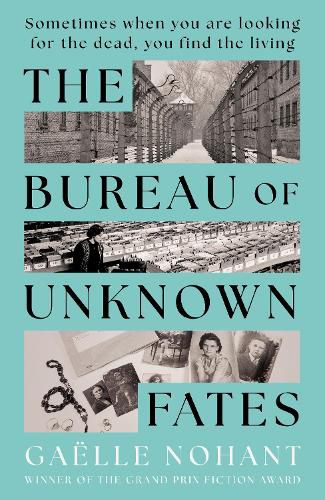
The Bureau of Unknown Fates
In the aftermath of the Second World War, the Allies establish the International Tracing Service in Bad Arolsen, Germany, to investigate Nazi crimes and help families discover the fates of millions of missing and displaced people. In 1990, Irène, a young Frenchwoman who has moved to Germany after marrying a German man, begins working at the institution. Meticulous and deeply committed to her work, she gradually becomes absorbed in the stories preserved within its archives. Years later, she is entrusted with returning thousands of personal belongings confiscated from concentration camp prisoners. A cloth doll, a medallion, and an embroidered handkerchief become clues to the identities of their former owners and the families they left behind. As Irène follows these traces across Europe, she uncovers stories of persecution, complicity, survival, and loss, while confronting the troubling silences surrounding Germany’s wartime past. Weaving together individual lives and collective memory, Gaëlle Nohant’s moving historical novel explores the enduring consequences of the Holocaust and the power of remembrance to restore dignity to those history has nearly erased.
2026
7
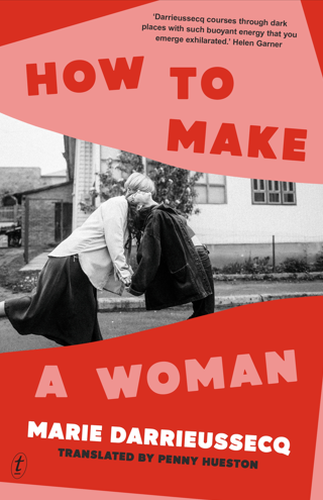
How to Make a Woman
How to Make a Woman follows Rose and Solange, two lifelong friends growing up in a small village in the French Basque Country during the 1980s. Although they share a childhood, their lives begin to diverge dramatically as they enter adulthood. Rose, thoughtful and conventional, moves to Bordeaux to study psychology while maintaining her relationship with her childhood sweetheart, Christian. Solange, rebellious and restless, becomes pregnant at fifteen and eventually leaves her familiar surroundings to pursue a career as an actress.
As their paths take them through Bordeaux, Paris, London, and Hollywood, the two women confront the expectations imposed on them by society, the demands of relationships, and the challenges of defining themselves on their own terms. Their friendship endures despite their differences, revealing how women can remain connected even as their lives move in opposite directions.
With wit and emotional precision, Darrieussecq explores female friendship, sexuality, motherhood, ambition, and the social forces that shape women’s identities. The novel offers a nuanced portrait of growing up and becoming oneself in a world that continually tries to define what a woman should be.
2026
8
The Witch
In The Witch, Marie NDiaye tells the story of Lucie, a woman who discovers that she possesses magical powers inherited from her mother. Living in a seemingly ordinary French suburb, Lucie struggles to pass her knowledge of witchcraft on to her twin daughters while navigating an unhappy marriage and an increasingly unstable family life. As her daughters begin to develop their own powers and assert their independence, Lucie’s sense of control over her family and identity begins to unravel. Blending dark humor, psychological tension, and elements of the supernatural, NDiaye explores motherhood, female power, and the complexities of family relationships. The novel offers a subtle, unsettling examination of the desire to control others and the difficulty of understanding those closest to us.
2026
9
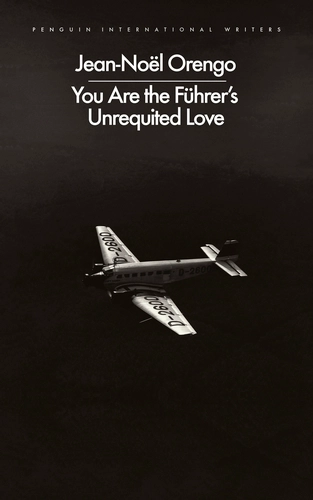
You Are the Führer's Unrequited Love
How does a man implicated in one of history’s greatest atrocities reinvent himself as an innocent bystander? In 1969, Albert Speer—Hitler’s favourite architect and Minister of Armaments—publishes his memoirs, presenting himself as the “good Nazi” who knew nothing about the Holocaust. His carefully constructed narrative helps him escape the full weight of his responsibility and become a bestselling author. But behind this image lies a history of ambition, complicity, and calculated self-deception. Blending historical research with literary fiction, Jean-Noël Orengo reconstructs Speer’s rise, his proximity to Hitler, and his postwar reinvention. The result is a disturbing exploration of how powerful people manipulate memory, reshape their identities, and make fiction more seductive than truth. In an age of competing narratives, the novel asks who gets to control the story of the past.
2024
10
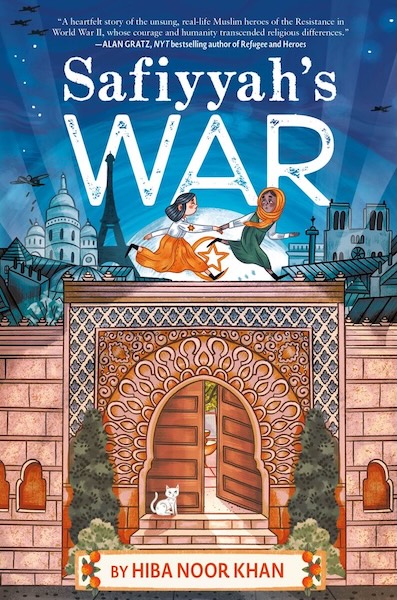
Safiyyah's War
When Nazi Germany invades Paris in 1940, eleven-year-old Safiyyah’s peaceful life at the Grand Mosque of Paris is transformed by fear and uncertainty. Her Jewish best friend has fled the city, German soldiers patrol the streets, and Safiyyah struggles to understand the growing injustice around her. When her father is arrested for his secret Resistance activities, she discovers that the adults she trusts are involved in something far more dangerous than she imagined.
Determined to fight back, Safiyyah begins carrying messages across occupied Paris. Soon, the mosque becomes a refuge for persecuted Jewish people, and Safiyyah faces her greatest challenge yet: navigating the dangerous underground passages beneath the city to help lead them to safety.
Inspired by the little-known history of the Grand Mosque of Paris and its role in helping Jews escape Nazi persecution, Safiyyah’s War brings a neglected chapter of the Second World War to life through the eyes of a courageous young Muslim girl. It is a moving story of friendship, compassion, and ordinary people risking everything to protect others.
2023
11
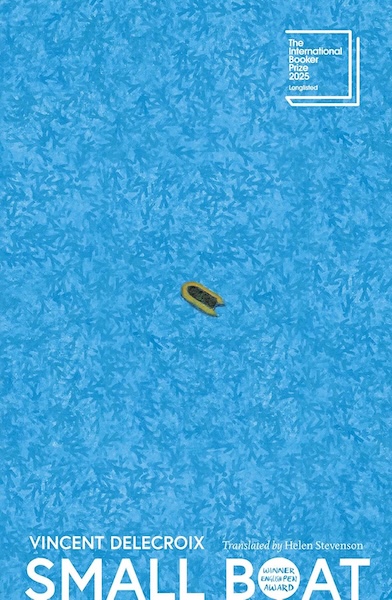
Small Boat
One night, a small boat carrying migrants across the English Channel begins to sink. Desperate passengers call for help again and again, but the rescue they need never comes in time. Twenty-seven people die. At the centre of Vincent Delecroix’s Small Boat is the woman who answered those distress calls—and who must now confront her role in the tragedy.
Inspired by the real-life Channel disaster of November 2021, this powerful novella unfolds through the perspective of an unnamed French rescue operator who insists that she alone cannot be held responsible. As she revisits the night’s events, her attempts to justify herself expose the uncomfortable distance between following procedures and doing what is morally right.
Delecroix transforms a devastating news story into an unsettling examination of guilt, indifference, and collective responsibility. Who is to blame when a human life is lost? An individual, a system, a border—or a society that has learned to look away?
Shortlisted for the 2025 International Booker Prize, Small Boat is a brief but haunting work that challenges readers to consider what it means to witness suffering and choose whether to act.
2023
12
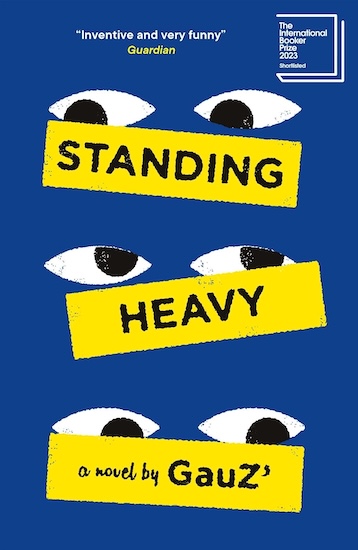
Standing Heavy
Set in Paris, Standing Heavy is a witty, politically charged novel about African immigrants working as security guards in a society that often overlooks their presence. Through the interconnected experiences of Ferdinand, Ossiri, and Kassoum, three men from Côte d’Ivoire navigating life in France across different decades, Gauz’ explores the realities of undocumented work, racial discrimination, and the enduring consequences of colonialism.
Drawing on the security guards’ observations of shoppers, wealthy passers-by, and everyday consumer habits, the novel exposes the contradictions of a society where the people responsible for protecting luxury stores remain largely invisible themselves. Its narrative moves between the 1960s, 1990s, and 2010s, connecting individual lives to France’s changing immigration policies and its complicated relationship with Africa.
Combining sharp humour, social observation, and historical reflection, Gauz’ challenges conventional ideas about belonging, labour, and power. The novel offers a distinctive perspective on the immigrant experience, showing how those positioned at the margins of society can see its inequalities more clearly than those at its centre. It was shortlisted for the 2023 International Booker Prize.
2022