Books from France
Suggest a book
All genres
Historical Fiction
Literary Fiction
Fantasy
Romance
Horror
Thriller
Non-Fiction
Mystery
Memoir
Classics
History
Sci-Fi
Contemporary Fiction
Science Fiction
Fiction
Poetry
Essays
Family Saga
Magical Realism
Family Drama
Dark Academia
Psychological Fiction
Dark Comedy
Political Writing
Feminist Fiction
Satire
Campus Fiction
Cultural Studies
Biography
Philosophy
Comedy
Drama
Young Adult
Gothic
Dystopia
Crime
Children's Books
Short Stories
Mythology
Cozy
Retellings
Humour
Adventure
All themes
Love & Passion
Adventure & Journey
Identity & Belonging
War & Conflict
Freedom & Resistance
Family & Heritage
Nature & Landscape
Society & Class
Spirituality & Faith
Solitude & Exile
Coming of Age
Revolution & Change
Friendship
History
Immigration
Myths and Retellings
Colonialism
Women & Society
Mental Health
Motherhood
1
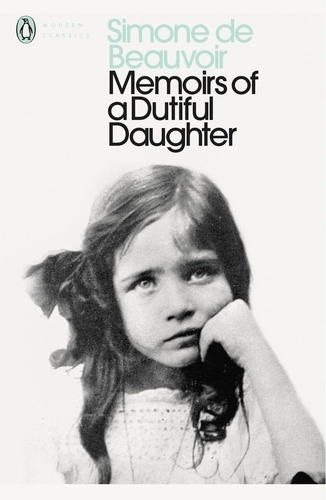
Memoirs of a Dutiful Daughter
Growing up in a respectable Parisian family, Simone de Beauvoir is taught to be a devout Catholic, an obedient daughter, and a woman destined for marriage. But as she discovers philosophy, literature, and the pleasure of independent thought, the beliefs that once defined her world begin to crumble. Questioning religion, challenging social conventions, and resisting her family’s expectations, she gradually realises that intellectual freedom comes at a price. Her journey towards independence is also a story of loneliness, friendship, and the painful discovery that the people we love can become obstacles to our becoming ourselves. Intimate and thought-provoking, this memoir captures the moment a young woman begins to break free from the life society has chosen for her.
1958
2
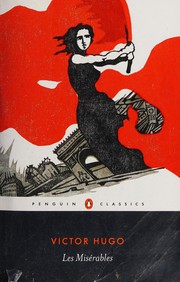
Les Misérables
Set in nineteenth-century France during a period of profound social inequality and political unrest, Les Misérables follows Jean Valjean, a former convict who struggles to rebuild his life after spending nineteen years in prison for stealing bread and attempting to escape. Despite his determination to become an honest man, he is relentlessly pursued by Inspector Javert, who believes that a criminal can never truly change. Valjean’s journey becomes intertwined with the lives of Fantine, a desperately poor woman; Cosette, her neglected daughter whom he raises as his own; and Marius, a young revolutionary caught up in the Paris uprising of 1832. Through their intersecting stories, Hugo explores poverty, injustice, sacrifice, love, and the possibility of redemption. Blending intimate human struggles with sweeping historical events, the novel offers a powerful critique of a society that punishes the vulnerable while questioning whether compassion and moral courage can overcome even the deepest forms of suffering.
1862