Fiji
Oceania
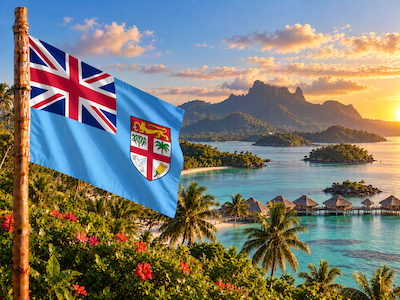
Fiji is an island nation in the South Pacific made up of more than 300 islands, with mountainous interiors, tropical forests, coral reefs, lagoons, and long stretches of coastline. Its largest islands, Viti Levu and Vanua Levu, are home to most of the population, including the capital Suva. Fijian culture reflects the traditions of Indigenous iTaukei communities alongside the heritage of Indo-Fijians, whose ancestors arrived during the colonial period.
Fiji’s literary tradition is closely connected to oral storytelling, genealogy, legends, songs, and traditional poetry, through which histories and cultural knowledge were passed between generations. Modern written literature developed particularly during the 20th century, shaped by Indigenous traditions, colonial history, migration, and the experience of a culturally diverse society. Important Fijian writers include Subramani, whose fiction and criticism explore Indo-Fijian identity, migration, and political change, and Satendra Nandan, whose poetry and memoirs draw on questions of belonging, displacement, and Fiji’s multicultural society. Epeli Hauʻofa, although associated with Tonga as well as the wider Pacific, was an influential writer and thinker whose work challenged narrow ideas of Pacific island identity. Contemporary Pacific literature from Fiji often explores colonialism, cultural identity, migration, race, political upheaval, environmental change, and the relationship between people and the ocean, while maintaining strong connections to oral and communal traditions.