Ethiopia

Africa
Ethiopia
4
books
2
authors

Books from Ethiopia

1
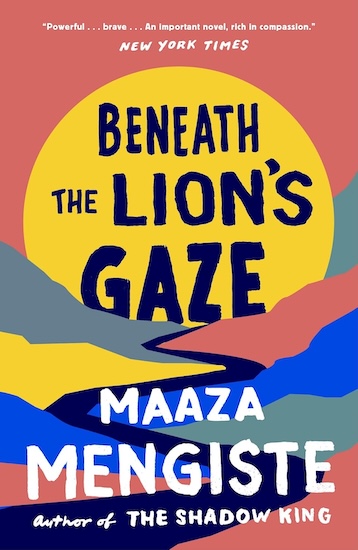
Beneath the Lion's Gaze
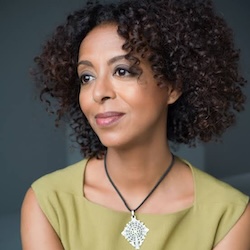
Addis Ababa, 1974. As protests sweep Ethiopia and Emperor Haile Selassie’s reign approaches its end, the Hailu family finds itself caught in a revolution that will transform the country—and destroy the fragile security of their lives. Hailu, a respected doctor, faces an impossible moral choice after helping a young woman who has been tortured by the authorities. His decision brings him into the machinery of state repression, while his sons take increasingly different paths: Yonas seeks refuge in faith and family, whereas Dawit joins the underground resistance, risking everything to fight for freedom. As the monarchy falls and a brutal military regime takes power, the family’s loyalties, convictions, and relationships are tested by violence and fear. Moving between the intimate struggles of a household and the upheaval of a nation, Maaza Mengiste’s debut novel explores the human cost of revolution and the difficult choices people face under authoritarian rule. It is a powerful portrait of a country at a turning point, where the hope of liberation threatens to give way to another cycle of oppression.
2010
2
The Shadow King
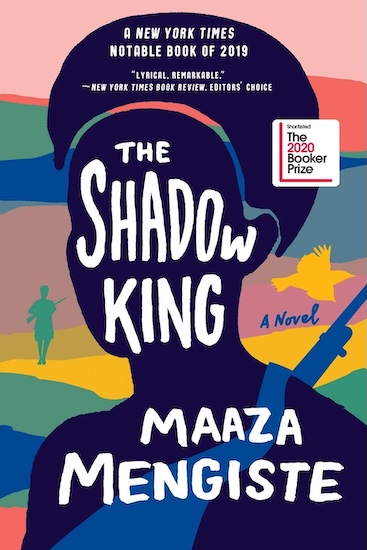
The Shadow King
Ethiopia, 1935. As Mussolini’s Italian army prepares to invade, Hirut, a recently orphaned young woman, struggles to survive in the household of Kidane, an officer in Emperor Haile Selassie’s army. When war erupts, Hirut and other Ethiopian women refuse to remain on the sidelines, limited to nursing the wounded and burying the dead. They want to fight for their country, but their courage must overcome not only the invading army but also the expectations of a society that rarely recognises women’s strength. When the emperor is forced into exile, Hirut devises an extraordinary plan to restore hope: she helps disguise a humble peasant as the emperor and becomes his personal guard. Meanwhile, Ettore, a Jewish Italian photographer serving with the invading forces, struggles with his own conscience as he witnesses the brutality of the occupation. Moving between the perspectives of soldiers, civilians, and women on the battlefield, The Shadow King reclaims a neglected chapter of Ethiopian history. It is a powerful exploration of resistance, sacrifice, and the women whose contributions to war have too often been erased.
2019
3
Cutting for Stone
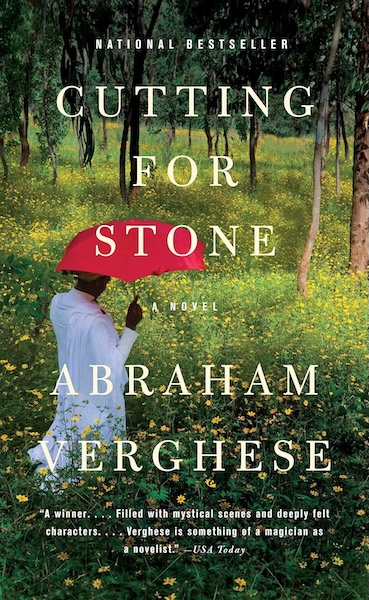
Cutting for Stone
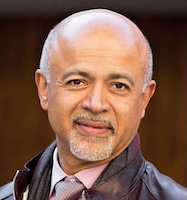
In 1950s Addis Ababa, Ethiopia, twin brothers Marion and Shiva Stone are born from a secret relationship between an Indian nun and a British surgeon at a mission hospital. Their mother dies during childbirth, and their father disappears, leaving the twins to be raised by two devoted doctors who become their adoptive parents. Growing up surrounded by the world of medicine, the brothers develop an extraordinary bond and a shared fascination with surgery. But as Ethiopia approaches revolution, their lives become entangled in forbidden love, jealousy, and betrayal. A devastating rupture drives Marion into exile in the United States, where he must confront the past he has tried to escape. When circumstances eventually bring him back to the world of his childhood, he faces the people and choices that shaped his life—and discovers that healing some wounds requires more than surgical skill. Spanning continents and decades, Cutting for Stone is an epic story of brotherhood, sacrifice, and the complicated ties between parents and children. Abraham Verghese combines the intimate drama of a family saga with the intricate world of medicine, exploring how love, loss, and the accidents of birth can shape a person’s destiny.
2009
4
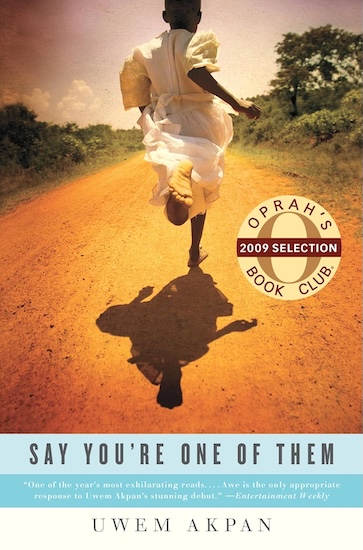
Say You're One of Them
Say You’re One of Them is a collection of five interconnected-in-spirit stories set in different African countries, exploring the lives of children caught in circumstances far beyond their control. Through the eyes of young narrators, Uwem Akpan portrays the devastating effects of poverty, religious conflict, human trafficking, and political violence on families and communities. Written with emotional intensity and compassion, the collection challenges readers to look beyond headlines and statistics to recognise the individual lives behind Africa’s social and political crises. Rather than reducing its characters to victims, Akpan gives them distinctive voices, relationships, and hopes, creating a powerful portrait of childhood under extreme circumstances.
2009

Famous authors from Ethiopia

About Ethiopia

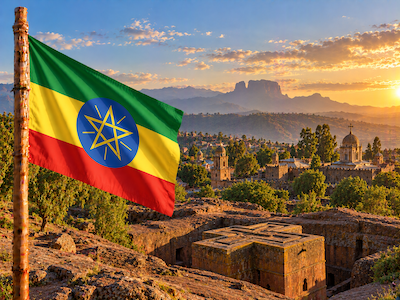
Ethiopia is a landlocked country in the Horn of Africa, known for its dramatic highlands, deep valleys, lakes, and ancient cultural heritage. Its capital, Addis Ababa, is a major cultural center, while cities such as Gondar, Lalibela, and Harar reflect the country’s long and diverse history. Ethiopia is home to many ethnic groups and languages, with traditions shaped by Christianity, Islam, Indigenous beliefs, and centuries of interaction with neighboring regions.

Region
Africa
Literary Context

Ethiopia has one of Africa’s oldest written literary traditions, rooted in the Ge’ez language and the long Christian manuscript tradition. Religious texts, chronicles, poetry, legends, and royal histories were preserved for centuries, alongside rich oral traditions of storytelling, songs, proverbs, and praise poetry. The national epic tradition also includes stories surrounding figures such as King Solomon and the Queen of Sheba. Modern Ethiopian literature developed primarily in Amharic, while writers have also worked in Oromo, Tigrinya, English, and other languages. Important figures include Haddis Alemayehu, whose novel Fikir Eske Mekabir explores love, tradition, and social change, and Daniachew Worku, whose The Thirteenth Sun examines Ethiopian society and political transformation. Contemporary writers such as Maaza Mengiste have brought Ethiopian history, war, memory, and displacement to international readers. Ethiopian literature frequently explores history, identity, religion, tradition versus modernity, political change, war, migration, and memory, reflecting the country’s exceptionally long and complex cultural history.
Africa