Eritrea
Africa
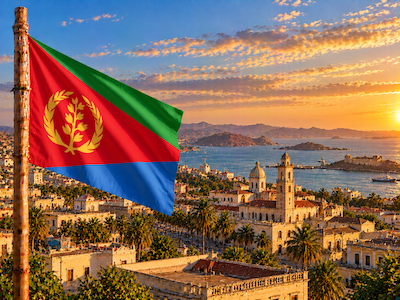
Eritrea lies along the Red Sea in the Horn of Africa, with a landscape ranging from the highlands around Asmara to dry lowlands, desert, and the Dahlak Islands. Its culture reflects Tigrinya, Tigre, Saho, Afar, Bilen, and other traditions, shaped by long connections with the Red Sea, Ethiopia, Sudan, Arabia, and Italy.
Eritrea has a strong tradition of oral literature, including folktales, praise poetry, songs, proverbs, and historical storytelling. Written literature developed through several languages, particularly Tigrinya and Arabic, with Italian also leaving a mark through the colonial period. Modern Eritrean writing has often been closely connected to questions of national identity, colonialism, war, independence, exile, and memory. Writers such as Sembene-like? No—more appropriately, Reesom Haile, Sulaiman Addonia, and Haji Jabir have explored displacement, migration, belonging, and the experience of Eritreans living between cultures. Eritrean literature frequently moves between the personal and political, reflecting the country’s turbulent twentieth-century history and its diaspora.