Books from Germany
Suggest a book
All genres
Historical Fiction
Literary Fiction
Fantasy
Romance
Horror
Thriller
Non-Fiction
Mystery
Memoir
Classics
History
Sci-Fi
Contemporary Fiction
Science Fiction
Fiction
Poetry
Essays
Family Saga
Magical Realism
Family Drama
Dark Academia
Psychological Fiction
Dark Comedy
Political Writing
Feminist Fiction
Satire
Campus Fiction
Cultural Studies
Biography
Philosophy
Comedy
Drama
Young Adult
Gothic
Dystopia
Crime
Children's Books
Short Stories
Mythology
Cozy
Retellings
Humour
Adventure
All themes
Love & Passion
Adventure & Journey
Identity & Belonging
War & Conflict
Freedom & Resistance
Family & Heritage
Nature & Landscape
Society & Class
Spirituality & Faith
Solitude & Exile
Coming of Age
Revolution & Change
Friendship
History
Immigration
Myths and Retellings
Colonialism
Women & Society
Mental Health
Motherhood
1
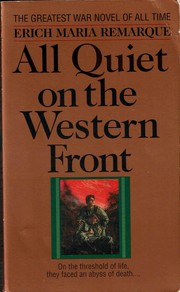
All Quiet on the Western Front
All Quiet on the Western Front follows Paul Bäumer, a young German soldier who enlists in the First World War alongside his school friends after being encouraged by patriotic teachers. Once at the front, the young men discover that the heroic ideals used to recruit them bear little resemblance to the reality of trench warfare. Constant bombardment, hunger, exhaustion, and the loss of comrades gradually destroy their innocence and their faith in the society that sent them to fight. When Paul returns home on leave, he finds himself unable to reconnect with civilians who cannot understand his experiences. Remarque portrays war as a force that damages not only bodies but also the emotional and moral foundations of a generation. The novel explores trauma, disillusionment, and the devastating distance between military rhetoric and the human cost of conflict.
1929
2

The Tin Drum
The Tin Drum is narrated by Oskar Matzerath, who recounts his life from a mental institution while reflecting on the turbulent history of Germany before, during, and after the Second World War. Born in Danzig in 1924, Oskar decides at the age of three to stop growing, using his small stature and tin drum to distance himself from the adult world. He also possesses a piercing scream capable of shattering glass. Through his strange perspective, the novel depicts the rise of Nazism, the violence of war, and the moral compromises of ordinary people. Grass combines grotesque humour, fantasy, and historical realism to challenge conventional narratives of innocence and responsibility. Oskar’s unreliable account exposes the contradictions of a society that participated in or tolerated fascism, examining collective guilt, denial, and the difficulty of confronting a traumatic national past.
1959
3
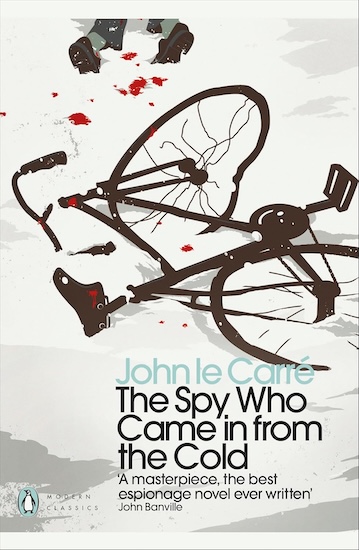
The Spy Who Came in from the Cold
Alec Leamas is a weary British intelligence officer stationed in Berlin during the Cold War. After watching his network of agents collapse, he is ready to leave the dangerous world of espionage behind. But his superior, known as Control, offers him one final assignment: pretend to defect to East Germany and help destroy a powerful figure within the East German intelligence service. To make the deception convincing, Leamas must appear disillusioned, financially desperate, and willing to betray his country.
As he becomes entangled in a carefully constructed web of lies, Leamas discovers that the boundaries between truth and deception are far less clear than he imagined. His growing relationship with Liz Gold, a young British communist, complicates his mission and forces him to confront the human cost of a world in which people are treated as expendable pieces in a political game.
Set against the bleak backdrop of divided Berlin, The Spy Who Came in from the Cold strips espionage of its glamour, revealing a world shaped by moral compromise, manipulation, and betrayal. John le Carré’s landmark novel challenges the idea that intelligence work serves an uncomplicated good, asking what remains of personal conscience when loyalty to the state demands sacrificing everything else.
1963
4
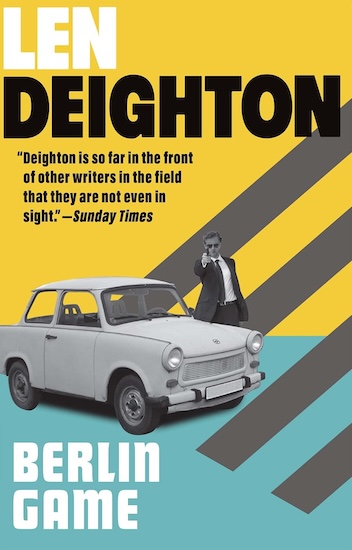
Berlin Game
During the Cold War, British intelligence officer Bernard Samson is accustomed to being overlooked. Now working behind a desk in London after years in the field, he is unexpectedly called back into action when one of Britain’s most valuable agents in East Berlin requests urgent extraction. Known by the codename “Brahms Four,” the agent believes a Soviet mole has infiltrated the highest levels of British intelligence—and that his own life is in immediate danger.
Sent to Berlin, Samson must navigate a labyrinth of double agents, conflicting loyalties, and carefully concealed secrets. His mission is complicated by the suspicion that the betrayal may come from someone within his own professional circle. Meanwhile, his relationship with his ambitious wife, Fiona, who is rising through the intelligence service while his own career stagnates, adds another layer of uncertainty to his already precarious position.
The first novel in Len Deighton’s acclaimed Game, Set and Match trilogy, Berlin Game combines intricate espionage plotting with a sharp portrait of the people behind intelligence operations. Set in a divided Europe where trust is a dangerous luxury, it explores betrayal, professional rivalry, and the personal costs of a life built around secrets.
1983
5
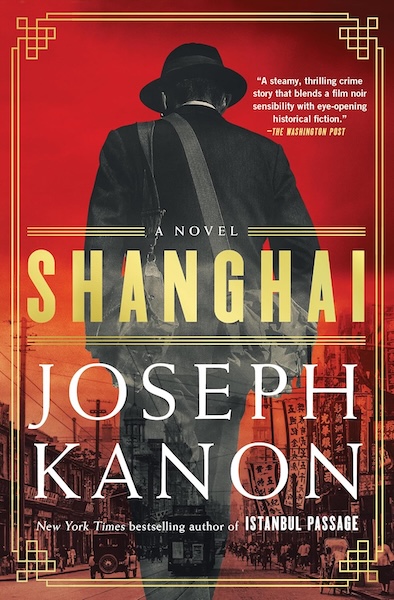
Shanghai
In 1938, as Nazi persecution intensifies across Europe, Shanghai becomes an unlikely refuge for Jewish refugees fleeing Germany. But escaping persecution does not mean escaping danger.
Daniel Lohr, a German Jew who has survived the Gestapo, arrives in Shanghai hoping to begin again. Penniless and stateless, he turns to his uncle Nathan, a mysterious businessman who runs a glamorous nightclub and maintains dangerous connections with the city’s criminal underworld. Meanwhile, Daniel cannot forget Leah, a woman he met during the voyage to China, whose fate becomes entangled with his own.
As political tensions rise and Japanese occupation looms, Daniel is drawn into a world of gang warfare, corruption, espionage, and shifting loyalties. In a city where survival depends on knowing whom to trust, every alliance carries a price—and the past is never entirely left behind.
Atmospheric and suspenseful, Shanghai brings to life a city caught between cultures and conflicts, where desperate refugees, gangsters, and political operatives struggle to survive. Joseph Kanon explores the moral compromises people make in extraordinary circumstances, asking how much of oneself can be sacrificed in the pursuit of safety.
2024