Belarus

Europe
Belarus
2
books
2
authors

Books from Belarus

1
Red Crosses
Red Crosses
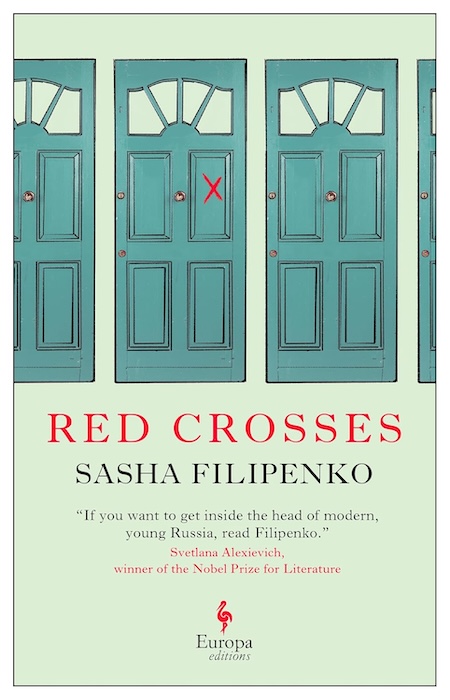
Red Crosses tells the story of two people whose lives are shaped by tragedy, memory, and the lasting consequences of political repression. Alexander, a young man devastated by personal loss, moves to Minsk hoping to withdraw from the world. His plans change when he meets his elderly neighbour, Tatiana Alexeyevna, a woman in her nineties whose memory is gradually disappearing because of Alzheimer’s disease. To help herself navigate their apartment building, she marks doors with red crosses. Despite her fading memory, Tatiana vividly recalls the horrors of twentieth-century Soviet history. She tells Alexander about her work during the Second World War, her husband’s capture by enemy forces, and her subsequent arrest and imprisonment in a labour camp under Stalin’s regime. As her story unfolds, Alexander becomes increasingly invested in preserving her memories before they disappear. Through their unlikely friendship, Filipenko explores the relationship between personal grief and collective history. The novel examines political persecution, historical amnesia, and the importance of bearing witness to the past, suggesting that remembering those who suffered is an essential act of resistance.
2021
2
Secondhand Time
Secondhand Time
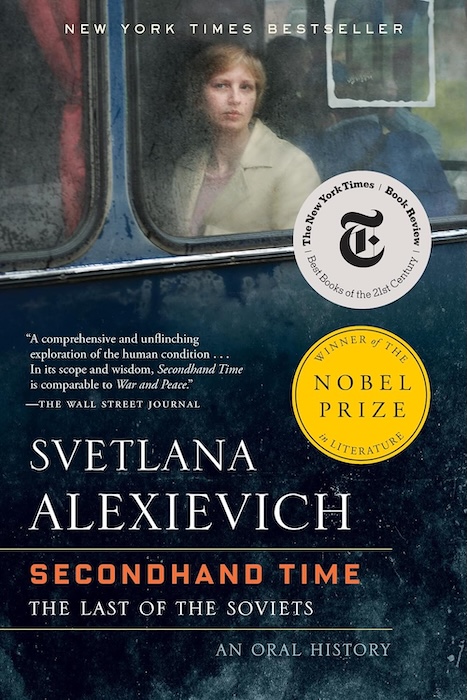
Secondhand Time is a documentary work by Nobel Prize-winning Belarusian writer Svetlana Alexievich that captures the emotional and psychological aftermath of the collapse of the Soviet Union. Through hundreds of interviews with ordinary people across the former Soviet republics, Alexievich assembles a collective portrait of a society struggling to understand the end of an entire political and cultural world. Her subjects include former Soviet idealists, disillusioned workers, survivors of political repression, and younger generations searching for meaning in a transformed society. Their testimonies reveal conflicting memories of communism, nostalgia for a lost sense of belonging, and the difficulties of adapting to new economic and social realities. Moving between intimate personal experiences and major historical events, the book explores how ideology shapes identity and how political change reverberates through private lives. Rather than presenting a single interpretation of the Soviet collapse, Alexievich allows contradictory voices to coexist, revealing the complexity of collective memory and the enduring human desire for dignity, security, and meaning.
2013

Famous authors from Belarus

About Belarus

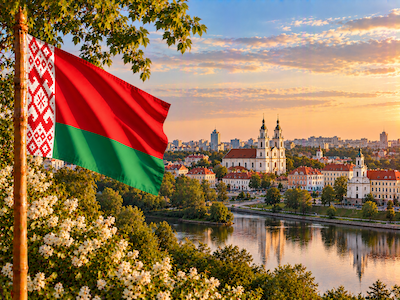
Belarus is a landlocked country in Eastern Europe, characterized by vast forests, wetlands, lakes, and gently rolling plains. Its capital, Minsk, combines broad Soviet-era avenues and monumental architecture with historic churches, parks, and a growing contemporary cultural scene. Belarusian culture has been shaped by Slavic traditions as well as centuries of contact with Lithuanian, Polish, Jewish, and Russian communities.

Region
Europe
Literary Context

Belarusian literature is closely connected to language, national identity, memory, and cultural survival. The Belarusian literary tradition developed alongside periods of political and cultural rule by the Grand Duchy of Lithuania, the Polish-Lithuanian Commonwealth, the Russian Empire, and later the Soviet Union. Modern Belarusian writing frequently addresses war, Soviet history, political repression, rural life, and collective memory. Svetlana Alexievich, the country’s best-known contemporary writer and 2015 Nobel Prize winner in Literature, developed a distinctive documentary style built from interviews and personal testimony. Her books give voice to ordinary people affected by events such as World War II, the Soviet-Afghan War, and the Chernobyl disaster. Belarusian literature is therefore particularly concerned with remembering history through individual voices and preserving cultural identity through periods of profound political change.


Europe