Bolivia
South America
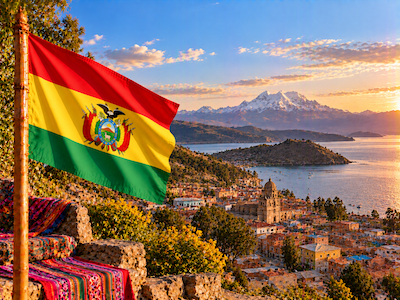
Bolivia is a landlocked country in the heart of South America, known for its extraordinary geographic diversity—from the high-altitude Altiplano and snow-capped Andes to tropical lowlands and the Amazon basin. Its cultural identity is deeply influenced by Aymara, Quechua, Guaraní, and other Indigenous traditions, alongside Spanish colonial heritage.
Bolivian literature often explores Indigenous identity, colonialism, inequality, landscape, and the relationship between traditional and modern life. Early writing was strongly influenced by Spanish literary traditions, while later authors increasingly sought to represent Bolivia’s Indigenous cultures and complex social realities. Major writers include Alcides Arguedas, whose Raza de bronce examined Indigenous oppression, and Franz Tamayo, an influential poet and intellectual. Contemporary literature continues to explore migration, political change, Indigenous identity, memory, and Bolivia’s multicultural society.