Australia

Oceania
Australia
10
books
13
authors

Books from Australia

1
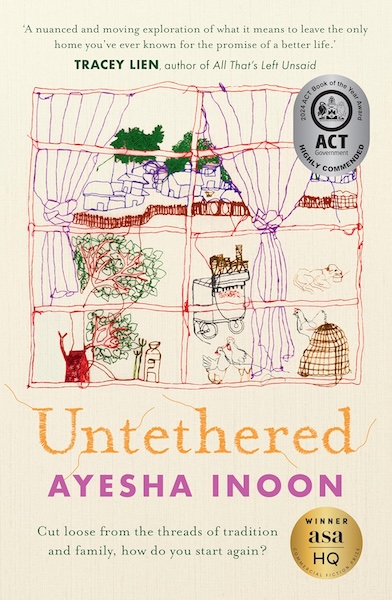
Untethered
Untethered
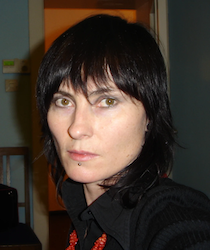
Leaving home promises freedom, but what happens when the life you find is more restrictive than the one you left behind? Zia secretly dreams of going to university, but growing up in a traditional Muslim family in Sri Lanka, she follows expectations and agrees to an arranged marriage with Rashid, a man she barely knows. At first, the security of family wealth and familiar customs softens the difficulties of their relationship. But when political unrest pushes the couple to immigrate to Australia, everything changes. Far from her family and the life she once knew, Zia faces isolation, financial hardship, and a marriage that becomes increasingly suffocating. The new country offers the promise of independence, yet visa restrictions and unfamiliar social expectations make building a life of her own far more difficult than she imagined. As she discovers friendship, experiences devastating loss, and begins questioning the choices made for her, Zia must decide whether she can find the courage to shape her own future. Inspired in part by Ayesha Inoon’s experiences as an immigrant Muslim woman, Untethered is a moving exploration of displacement, cultural expectations, and the complicated freedom of starting over. It asks what we must leave behind to discover who we truly are.
2023
2
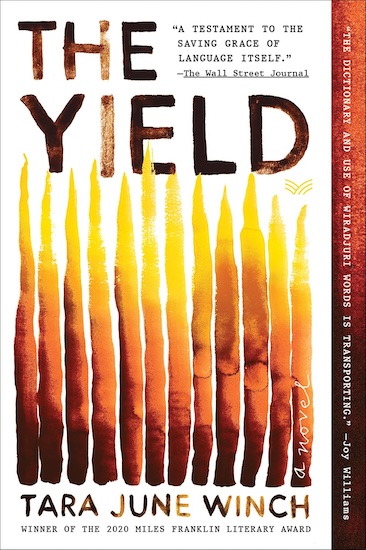
The Yield
The Yield
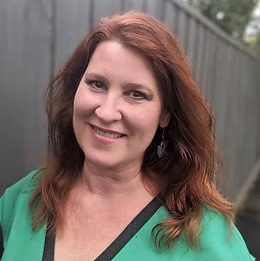
In The Yield, Tara June Winch tells the story of Albert Gondiwindi, an elderly Wiradjuri man determined to preserve his people’s language and cultural knowledge before he dies. When Albert passes away, his granddaughter August returns to her family’s home in rural New South Wales after spending ten years in England. Her homecoming brings her face-to-face with painful memories, including the disappearance of her older sister, Jedda, and the colonial history that has shaped her family’s life. August soon discovers that their ancestral home, Prosperous House, is threatened by a mining company seeking to take over the surrounding land. Determined to protect her family’s heritage, she searches for the dictionary Albert was compiling, a collection of Wiradjuri words and stories that preserves generations of knowledge. His work becomes a vital link to the past, helping August reconnect with her identity and understand the experiences of her ancestors. The novel unfolds through three interwoven narratives: August’s return, Albert’s dictionary, and the historical account of a missionary whose actions reveal the destructive effects of colonial intervention. Through these different perspectives, Winch explores the connections between language, land, memory, and belonging. The Yield is both a powerful examination of Indigenous dispossession and a celebration of cultural survival, showing how reclaiming language and storytelling can help restore what history has attempted to erase.
2019
3
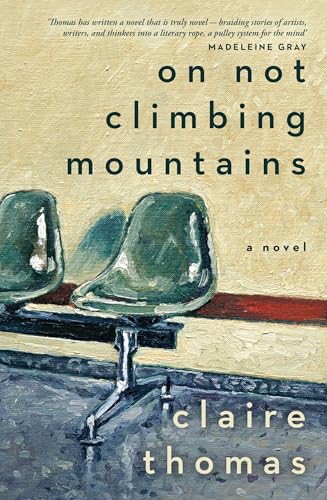
On Not Climbing Mountains
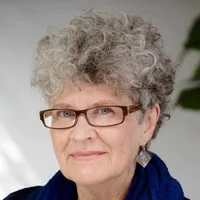
A woman arrives in Geneva, beginning a train journey through Switzerland, the country where her father was born. Seeking solitude and a temporary escape from the demands of ordinary life, she hopes to exist outside the usual rhythms of time. Yet as she travels through snowy landscapes, museums, and historic towns, she becomes immersed in the stories embedded in the places she encounters. She discovers traces of writers and artists including Mary Shelley, James Baldwin, Charlie Chaplin, and Patricia Highsmith, alongside the histories of political revolutionaries, scientific pioneers, and workers who carved tunnels through the Alps. Gradually, these fragments of art, history, and human experience begin to resonate with her own memories and grief. Blending travel writing, historical reflection, and literary fiction, On Not Climbing Mountains is a contemplative novel about the connections between landscape and memory, the fragility of the natural world, and the ways art allows us to encounter lives beyond our own.
2026
4
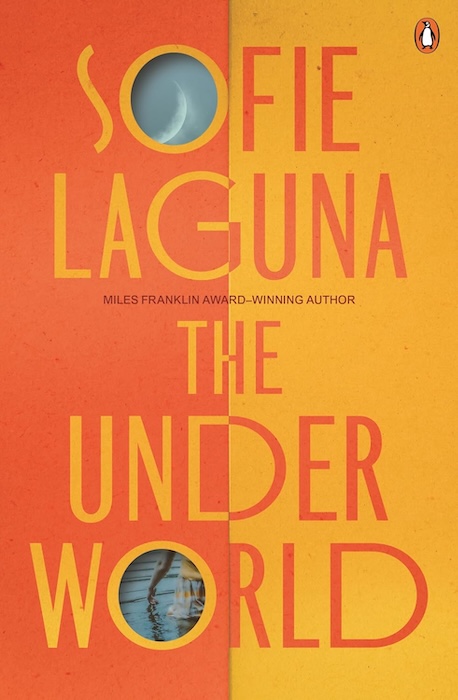
The Underworld
The Underworld
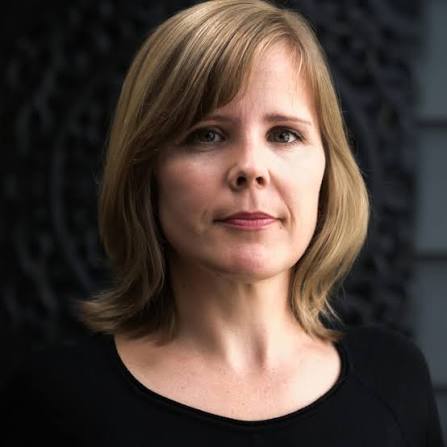
Martha Mullins has always felt like an outsider. Growing up with a glamorous but judgmental mother and a mostly absent father, she finds refuge in the myths of ancient Rome, discovering in the underworld and its gods a world that reflects her own feelings of isolation, desire and longing. As she navigates adolescence, Martha gradually discovers the joys of friendship, intimacy and the freedom of being understood by others. Her circle of friends introduces her to spontaneity, laughter and experiences that challenge her tendency to retreat into her imagination. But when events take a painful turn, Martha must confront the difficulties of growing up and the limits of the worlds she has created to protect herself. Following her intellectual and sexual awakening through school and into adulthood, Laguna’s novel explores loneliness, queer identity, grief and the search for belonging. Blending classical mythology with the emotional realities of contemporary life, The Underworld is a tender portrait of a young woman learning how to inhabit a world in which she can be herself.
2025
5
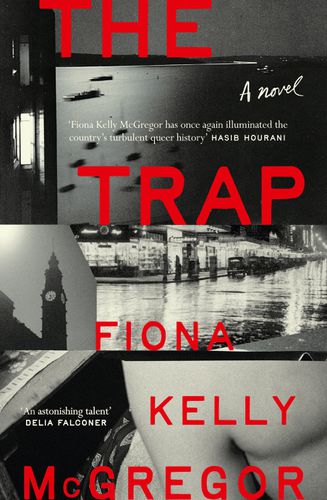
The Trap
The Trap
Sydney, October 1942. As the Second World War transforms the city, blackouts, curfews, thriving black markets, and an influx of American servicemen create an atmosphere of opportunity and danger. Beneath the respectable surface of wartime society, nightclubs and underground bars offer refuge to people living outside conventional social norms. Among them is Ray Sayles, a nightclub manager whose encounter in the Domain, a public park in central Sydney, brings him to the attention of the police. Detectives Thomas Carney and William Grigg are conducting a campaign against homosexual men, using entrapment in public toilets to manufacture arrests. As Ray becomes caught in their scheme, a scandal begins to expose the corruption and hypocrisy of those entrusted with upholding the law. Journalists, lawyers, and influential establishment figures become entangled in a struggle over truth, reputation, and justice. Inspired by a real historical scandal, this compelling novel brings to life Sydney’s marginalised communities during wartime. Blending crime fiction with social history, McGregor examines institutional homophobia, police corruption, and the resilience of people forced to conceal their identities to survive. At its heart, The Trap asks who gets to define morality—and what happens when the law itself becomes an instrument of persecution.
2026

Famous authors from Australia

About Australia

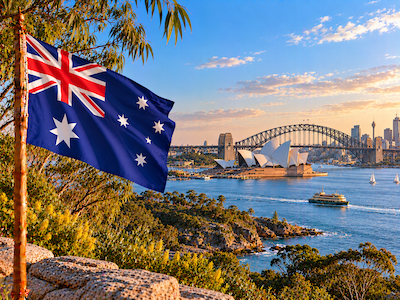
Australia is a vast country known for its red deserts, ancient rock formations, tropical rainforests, and spectacular coastlines. Sydney and Melbourne are vibrant cultural centers, while the Great Barrier Reef and the Outback showcase its remarkable natural diversity. Aboriginal and Torres Strait Islander peoples have shaped Australia’s cultural heritage for tens of thousands of years. Today, Indigenous traditions, British colonial history, and multicultural influences contribute to the country’s identity.

Region
Oceania
Literary Context

Australian literature explores identity, belonging, colonialism, migration, and the relationship between people and the land. Its literary heritage combines ancient Indigenous storytelling traditions with modern poetry, novels, and short stories. Patrick White, author of Voss, explored isolation and human nature, while Miles Franklin, known for My Brilliant Career, challenged traditional expectations of women. Contemporary Indigenous writers such as Alexis Wright, author of Carpentaria, and Kim Scott, author of That Deadman Dance, explore Indigenous history, culture, and the lasting effects of colonization. Tim Winton, known for Cloudstreet, frequently examines community, memory, and the natural environment.
Oceania