United Arab Emirates

Asia
United Arab Emirates
5
books
2
authors

Books from United Arab Emirates

1
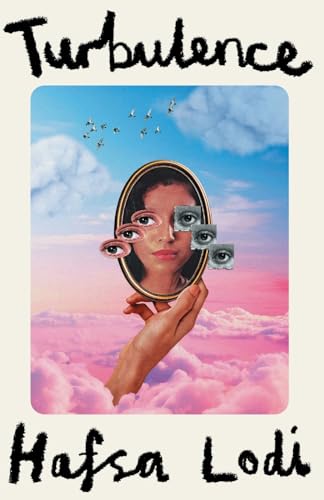
Turbulence
Turbulence
What happens when the life you carefully built begins to feel like a life you never chose? Dunya Dawood once dreamed of becoming a documentary filmmaker. Then she fell in love, married, and moved to the Middle East, where her ambitions gradually gave way to the demands of domestic life. A decade later, pregnant with her second child, she boards a flight to New York and finds herself unexpectedly separated from her husband and young son in business class. For the first time in years, Dunya has space to think. As the plane crosses continents, she revisits the decisions that brought her here, questioning the compromises she made between love, faith, family expectations, and her own ambitions. But when a shocking discovery triggers an unexpected crisis mid-flight, she faces a decision that could change everything. In Turbulence, Hafsa Lodi explores the complicated intersection of Muslim identity, feminism, marriage, and motherhood. Thoughtful and emotionally intimate, the novel asks whether women can challenge the expectations placed upon them without abandoning the people and beliefs they hold dear.
2026
2
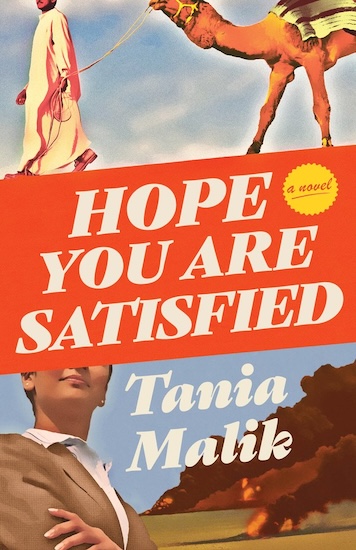
Hope You Are Satisfied
Set in Dubai in 1990, on the eve of the first Gulf War, Hope You Are Satisfied follows Riya, a 25-year-old Indian woman working for a small tour company in a city that has yet to become the glittering global metropolis it is today. Living far from her family, Riya sends money home to support her mother and younger sister, while dreaming of a future that offers more than endless work and financial obligations. Her life takes an unexpected turn when a seemingly ordinary workplace mishap involving a powerful sheikh threatens her position. As she attempts to repair the damage, Riya becomes entangled with Dubai’s shadowy network of fixers, arms dealers, foreign soldiers, intelligence operatives, and corrupt businessmen. Meanwhile, the looming threat of war transforms the city’s atmosphere, exposing the precariousness of life for the migrant workers who keep its tourism industry running. With sharp humour and a lively cast of expatriates, Malik explores the contradictions of a city built on ambition, wealth, and the labour of people who often remain invisible. Through Riya’s experiences, the novel examines migration, class inequality, cultural displacement, and the tension between family duty and personal freedom. Blending espionage, social satire, and historical fiction, it offers a glimpse of Dubai before its transformation into a global destination.
2023
3
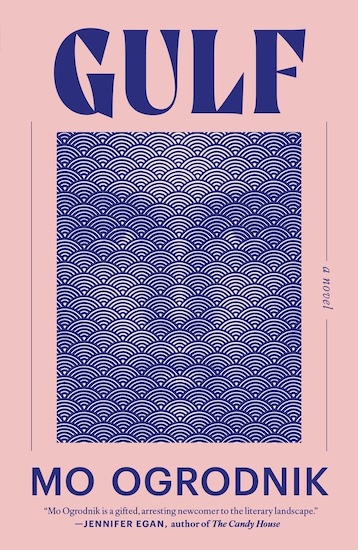
Gulf
Gulf
Set across the Arabian Gulf, Gulf follows five women from different backgrounds whose lives intersect in a region shaped by gender inequality, political conflict, economic disparity, and cultural divides. Dounia, a young Saudi woman, struggles with the restrictions of married life and the prospect of raising a daughter in a society where women’s freedom is limited. Flora, a Filipina domestic worker, leaves her surviving child behind after a devastating natural disaster forces her to seek work abroad. In Syria, Zeinah is pushed into marriage with an ISIS fighter, while Justine, an American museum curator in Abu Dhabi, confronts the contradictions between her progressive ideals and her own complicity in unequal power structures. Meanwhile, Eskedare, an Ethiopian teenager, fights to escape the circumstances that threaten to define her future. Through these interconnected stories, Ogrodnik explores the ways women navigate oppression, displacement, and moral compromise. Gulf is a powerful examination of survival, rebellion, and the struggle for agency in a world shaped by unequal power.
2025
4
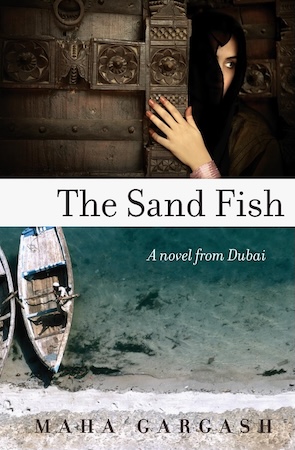
The Sand Fish
The Sand Fish
In 1950s Dubai, seventeen-year-old Noora dreams of a life beyond the traditions that dictate her future. After her mother’s death and her father’s descent into madness, her brother arranges her marriage to a wealthy pearl merchant many years her senior. Trapped in an unfamiliar household alongside his two other wives, Noora struggles to find her place in a world where her choices are limited and her future depends on producing an heir. But an unexpected passion offers her a glimpse of another life—and leaves her with a dangerous secret that could cost her everything. Inspired by the image of a sand fish, a desert creature that injures itself desperately trying to escape its surroundings, Noora’s story is a poignant portrait of a woman caught between duty and desire. Against the backdrop of a society on the brink of transformation, The Sand Fish explores female independence, forbidden love, and the courage to seek freedom when every path seems closed.
2009
5
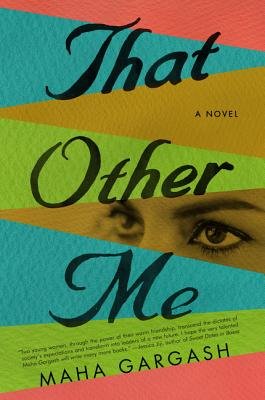
That Other Me
That Other Me
In mid-1990s Dubai, the secrets of a wealthy Emirati family threaten to destroy the lives of those bound by its name. Majed Naseemy, a powerful businessman, has built his reputation on wealth and respectability while concealing betrayals that haunt him. In Cairo, his niece Mariam pursues an education and dreams of escaping his control, until an unexpected romance threatens to derail her plans. Meanwhile, Dalal, Majed’s rebellious daughter from a secret second marriage, dreams of becoming a singer—a career that could bring her fame but disgrace her family in the eyes of society. As both young women challenge the authority imposed upon them, buried resentments and family secrets begin to surface. Moving between the glittering worlds of Dubai and Cairo, That Other Me explores the tensions between tradition and independence, the price of social respectability, and the courage it takes for women to claim ownership of their lives.
2016

Famous authors from United Arab Emirates

About United Arab Emirates

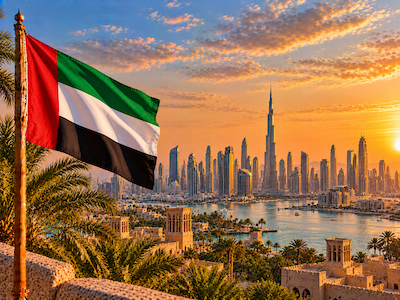
The United Arab Emirates (UAE) is a federation of seven emirates on the southeastern coast of the Arabian Peninsula, bordered by Saudi Arabia and Oman and surrounded by the Persian Gulf and the Gulf of Oman. Its landscapes combine vast sand dunes, rugged mountains, coastal wetlands, and modern urban skylines. Dubai is internationally known for its striking architecture and commercial energy, while Abu Dhabi, the capital, blends cultural institutions and contemporary development with deep-rooted Emirati traditions. The country’s heritage reflects centuries of Bedouin life, pearl diving, maritime trade, and connections across the Arabian Peninsula, Persia, East Africa, and South Asia. Arabic is the official language, while English and many other languages are widely spoken in this highly international society. Poetry, storytelling, falconry, traditional music, and hospitality remain important elements of Emirati cultural identity.

Region
Asia
Literary Context

Emirati literature grows from the rich oral traditions of the Arabian Peninsula, particularly Nabati poetry, a form of vernacular Arabic verse historically used to express love, wisdom, social values, and the experiences of desert life. Oral storytelling, folk tales, proverbs, and classical Arabic poetry have long played important roles in preserving cultural memory. As the UAE developed into a modern federation, its literary scene expanded to include novels, short stories, essays, and experimental poetry exploring rapid urbanization, migration, identity, and the relationship between tradition and modernity. Among the UAE’s notable writers is Ousha bint Khalifa Al Suwaidi, widely known as Fatāt Al-Arab, whose Nabati poetry earned her recognition as an important voice in Emirati literary culture. Sultan Al Ameemi, a novelist, short-story writer, and researcher of oral traditions, has helped document and develop the country’s literary heritage. Mohammed Al Murr, known for his short stories, often portrays everyday life and social change in Dubai and the wider Emirates. Maha Gargash, author of The Sand Fish, explores women’s lives and the transformation of Emirati society during the twentieth century. Noura Al Noman, a science-fiction author known for Ajwan, has contributed to the growth of speculative fiction in Arabic. Together, these writers reflect the UAE’s evolving literary identity, connecting inherited storytelling traditions with the experiences of a rapidly changing society.
Asia