What makes a story frightening? A spirit that refuses to leave the living world? A familiar house that suddenly feels hostile? The unsettling sensation that your own body has become something you no longer recognize?
Fear has no single language. In some stories, it emerges from folklore and spiritual traditions; in others, from family secrets, social hierarchies, or the disturbing realization that the people closest to us may be dangerous.
Not every frightening story fits neatly into the horror genre. Literary fiction, domestic thrillers, dystopian survival stories, and body horror all offer different ways to explore our deepest anxieties.
From Ecuador to Japan, Nigeria to Argentina, these eight books explore what happens when the familiar becomes frightening.
Ecuador | 2026
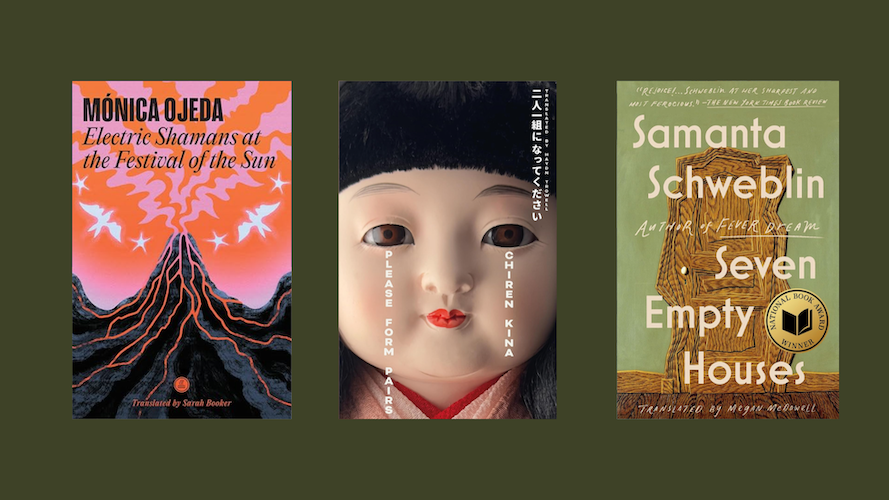
What if a music festival became a doorway to something ancient and unknowable?
Best friends Noa and Nicole escape the violence of Guayaquil to attend Solar Noise, an experimental music festival near an active volcano in the Andes. Surrounded by psychedelic experiences and spiritual forces, Noa begins speaking in a voice that does not seem to belong to her.
Mónica Ojeda blends contemporary youth culture with Andean spiritual traditions, exploring the uneasy boundaries between personal trauma, ancestral beliefs, and the supernatural. Here, transcendence and terror become difficult to distinguish.
Why read it: For atmospheric literary horror blending spirituality, experimental culture, and psychological unease.
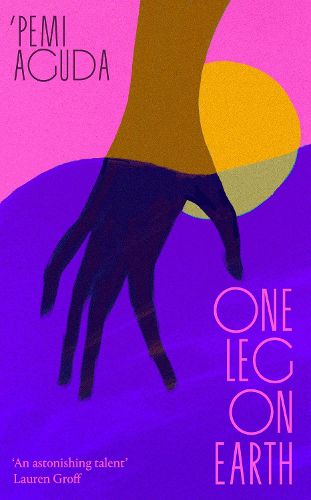
Nigeria | 2026
In Lagos, pregnant women are mysteriously walking into bodies of water and drowning.
Yosoye arrives in the city hoping to build a new life. Working at an architectural firm developing an ambitious coastal city, she initially sees a future filled with opportunity. But when she discovers she is pregnant, the disturbing reports become impossible to ignore.
In One Leg on Earth, ’Pemi Aguda connects supernatural mystery with motherhood, urban development, and the histories buried beneath modern progress. The city itself becomes a source of unease, raising questions about displacement, belonging, and whose lives are valued.
Why read it: For readers interested in African literary fiction, eco-horror, and supernatural stories about the hidden costs of progress.
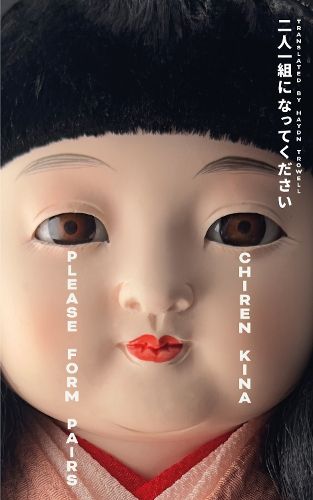
Japan | 2026
At a school ruled by popularity and social hierarchy, being left without a partner becomes a matter of life and death.
When a teacher introduces a deadly rule requiring every student to form a pair, anyone left alone faces execution. Suddenly, the familiar anxieties of adolescence become a fight for survival.
Chiren Kina transforms the fear of social exclusion into dystopian survival horror. Popularity becomes power, conformity becomes a survival strategy, and the desire to belong takes on terrifying consequences.
Why read it: For fans of dystopian fiction and survival horror that turns social pressure into a deadly game.
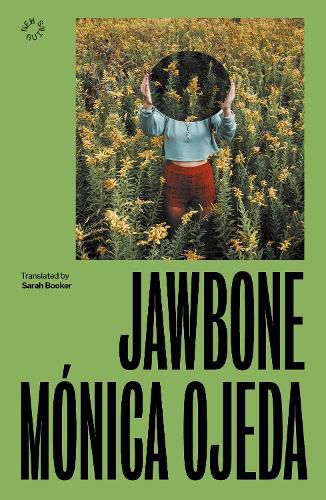
Ecuador | 2022
Adolescence can be frightening even without monsters. In Jawbone, inseparable friends Fernanda and Annelise develop elaborate rituals centered on a deity of their own creation at a Catholic girls’ school.
Their friendship becomes entangled with obsession and dangerous desire, while their literature teacher struggles with her own psychological unraveling. As the narrative shifts between characters, the boundary between fantasy and reality grows increasingly unstable.
Ojeda combines religious imagery, internet horror, and the intensity of teenage relationships to explore identity, desire, and violence. The result is a disturbing portrait of girlhood in which imagination can become both refuge and threat.
Why read it: For readers drawn to literary horror, unsettling coming-of-age fiction, and the darker sides of friendship and identity.
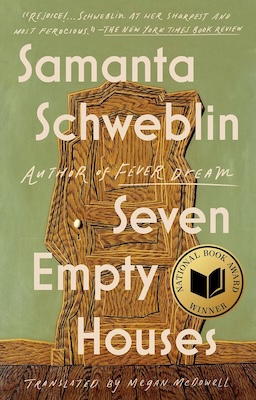
Argentina | 2023
A house should be a place of safety. But what happens when the spaces we know best begin to feel wrong?
In this collection of seven stories, Samanta Schweblin transforms domestic spaces into sites of uncertainty. Strange encounters, unsettling family dynamics, and inexplicable events disrupt the ordinary rhythms of everyday life.
Schweblin excels at making familiar situations feel threatening without offering easy explanations. Her stories demonstrate that fear does not always require supernatural monsters; sometimes, the ordinary becomes disturbing enough on its own.
Why read it: For fans of psychological unease, literary short fiction, and stories that make everyday life feel uncanny.
Nigeria / United States | 2023
What if the home you were promised turned out to be a prison?
Young Nigerian dancer Ikemefuna travels from Lagos to Texas for an arranged marriage, hoping for a new beginning. Instead, she finds herself trapped in a household where her freedom is restricted and expectations surrounding marriage and motherhood become increasingly oppressive.
Adorah Nworah uses domestic suspense to explore gender expectations, migration, and the darker side of family life. The house becomes a place where power is exercised and independence is threatened.
Rather than relying on supernatural terror, House Woman draws its tension from the disturbing possibilities of domestic relationships.
Why read it: For readers interested in domestic thrillers, psychological suspense, and stories about power, autonomy, and family expectations.
India / Pakistan | 2027 — Forthcoming
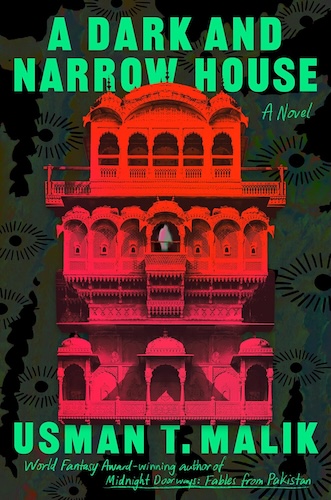
Some houses are frightening because of what happened inside them. Others seem to contain something that existed long before their inhabitants arrived.
Pakistani-American writer Usman T. Malik explores the uncanny through dark fantasy and supernatural storytelling. A Dark and Narrow House is a forthcoming title for readers interested in the space where Gothic atmosphere, myth, and the extraordinary meet.
Its place on this list reflects the wider possibilities of fear fiction: stories in which the strange challenges our assumptions about reality and reveals what ordinary explanations cannot contain.
Why read it: For readers drawn to dark fantasy, Gothic atmosphere, and supernatural fiction.
United Kingdom | 2027 — Forthcoming
Sometimes the most disturbing transformation is the one happening inside your own body.
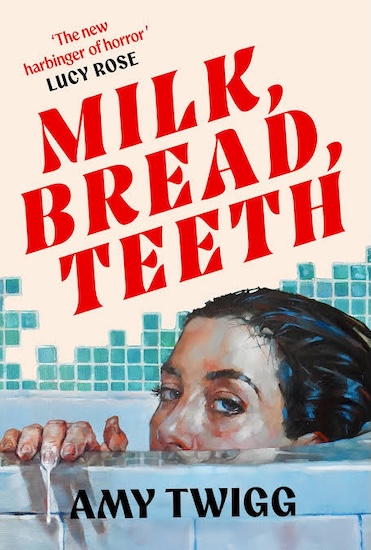
In Amy Twigg’s Milk, Bread, Teeth, Lena develops a hunger that seems impossible to satisfy. As her appetite grows, the boundary between ordinary consumption and something monstrous begins to disappear.
When aspiring actress Joan moves into the apartment above, Lena becomes increasingly drawn to her world and the privileges it represents.
Using the possibilities of body horror, Twigg explores dissatisfaction, class, aspiration, and the desire for more. Lena’s hunger becomes a disturbing metaphor for desires that wealth, status, and proximity to success cannot satisfy.
Why read it: For fans of body horror and grotesque fiction exploring identity, class, and insatiable desire.
What Does Horror Look Like Around the World?
These eight books approach fear from different directions, revealing several recurring themes.
- Folklore and the supernatural: Electric Shamans at the Festival of the Sun and One Leg on Earth explore the unsettling relationship between spiritual traditions, the natural world, and modern life.
- The body as a source of fear: One Leg on Earth, Jawbone, and Milk, Bread, Teeth examine pregnancy, desire, and bodily transformation.
- The home as a place of danger: Seven Empty Houses and House Woman challenge the assumption that domestic spaces are inherently safe.
- The terror of belonging: Please Form Pairs and Jawbone explore how social hierarchies, friendship, and the desire for acceptance can become dangerous.
- Fear as social criticism: Across the collection, urban development, gender expectations, class, and family obligations reveal the anxieties beneath everyday life.
Not every book here is horror in the strictest sense. Some lean toward psychological suspense, others toward dystopian fiction or dark fantasy. Together, they demonstrate how many forms fear can take.
Why Read Horror Across Cultures?
Reading fear fiction from different countries challenges the assumption that horror must look or feel a particular way. Folklore, social expectations, family structures, and relationships with the natural world all influence how writers imagine the frightening and the uncanny.
These books offer distinct literary perspectives rather than representing entire national traditions. Each invites us to encounter unfamiliar fears while recognizing something deeply human within them.
The monster may change from country to country. But the feeling of being trapped, watched, excluded, or transformed is harder to leave behind.
Sometimes, the most frightening thing a book can do is make the world we already know feel strange again.