Some books tell you a story. Others make you feel as though you’ve travelled thousands of miles without ever leaving your chair.
There is a particular kind of magic in reading a book that makes a place feel real. You can almost taste the food, feel the heat rising from the pavement, hear the sounds of an unfamiliar city, or picture the landscape stretching beyond the characters’ windows. Long after you finish reading, a part of that place stays with you.
Books can take us somewhere we’ve never been, reveal a new side of somewhere we thought we knew, or make us fall in love with a country we hadn’t considered visiting.
If you’re looking for your next literary escape, here are five books that bring their settings to life in unforgettable ways.
Destination: Naples, Italy
Few novels make a city feel as inseparable from its characters as Elena Ferrante’s My Brilliant Friend. Set in a working-class neighbourhood of postwar Naples, the novel follows Elena and Lila, two girls whose intense friendship unfolds against a backdrop of poverty, ambition, violence, and social change.
Ferrante’s Naples is far removed from the sun-drenched holiday destination of postcards. Its narrow streets, crowded apartment buildings, neighbourhood rivalries, and close-knit communities shape the girls’ lives as powerfully as their own choices. The city can feel suffocating, but it is also full of vitality, history, and possibility.
Through Ferrante’s precise, unsentimental prose, you experience Naples from the inside: its rhythms, its contradictions, and the complicated loyalties that bind people to the places where they grow up.
Perfect for readers who love: immersive literary fiction, complex friendships, and stories about the places that shape us.
Destination: Kerala, India
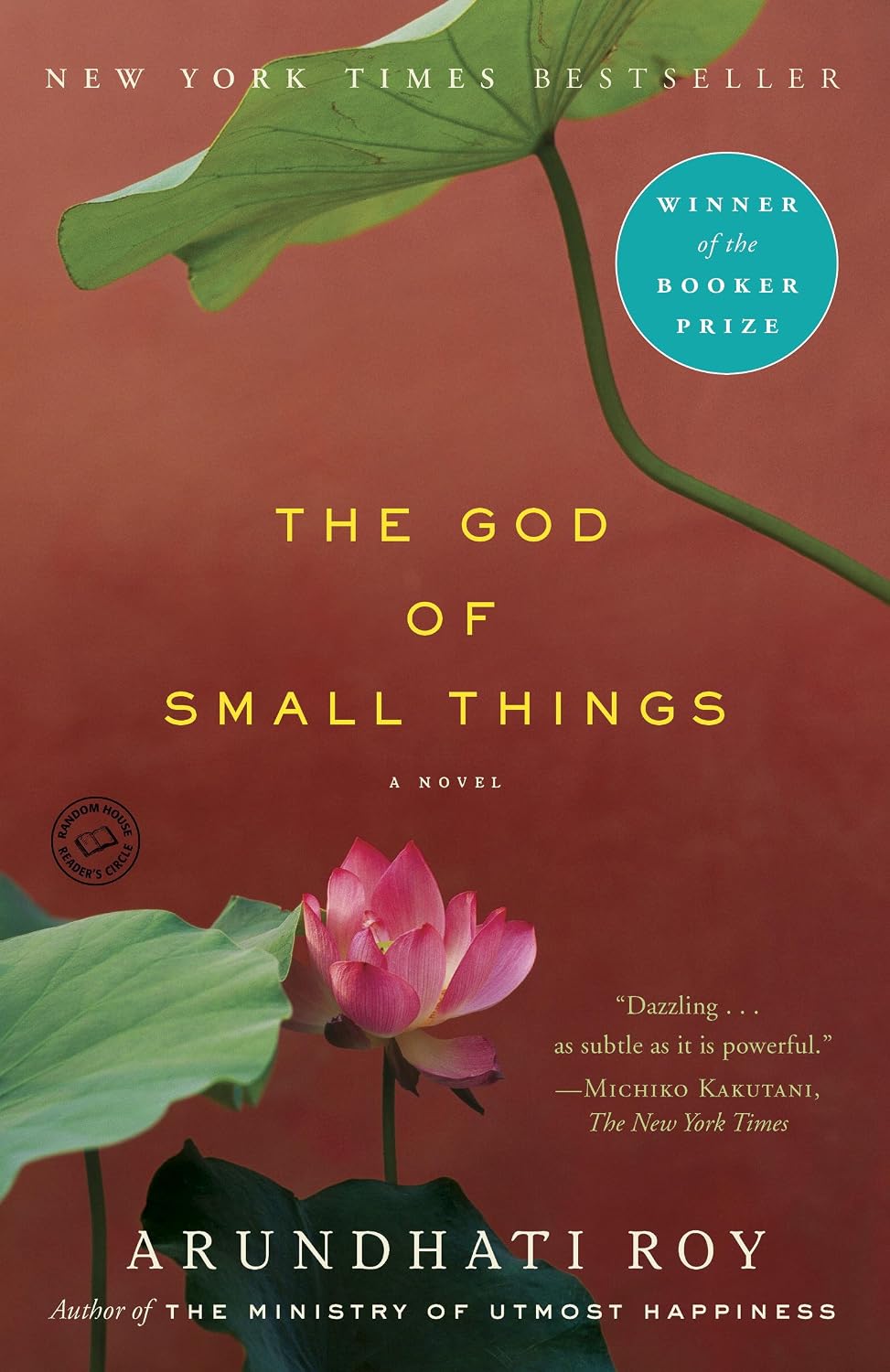
In Arundhati Roy’s remarkable debut novel, the lush landscape of Kerala becomes a living presence. Set in the fictional town of Ayemenem, the story follows twins Estha and Rahel as they navigate childhood, family secrets, and the social divisions that govern their world.
Roy’s writing is intensely sensory. The air is thick with humidity, monsoon rains transform the landscape, and the river flows through a world of tangled vegetation, insects, old houses, and decaying grandeur. The natural beauty of the region contrasts with the rigid social hierarchies and painful histories that shape the characters’ lives.
The novel moves between past and present, revealing how seemingly small moments can reverberate across generations. Its nonlinear structure mirrors the way memories return: in fragments, sensations, and images that refuse to fade.
Reading it feels like entering a place where beauty and sorrow exist side by side, and where the landscape holds traces of everything that has happened there.
Perfect for readers who love: lyrical prose, family sagas, and stories deeply rooted in place and culture.
Destination: A mysterious island inspired by Japan
Imagine living on an island where objects disappear without explanation—and, eventually, people forget they ever existed. In Yōko Ogawa’s haunting novel, an unnamed narrator lives under the watchful eye of the Memory Police, who ensure that everything destined to disappear is erased from collective memory.
Set on an unnamed island, the novel creates a world that feels both familiar and strangely unsettling. Roses, birds, photographs, and other ordinary objects gradually vanish, transforming the landscape and the daily lives of its inhabitants. As the disappearances accumulate, the island becomes quieter, emptier, and increasingly difficult to recognise.
Ogawa’s restrained prose makes this surreal setting feel remarkably tangible. Ordinary rooms, streets, and workplaces acquire an eerie quality as the familiar world slowly unravels. Beneath the novel’s dreamlike atmosphere lies a powerful exploration of memory, identity, freedom, and the fragility of human connection.
Although the island is fictional, its atmosphere evokes the quiet, introspective sensibility often associated with Japanese literary fiction.
Perfect for readers who love: atmospheric literary fiction, dystopian worlds, psychological mysteries, and stories that linger long after the final page.
Destination: Barcelona, Spain
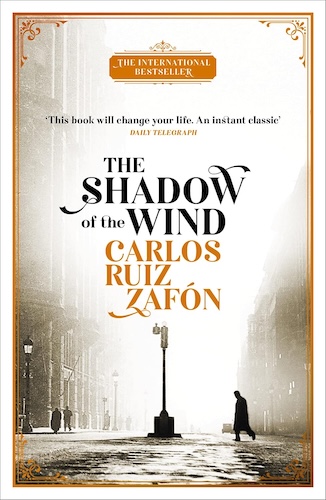
The Shadow of the Wind
Barcelona has never felt quite so mysterious as it does in Carlos Ruiz Zafón’s The Shadow of the Wind.
Set in the aftermath of the Spanish Civil War, the novel begins when a young boy named Daniel Sempere discovers a forgotten book in a secret labyrinth known as the Cemetery of Forgotten Books. His fascination with its mysterious author draws him into a dangerous investigation that gradually reveals the city’s buried secrets.
Zafón’s Barcelona is a place of shadowy alleyways, grand old buildings, forgotten bookshops, hidden courtyards, and streets that seem to conceal another story around every corner. The city is beautiful, but its beauty carries an undercurrent of unease. Beneath its architecture lie memories of political repression, personal tragedy, and lives deliberately erased from history.
The atmosphere is almost gothic, with the city itself seeming to participate in the mystery. Reading the novel feels like wandering through Barcelona at dusk, following a trail of clues into places most visitors would never think to look.
Perfect for readers who love: atmospheric mysteries, gothic fiction, old bookshops, and cities with secrets.
5. The Island of Missing Trees by Elif Shafak
Destination: Cyprus
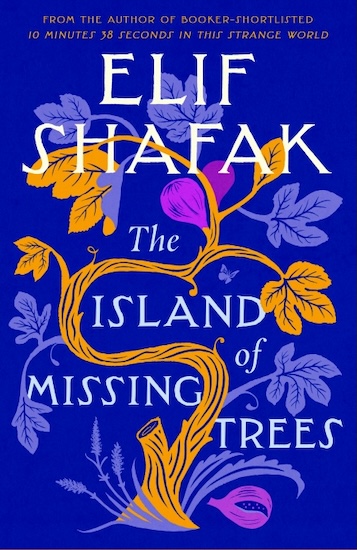
The Island of Missing Trees
Some places are impossible to understand without confronting the histories that have divided them. In The Island of Missing Trees, Elif Shafak takes readers to Cyprus, weaving together a love story, family history, and the lasting consequences of political conflict.
The novel moves between Cyprus in the 1970s and London decades later, following the lives of Greek Cypriot Kostas and Turkish Cypriot Defne, whose relationship unfolds against the tensions dividing their communities. Their story explores displacement, belonging, memory, and the ways history shapes the lives of those who inherit it.
One of the novel’s most distinctive features is its attention to the natural world, particularly a fig tree that becomes a witness to human experience. Through its branches, roots, and seasonal cycles, the story offers a different perspective on history: one that stretches beyond human memory and national boundaries.
Shafak’s Cyprus is a place of Mediterranean warmth, fragrant gardens, family kitchens, and tangled histories. Its beauty is inseparable from its wounds, making the island feel both inviting and profoundly complex.
Perfect for readers who love: multigenerational stories, literary fiction, and books exploring memory, identity, and belonging.
Travel the World, One Book at a Time
What makes these five novels so special is that they offer more than a change of scenery. They invite us to understand how places shape people, how history lingers in landscapes, and how the meaning of home can change over time.
Through Elena Ferrante, we discover a Naples far beyond the tourist trail. Through Arundhati Roy, we experience the lush intensity of Kerala. Amor Towles introduces us to a Moscow contained within the walls of a hotel, while Carlos Ruiz Zafón leads us through the hidden corners of Barcelona. And Elif Shafak reminds us that a beautiful island can hold memories both tender and painful.
You might finish one of these books wanting to book a flight. Or you might simply find yourself looking at a familiar place differently.
Either way, reading is a kind of travel: one that allows us to cross borders, inhabit unfamiliar worlds, and encounter lives far removed from our own.
Where will your next reading journey take you?
Discover your next literary destination with TheBookRoads — one country, one story, one book at a time.