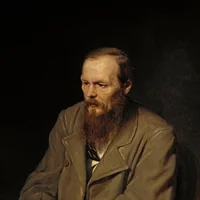
Fyodor Dostoevsky
RussiaAbout
Russian novelist (1821–1881) whose works explore human psychology, suffering, and morality against the backdrop of 19th-century Russian society. His major novels probe the darkest corners of the human soul with philosophical and spiritual depth.
Books on TheBookRoads
1
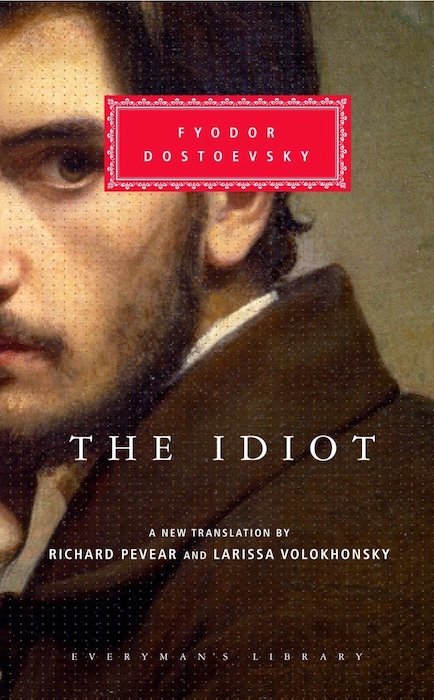
The Idiot
The Idiot follows Prince Lev Myshkin, a gentle and compassionate young man who returns to Russia after spending several years in a Swiss sanatorium receiving treatment for epilepsy. His sincerity, honesty, and lack of social pretension set him apart in the sophisticated but morally compromised world of St. Petersburg’s aristocracy, where his kindness is often mistaken for weakness or foolishness.
Myshkin becomes entangled in the lives of two women: Nastasya Filippovna, a beautiful woman haunted by past abuse and social humiliation, and Aglaya Yepanchina, a young woman drawn to the prince’s unusual character. As jealousy, romantic rivalry, and competing social ambitions intensify, Myshkin struggles to reconcile his ideal of unconditional compassion with the destructive realities of human behaviour.
Through its psychologically complex characters, Dostoevsky examines innocence, faith, suffering, pride, and the contradictions of human nature. The novel asks whether genuine goodness can survive in a society shaped by vanity, greed, and cruelty.
1869
Russia
2
Crime and Punishment
Set in the impoverished streets of nineteenth-century St. Petersburg, Crime and Punishment follows Rodion Raskolnikov, a former student who develops a theory that extraordinary individuals may be entitled to transgress moral laws for a greater purpose. Driven by poverty, pride, and his desire to prove his own superiority, he commits a brutal double murder. However, rather than achieving the freedom he imagined, Raskolnikov becomes consumed by guilt, paranoia, and psychological torment. As he struggles to conceal his crime, he encounters people who challenge his worldview, particularly Sonya Marmeladova, a young woman whose faith and compassion offer him a possible path toward redemption. Through intense psychological exploration, Dostoevsky examines morality, free will, suffering, and the conflict between intellectual justification and human conscience. The novel asks whether anyone can rise above ordinary moral obligations and explores how confronting one’s own humanity may be the first step toward transformation.
1866
Russia
3
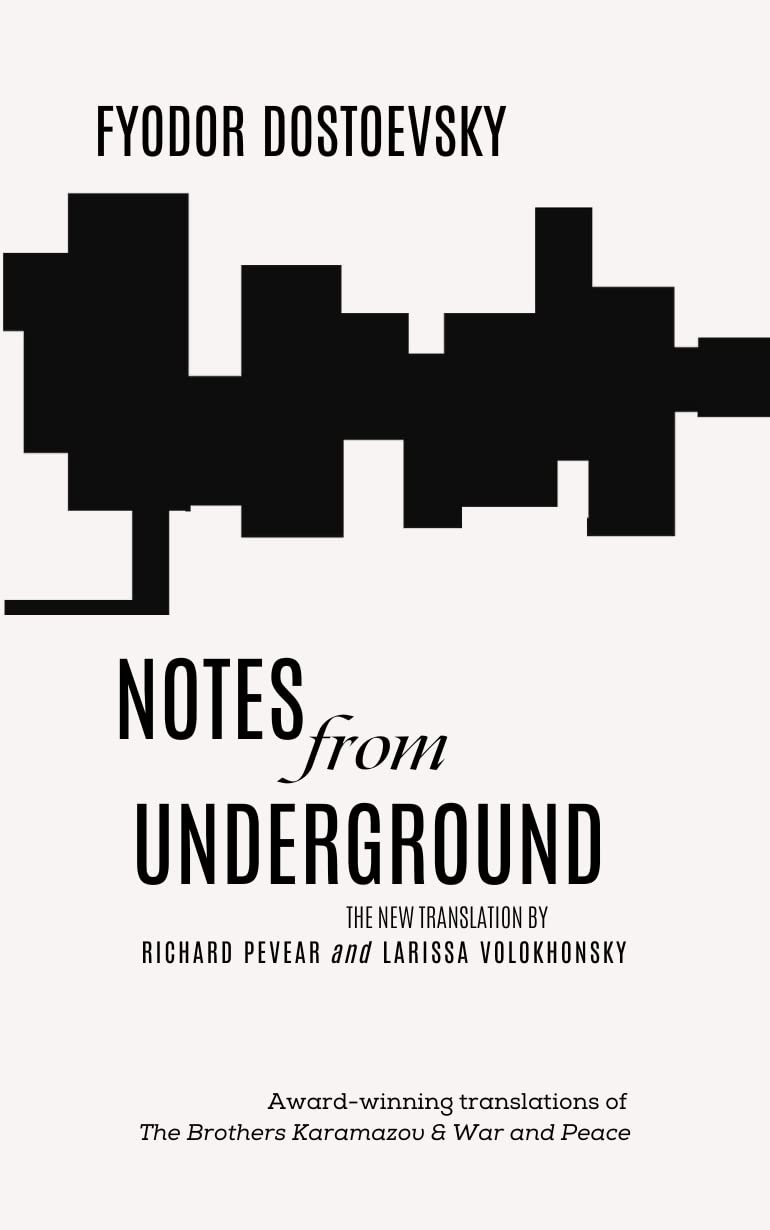
Notes from Underground
Notes from Underground is a psychological novella narrated by a bitter, isolated former civil servant living in St. Petersburg. Known only as the Underground Man, he addresses the reader directly, reflecting on his resentment toward society, his own contradictions, and his inability to form meaningful relationships. In the first part, he challenges the belief that human behaviour can be explained entirely through reason and self-interest, arguing that people may deliberately act against their own interests simply to assert their freedom.
The second part recounts episodes from his earlier life, including a humiliating encounter with former schoolmates and a disturbing relationship with Liza, a young woman working in a brothel. Although he briefly experiences the possibility of genuine human connection, his pride and fear of vulnerability lead him to reject it.
Through its unreliable narrator and intense introspection, Dostoevsky explores alienation, free will, self-sabotage, and the conflict between the desire for connection and the impulse to withdraw from the world.
1864
Russia